
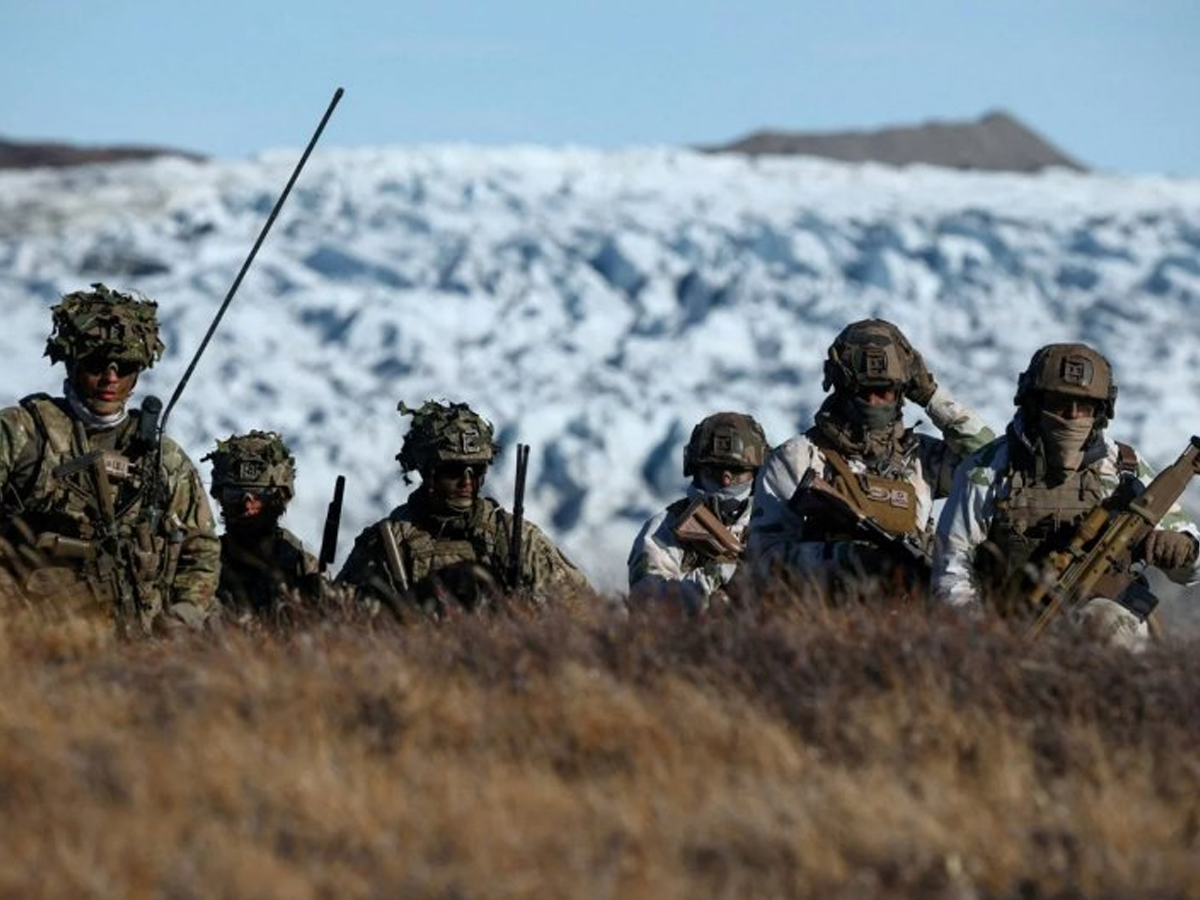
A brief German military mission to Greenland has ended abruptly, adding fresh tension to an already fragile debate over Arctic security and NATO unity. A reconnaissance team from the Bundeswehr, Germany’s armed forces, left Greenland over the weekend after their deployment was cut short, according to reports. The exit came at a sensitive moment, as US President Donald Trump continues to publicly threaten Greenland’s status, citing American national security concerns and alleged Russian activity in the Arctic.
The development has triggered questions across Europe about whether NATO allies are beginning to pull back under political pressure, even as the alliance insists it remains united in defending the strategically critical Arctic region.
Why German Troops Were Sent to Greenland?
Germany deployed 15 soldiers from its Army, Air Force, and Navy to Greenland as part of a NATO-backed reconnaissance mission launched at Denmark’s invitation. The objective was limited but strategic: assess future training exercises, logistics, and potential stationing options on the Arctic island.
The deployment followed the collapse of a proposed high-level meeting between officials from the US, Denmark, and Greenland in Washington, a setback that underscored the growing diplomatic strain over Greenland’s future.
Led by Rear Admiral Stefan Pauly, Inspector of the German Navy, the team arrived on Friday after travel delays and was expected to stay longer to complete reconnaissance activities.
Why the Bundeswehr Left After Just Two Days?
According to reports, the German reconnaissance team departed Greenland on Sunday afternoon (January 18), barely two days after arrival. The withdrawal order reportedly came from Berlin early that morning, prompting the soldiers to pack up and head to Nuuk Airport with all their equipment.
Poor weather conditions had already disrupted the original plans. The team was initially scheduled to fly directly to Greenland aboard a Bundeswehr Airbus A400M, but instead travelled via Denmark and arrived using a Danish aircraft. A planned visit to the Danish military base at Kangilinnguit was later abandoned.
German defence officials said revised operational planning and weather conditions drove the decision, stressing that the move does not signal a reduction in Germany’s NATO commitments in the Arctic.
Is Trump’s Greenland Rhetoric Changing NATO Calculations?
The timing of Germany’s departure has drawn attention. Just hours before the withdrawal, Rear Admiral Pauly said talks were ongoing with Danish forces and allies about expanded cooperation, including the possibility of a larger joint exercise.
Soon after, President Trump renewed warnings that countries opposing US ambitions in Greenland could face tariffs of up to 25 per cent. The coincidence has fueled speculation that European defence capitals may be reassessing their posture to avoid escalating tensions with Washington.
Trump has repeatedly argued that Greenland is critical for US missile defence, Arctic surveillance, and countering Russian and Chinese influence in the region.
Why Greenland Is Creating Friction Inside NATO?
Greenland is a self-governing territory within the Kingdom of Denmark, and Denmark is a NATO member. Under NATO’s collective defence principle, Greenland falls within the alliance’s security umbrella.
However, Trump’s remarks have created an unusual scenario of ally versus ally, with the US openly challenging Denmark’s sovereignty while European nations rally behind Copenhagen.
Greenland’s own government has firmly rejected any suggestion of a US takeover, insisting that Greenlanders alone will decide their future.
Criticism Over Small NATO Deployments
Germany is not alone in facing scrutiny. Several NATO countries, including the UK and France, have recently sent only small units—sometimes just one or two soldiers—for Arctic-related exercises under Danish leadership.
These minimal deployments have sparked mockery and criticism, raising doubts about whether NATO is doing enough to deter external threats in the Arctic while internal divisions grow louder.
What Comes Next for Arctic Security
Germany’s defence ministry maintains that the early exit from Greenland reflects logistical realities, not political retreat. Still, the episode highlights how Greenland has become a geopolitical flashpoint, testing NATO unity at a time of heightened global tensions.
As Trump continues to link Greenland to US security and economic pressure, Europe faces a difficult balancing act: standing by an ally’s sovereignty while keeping relations with Washington from sliding into open confrontation.




