Trump insists Greenland is key to 'national and world security', pushes talks with NATO's Rutte and plans Davos discussions, stirring transatlantic tensions.
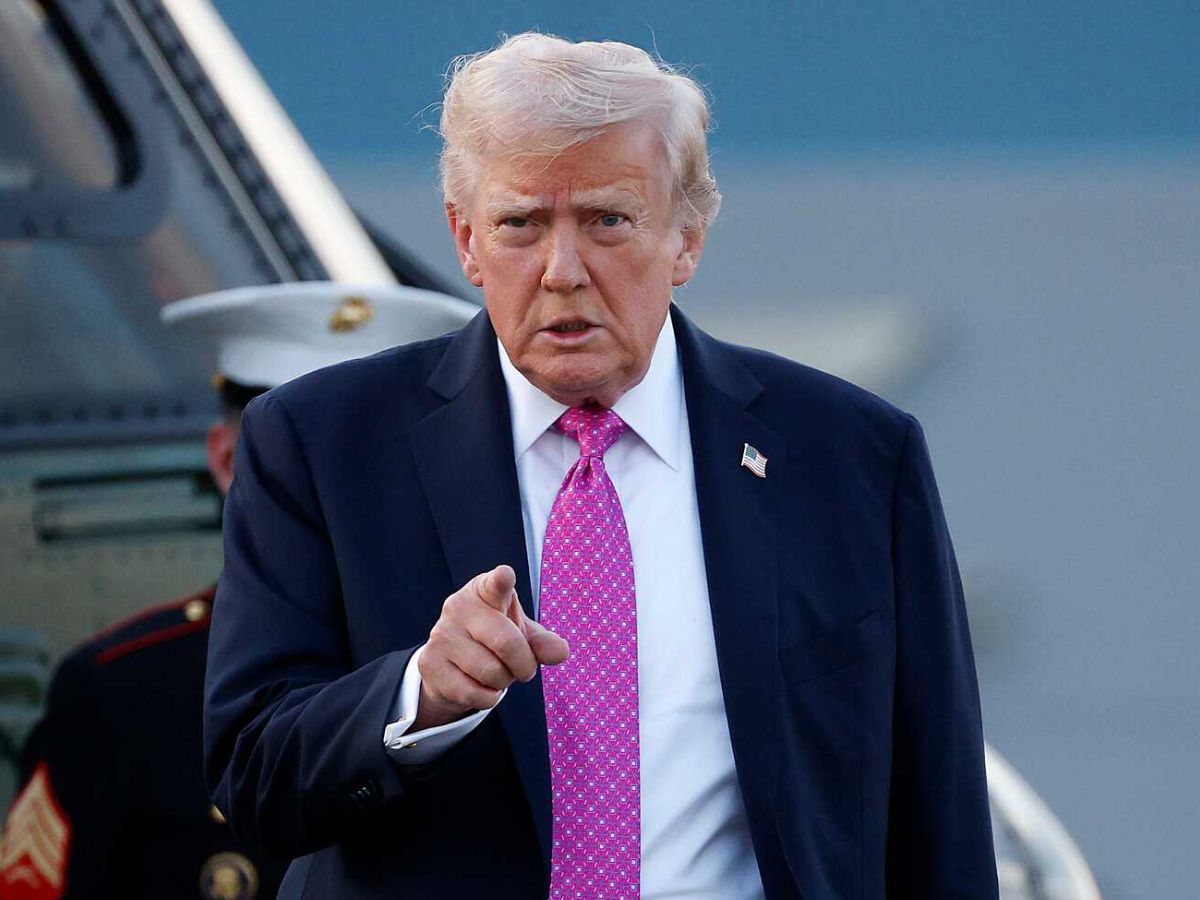
Trump insists Greenland is key to 'national and world security' [Photo: X]
US President Donald Trump has intensified his controversial stance on Greenland, calling it 'imperative' for global security. He said this after a 'very good' phone call with NATO Secretary-General Mark Rutte.
Trump also announced plans to hold a meeting with several leaders at the World Economic Forum in Davos to discuss the Arctic territory's future. His remarks have reignited a diplomatic storm involving the US, NATO, Denmark and other allies.
Trump has repeatedly framed Greenland as a non-negotiable strategic priority. After his call with NATO Secretary-General Mark Rutte, he doubled down on that view. He wrote: “As I expressed to everyone, very plainly, Greenland is imperative for National and World Security. There can be no going back — On that, everyone agrees!”
The statement underlines Trump’s belief that control and influence over Greenland are essential to counter growing Russian and Chinese activity in the Arctic. It also signals that he sees the issue not as a bilateral dispute with Denmark, but as a broader NATO and global security concern.
On Truth Social, Trump shared details of his conversation with NATO’s chief. He wrote, “As I expressed to everyone, very plainly, Greenland is imperative for National and World Security. There can be no going back. On that, everyone agrees!”
Trump argued that Greenland should be a key piece in the US and global strategy. He did not name all the parties involved in the planned Davos meeting but signalled that discussions would involve multiple nations.
This push comes as Trump again questioned Denmark’s ability to protect Greenland from Russia or China, stressing the need for stronger safeguards in the Arctic.
Trump’s plan to raise the issue at the World Economic Forum is unusual. Davos is mainly an economic and global policy forum. It is not traditionally a venue for territorial negotiations or security disputes.
Snowballing tensions over Greenland have already affected diplomatic attendance. Reports suggest Denmark may skip portions of Davos in protest amid the growing feud over Trump’s push to assert US influence there.
Trump’s insistence on a high-level discussion at Davos signals his desire to make the Arctic a centrepiece of US foreign policy and global security debates this year.
Trump has for years spoken about acquiring or controlling Greenland, an autonomous territory of Denmark. He sees it as crucial to US national and world security, especially given rising Russian and Chinese interests in the Arctic region.
According to Trump, long-standing NATO warnings about Arctic vulnerabilities support his position. He insists allies must reassess their defence strategies there. He also tied Greenland’s future to broad geopolitical competition, saying the US must secure strategic advantages to deter rivals.
Trump’s rhetoric has drawn strong reactions from European governments. Several NATO allies have jointly condemned suggestions that Greenland should be transferred or that the US must “own” it.
Some EU leaders have framed tariff threats, imposed by the US, until Denmark agrees to negotiations over Greenland, as harmful to transatlantic cooperation. Denmark, Greenland’s governing state, has reiterated that the island is not for sale, and that its security is tied to NATO, not a US takeover.
Greenlandic officials have also pushed back. The territory’s leaders and people have repeatedly stated they will decide their own future and reject external control. The Danish government echoed Greenland’s position, leading to broader calls within Europe for respect for sovereignty and international law.
Trump’s remarks and planned discussions at Davos have put fresh pressure on NATO unity. Some leaders fear that framing territorial control as central to alliance security risks undermining collective decision-making and trust.
Meanwhile, debates over Arctic strategy, climate change, and resource competition continue to make Greenland increasingly strategic—not just for the US, but for all Northern Hemisphere powers.
