
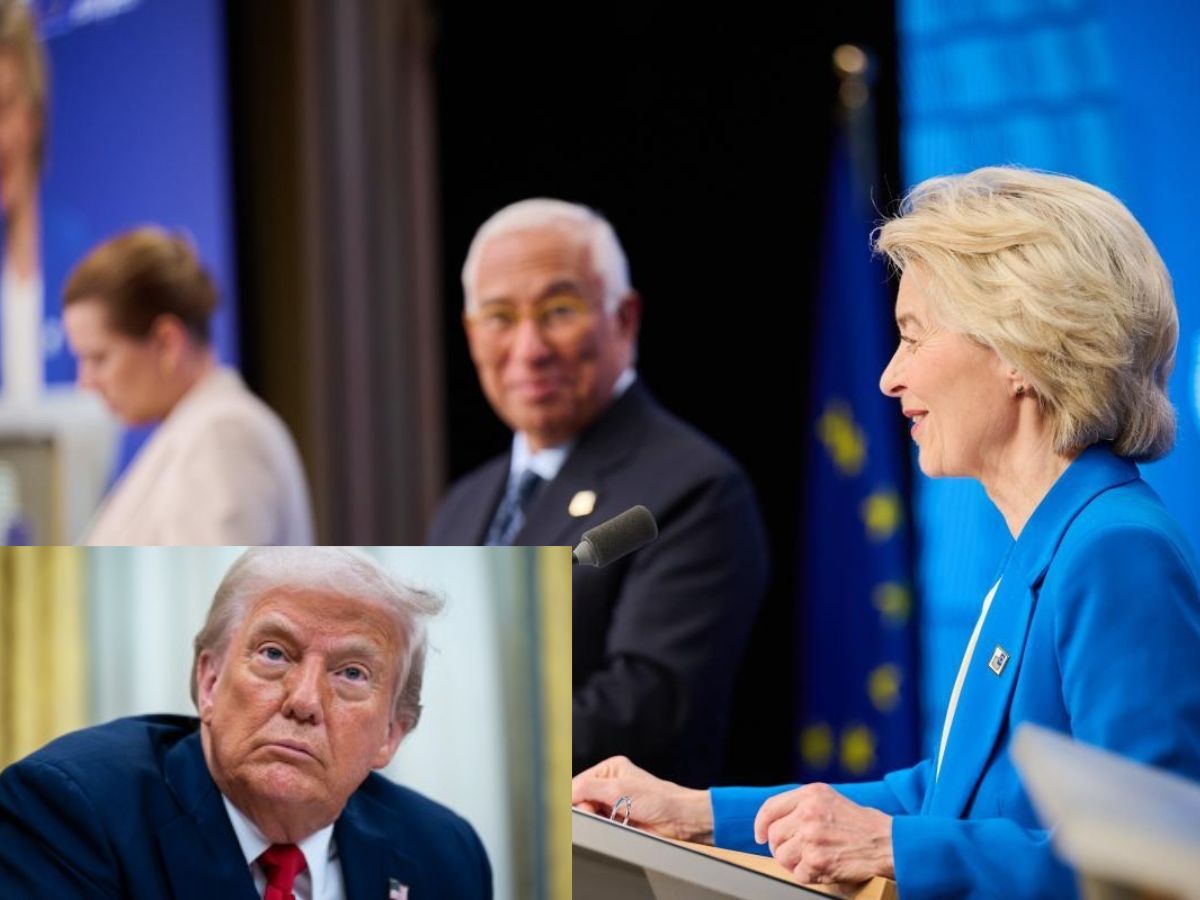
BRUSSELS / WASHINGTON, D.C. (January 19) — The European Union is considering imposing retaliatory tariffs on up to €93 billion in U.S. goods after President Donald Trump threatened new levies on eight European allies. The escalating trade dispute follows Trump’s announcement linking the tariffs to European opposition over U.S. control of Greenland.
What Retaliatory Options is the EU Weighing?
According to a Bloomberg report citing people familiar with the discussions, EU member states are coordinating a joint response. One primary option is activating the bloc’s new “anti-coercion instrument,” a trade defense tool designed to counter economic pressure. The EU had previously approved retaliatory tariffs on €93 billion ($108 billion) of U.S. products last year but suspended them after a trade pact. European lawmakers may now delay ratifying that agreement.
How Are European Allies Reacting?
The eight European countries targeted by Trump’s proposed 10% tariffs, set to start February 1, issued a joint statement condemning the move. They warned it “risks a dangerous downward spiral” and could undermine transatlantic relations. The nations, which include Denmark, reaffirmed their solidarity with Greenland, emphasizing sovereignty. “We stand in full solidarity with the Kingdom of Denmark and the people of Greenland,” the statement read.
What Did Trump Link the Tariffs To?
President Trump’s announcement on Saturday explicitly linked the tariff threat to European opposition regarding U.S. control of Greenland, a semi-autonomous territory of Denmark. Trump considers Greenland strategically critical to U.S. national security. The move appears aimed at using trade leverage to force discussions over the territory’s future.
What Are Leaders Saying About the Dispute?
Leaders across Europe and NATO have pushed back forcefully:
- EU’s Kaja Kallas has warned that China and Russia could benefit from a U.S.-Europe split, stating tariffs “risk making Europe and the United States poorer.”
- NATO’s Mark Rutte confirmed diplomacy is ongoing, noting a planned discussion with Trump at the World Economic Forum in Davos.
- UK’s Keir Starmer told Trump that “applying tariffs on allies for pursuing the collective security of NATO allies is wrong.”
- Italy’s Giorgia Meloni, a Trump ally, called the tariffs “a mistake,” clarifying European deployments to Greenland are for security against “other actors,” not the U.S.
FAQs
Q: What is the “anti-coercion instrument” the EU might use?
A: It is a trade defense mechanism the EU designed to counter economic pressure from foreign governments, allowing for measured retaliation.
Q: Which countries did Trump target with tariffs?
A: The tariffs threaten eight European countries, though the report did not list all names explicitly. Denmark is involved due to Greenland.
Q: When would the U.S. tariffs start?
A: President Trump announced the 10% tariffs would start on February 1.




