How US and Israeli intelligence tracked Ayatollah Ali Khamenei’s location, leading to deadly Tehran airstrikes that reshaped the Middle East conflict.
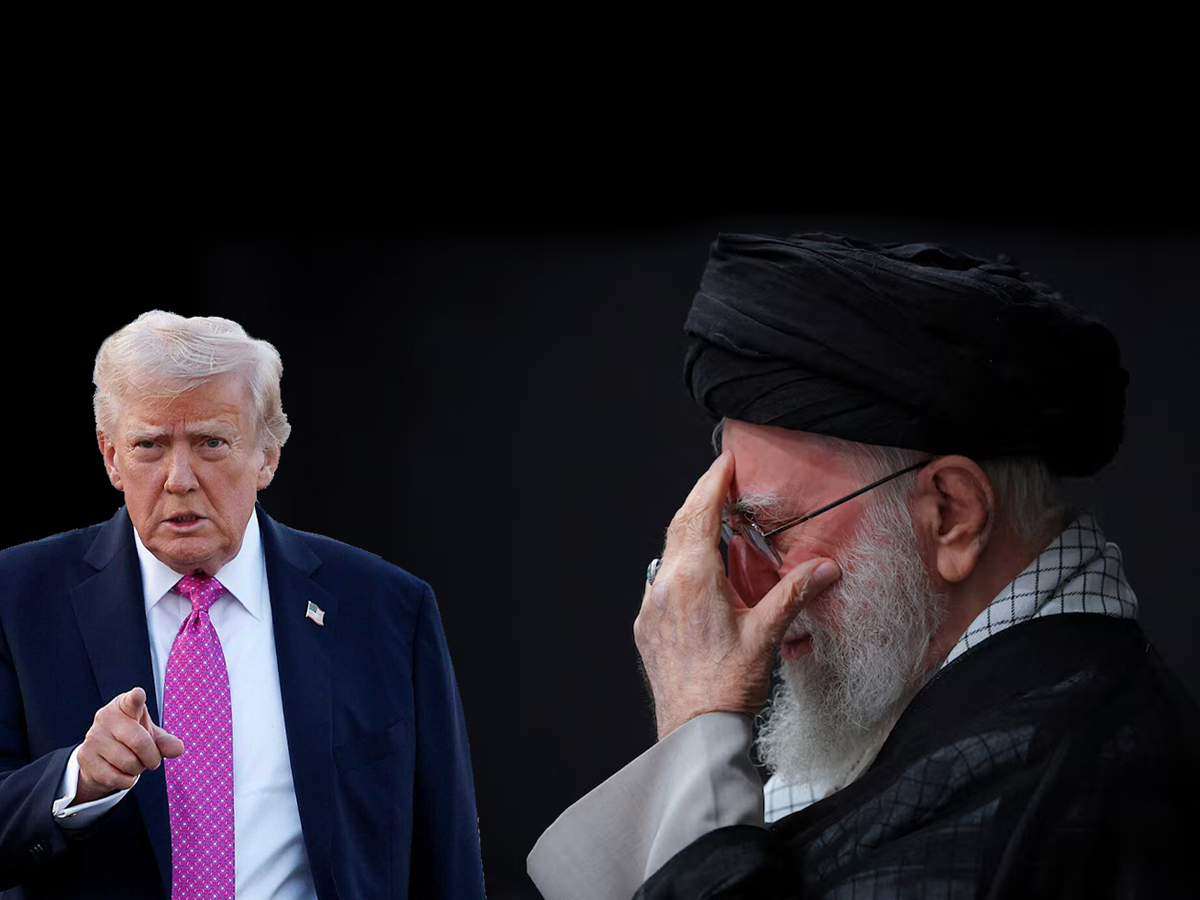
Trump officially announced Khamenei’s death on Saturday evening, calling him “one of the most evil people in History.” (Photo: Social Media)
Iran witnessed an extraordinary outpouring of grief as thousands gathered at Tehran’s Enghelab Square on March 1 to mourn the death of Ayatollah Ali Khamenei, who was killed in coordinated airstrikes carried out by the United States and Israel. The attack marked one of the most dramatic escalations in Middle East tensions in decades.
According to reports, the strikes destroyed Khamenei’s heavily fortified residence in central Tehran, effectively ending his 36-year rule. The operation unfolded amid an intensifying regional conflict, with Israel confirming fresh attacks on Iranian targets a day later. Donald Trump warned Iran against retaliation, signalling more consequences if Tehran responded militarily.
The killing of Iran’s Supreme Leader did not result from a single intelligence tip-off. Instead, it followed months of surveillance, advanced tracking, and real-time intelligence coordination between Washington and Jerusalem.
US and Israeli intelligence agencies reportedly relied on a combination of behavioural analysis and a last-minute intelligence breakthrough involving a high-level leadership meeting. The operation, described as a joint effort, aimed to eliminate multiple senior Iranian leaders gathered at secured locations across Tehran.
One of the most decisive factors was sustained monitoring by the Central Intelligence Agency. Intelligence officials tracked Khamenei’s movement patterns, security routines, and meeting schedules over several months. This allowed analysts to predict his likely presence inside a restricted leadership compound with what was described as “high fidelity” accuracy.
The breakthrough reportedly came when intelligence agencies detected an unusual meeting planned for the morning of Saturday, February 28, 2026. The gathering included Khamenei and several senior political and military figures, making it a rare opportunity to strike multiple targets at once.
This information prompted planners to accelerate and adjust the operation’s timing to ensure maximum impact.
President Trump later revealed that “Highly Sophisticated Tracking Systems” were used to lock onto Khamenei’s location. Once confirmed, the US shared the intelligence with Israel, enabling rapid coordination between both militaries.
The timing of the strike was reportedly changed from night to mid-morning, around 9:40 a.m. Tehran time, to coincide with the leadership meeting. Multiple secure buildings linked to Iran’s presidency, the Supreme Leader’s office, and the National Security Council were targeted simultaneously.
Trump officially announced Khamenei’s death on Saturday evening, calling him “one of the most evil people in History.” Posting on Truth Social, the US President wrote, “This is not only Justice for the people of Iran, but for all Great Americans, and those people from many Countries throughout the world, that have been killed or mutilated by Khamenei and his gang of bloodthirsty THUGS.”
He added, “He was unable to avoid our Intelligence and Highly Sophisticated Tracking Systems and, working closely with Israel, there was not a thing he, or the other leaders that have been killed along with him, could do.”
Trump further warned members of Iran’s security establishment, stating that while some forces may receive temporary immunity, they “will only face death!” if they continue hostile actions.
With Iran’s top leadership decimated and tensions soaring, uncertainty now surrounds the country’s political future. As airstrikes continue and regional responses intensify, the Middle East stands at a critical and volatile crossroads.
