Berlin relies on Israeli technology to rebuild its military amid growing threats.
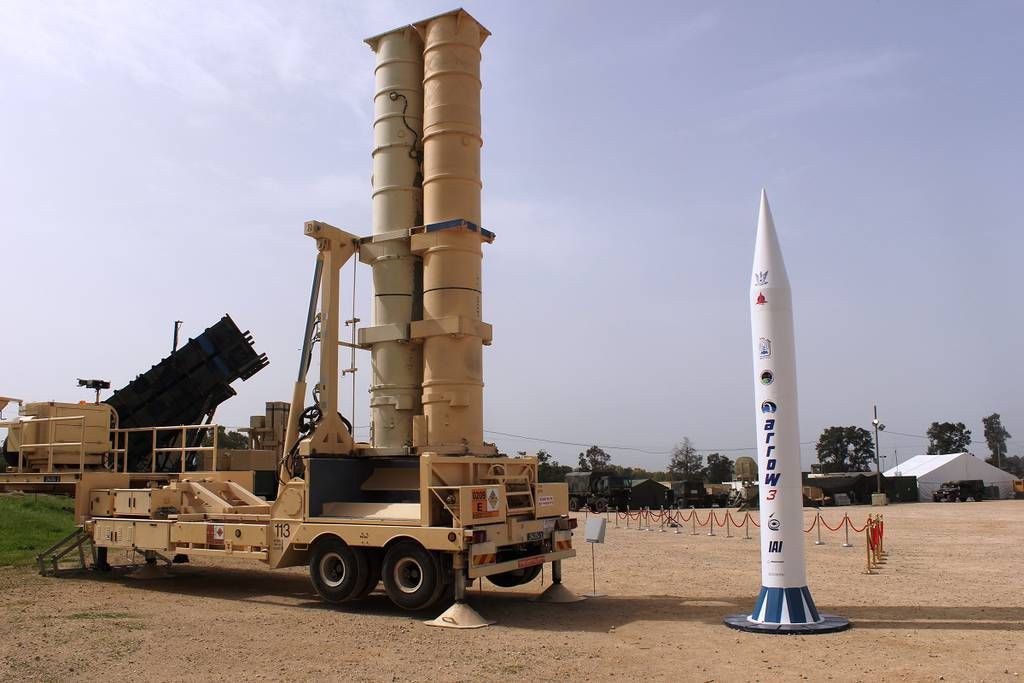
German military integrates Israeli Arrow 3 missiles, Spike anti-tank systems, and Heron drones as part of rapid rearmament strategy (Photo: File)
LONDON: When German Chancellor Olaf Scholz announced the Zeitenwende in February 2022 Germany's historic turn toward rapid military rearmament it signalled a seismic shift in a country long reluctant to reassert hard power. But the political declaration was only the first step. Behind the scenes, German planners, lawmakers, and procurement officers confronted a difficult question: where to acquire the advanced systems needed to rebuild Europe's largest economy into a credible military force at speed?
Two years later, the answer has become increasingly clear. Germany is rebuilding its military with significant help from an unlikely but technologically indispensable partner: Israel. From missile defence to precision weapons to unmanned aircraft, Israeli systems now form a central, though not exclusive, pillar of Germany's rearmament strategy. The deepening defence relationship between the descendants of a genocidal regime and its victims, reflects Germany's growing urgency to protect itself and Europe from emerging threats, particularly from Russia, as well as Israel's unique position as a global leader in air and missile defence. The result is a defence partnership that is pragmatic, fast-moving, strategically vital and politically delicate.
The most visible symbol of this shift is the Arrow 3 missile-defence system, built by Israel Aerospace Industries. In 2023 Berlin signed a €3.3 billion agreement, one of the largest defence contracts in Israeli history, to procure the long-range, exo-atmospheric interceptor designed to destroy ballistic missiles in space. The significance of this move is difficult to overstate. Arrow 3 is not merely another defence acquisition: it represents a strategic leap. Until recently, no European state possessed the capacity to intercept long-range ballistic missiles before they re-entered the atmosphere. Israel, with decades of combat-tested experience, was the only country offering this capability at short notice.
For Germany, the timing was critical. The war in Ukraine revived fears of Russian missile attacks on NATO states. Berlin, alarmed by gaps in European air-defence architecture, launched the European Sky Shield Initiative to create a multi-layered defensive network across the continent. Arrow 3 forms the outer layer, designed to protect not only Germany but potentially much of Europe. Preparations for delivery are now in their final phase. German and Israeli teams have been working to integrate command-and-control systems and prepare launch sites. Initial operational capability is expected soon. The acquisition was funded by Germany's special €100 billion defence fund, a pot of money intended to jumpstart the country's military revitalization. It also underscored Berlin's willingness to break long-standing political taboos on foreign weapons procurement when strategic urgency demanded it.
While Arrow 3 protects Germany from the sky, another Israeli-designed weapon is reinforcing German firepower on the ground—the Spike anti-tank guided missile. In late 2025, Germany finalized a €2.3 billion deal for thousands of Spike missiles through NATO's procurement agency. The agreement, signed with EuroSpike GmbH, a joint venture in which Israel's Rafael holds 20% and German firms Rheinmetall and Diehl each hold 40%, ensures that most of the missile production will take place in Europe. This structure is more than an industrial convenience. By anchoring production on European soil, Berlin not only reinforces its own defence industry but also insulates itself from potential geopolitical disruptions in Israeli supply chains. It is a hybrid model—Israeli technology, European manufacturing, NATO integration. The system fills a vital capability gap. Germany's existing anti-tank inventories, largely based on older MILAN missiles, needed replacement. Spike offers long-range, top-attack options and advanced guidance, capabilities urgently required to deter or counter heavily armoured forces such as Russia's. Moreover, the deal includes maintenance, training, and system integration support, embedding Israeli technology deeply into the Bundeswehr's evolving structure.
Israel's role in German rearmament is not confined to missiles. Berlin is also investing in advanced unmanned systems, another domain in which Israel is among the world's most experienced operators. The German Bundestag recently approved procurement of the Heron TP, a medium-altitude, long-endurance (MALE) drone produced by Israel Aerospace Industries. Delivery is expected in 2028, with contracts covering training, spare parts, and logistical support. For years, Germany debated whether its drones should be armed. The Heron TP, capable of carrying precision munitions, pushed the conversation forward. While the German government has moved cautiously, the choice of Israel as a drone supplier reflects confidence in a system that has been flown extensively in real-world operations. In an age of swarm attacks, reconnaissance saturation, and rapid-response targeting, drones have become indispensable. For Germany, which has lagged behind its NATO partners in unmanned systems, the Heron TP represents a leap into modern aerial warfare.
The German/Israel relationship extends beyond frontline weapons. Germany has acquired J-MUSIC directional infrared counter measure (DIRCM) systems from Israel's Elbit Systems under a $260 million, six-year contract. These sophisticated defensive pods protect large aircraft such as the A400M transport plane from infrared-guided missiles—an increasingly urgent need as Germany expands its airlift operations in volatile regions. Israel, whose own aircraft routinely operate in high-threat environments, has refined these technologies through hard-earned experience. Germany also ordered 90 Litening 5 targeting pods, another Rafael product, to modernize its Eurofighter Typhoons' precision-strike capabilities. These acquisitions may be less publicly visible than Arrow 3, but they matter. They improve survivability, accuracy, and responsiveness—core components of Germany's military modernization.
Why, then, has Germany turned so decisively toward Israeli systems? Three factors stand out in Israel's favour. Germany needed cutting-edge systems that are battle-tested and available quickly—an invaluable advantage when Germany is racing to rebuild capabilities after decades of underinvestment. Then, whether in missile defence, drones, or precision targeting, Israel sits at the forefront of modern defensive innovation. German officials have repeatedly emphasized that certain capabilities, particularly Arrow 3's exo-atmospheric interceptor, simply have no European equivalent available for years. Finally, there's the issue of shared strategic interests. Both nations perceive rising missile threats—Israel from Iran and its proxies; Germany from Russia. Their cooperation is rooted in a common strategic outlook, one reinforced by longstanding diplomatic ties and historical responsibilities.
Yet Germany's embrace of Israeli systems is not without risks or controversy. Some European partners question whether Berlin is outsourcing critical defence capabilities. Others worry about political complications. The Middle East's volatility raises questions about supply continuity, while domestic critics object to deeper military integration with Israel amid ongoing regional conflicts. German policymakers also remain cautious about over-dependence. Berlin has sought to mitigate these risks through diversified procurement. Arrow 3 will complement, not replace, other systems such as Patriot batteries. Spike missiles will be produced mostly in Europe. The Sky Shield Initiative distributes responsibility across multiple states. In other words, Germany's reliance on Israel is significant but not singular. Israeli systems fill critical gaps, but they form part of a broader mosaic that includes American, European, and domestic German technologies.
All this represents a new reality for Europe. Germany's deepening partnership with Israel reflects a broader transformation: the return of hard power to the centre of European politics. As threats multiply, ideals give way to pragmatism. Berlin has chosen systems that can defend its population and support NATO allies in the near term, regardless of where they originate. Israel, for its part, gains not only a major strategic partner in Europe but also validation of its decades-long investment in missile-defence innovation. For both sides, the partnership is mutually reinforcing.
Germany's rearmament journey is far from complete. But its reliance on Israeli missiles, drones, and defensive systems underscores a new geopolitical reality: when security is at stake, capability, and availability, matter more than tradition or geography. After all, many will view Germany's purchase of Israeli equipment as something quite profound: that Germany's security now depends on Jews, the very people it once sought to annihilate! So, as Europe steps into an era of uncertainty, Berlin's strategic pivot may ultimately be remembered not for the money spent, but for the partner chosen and the defences built together.
John Dobson is a former British diplomat, who also worked in UK Prime Minister John Major's office between 1995 and 1998. He is currently a visiting fellow at the University of Plymouth.
