US Supreme Court strikes down Trump’s sweeping tariffs, leaving about $133 billion already collected at stake and experts warning the refund process could be chaotic and lengthy.
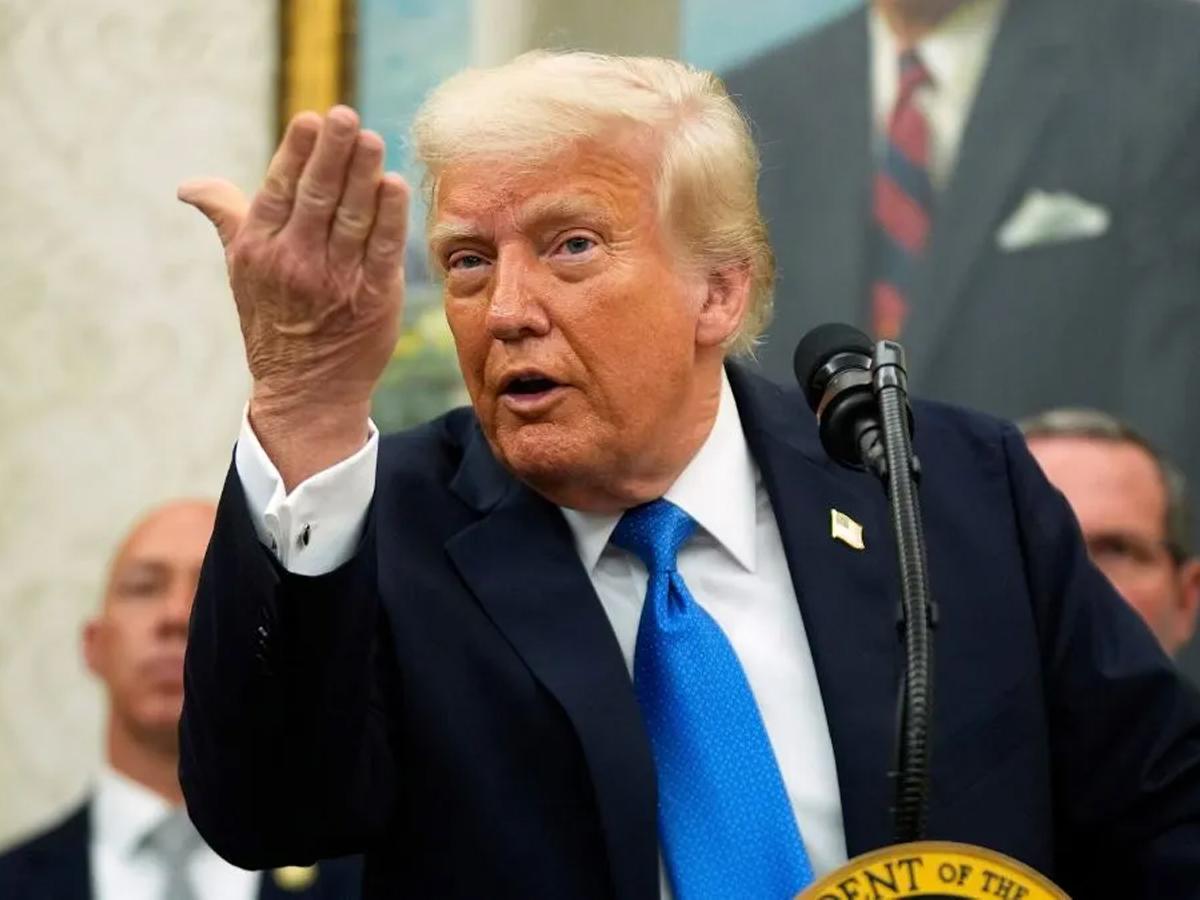
This decision effectively invalidates the tariff regime that raised roughly $133 billion in duties on imports, including broad “reciprocal tariffs” and targeted levies tied to issues like drug trafficking and trade deficits. (Photo: AP)
The U.S. Supreme Court delivered a major legal setback to Donald Trump this week by ruling that his sweeping global tariffs were imposed without proper legal authority, invalidating an emergency economic policy that had generated about $133 billion in import taxes. The decision has raised crucial questions about who will return the money already collected, and how long it might take.
Tariffs have been at the center of Trump’s trade strategy, aimed at reducing trade deficits and protecting American industries. But the court found that his use of the International Emergency Economic Powers Act (IEEPA) to impose broad tariffs was unconstitutional, leaving the future of these funds uncertain and sparking widespread debate in courts, markets, and on Capitol Hill.
In a 6–3 decision, the Supreme Court said Trump exceeded his authority under the 1977 IEEPA, which does not clearly allow a president to impose sweeping tariffs on global trade. Justices noted that only Congress has the power to levy tariffs, not the president acting unilaterally under emergency powers, marking a significant blow to Trump’s economic agenda.
This decision effectively invalidates the tariff regime that raised roughly $133 billion in duties on imports, including broad “reciprocal tariffs” and targeted levies tied to issues like drug trafficking and trade deficits.
Perhaps the most controversial part of the ruling is that the court did not decide what should happen with the $133 billion already collected. Lower courts and trade tribunals are now expected to determine whether the government must refund the money and to whom those refunds should go.
The ruling specifically left this unanswered, with dissenting Justice Brett Kavanaugh noting that,“The Court says nothing today about whether, and if so how, the Government should go about returning the billions of dollars that it has collected from importers. But that process is likely to be a ‘mess.’”
See attached. pic.twitter.com/EMiBPUwVn0
— JB Pritzker (@JBPritzker) February 20, 2026
Experts warn that the road ahead could be long and complex, with legal battles likely to unfold in the U.S. Court of International Trade, lower federal courts, and administrative agencies.
Economists and policy groups estimate that if refunds are mandated, the total could reach $170 billion to $175 billion, far above the core $133 billion already collected, because additional tariff revenue might also be included.
These amounts represent one of the largest financial obligations the federal government could face in modern history if refunds go forward. Some analysts warn that nearly 90% of the tariff burden was passed through to American consumers and firms in the form of higher prices, adding to inflation and costs across sectors.
Unlike typical trade duties, where tariffs are refunded if importers successfully protest under specific rules, the broad nature of Trump’s invalidated tariffs means no ready-made mechanism exists for mass refunds. Customs and trade lawyers predict a “bumpy ride” involving multiple claims, lawsuits, and administrative hurdles.
Trade attorney analysts say a mix of U.S. Customs and Border Protection, the Court of International Trade, and federal appeals courts will have to build a framework for repayment, potentially delaying refunds for years.
Trump’s critics welcomed the decision as a win for constitutional limits on executive power and a boost for U.S. consumers and global trade. But supporters of the tariffs argue the decision undermines American negotiating leverage and could complicate future trade policy.
The ruling also throws the federal budget into uncertainty. Earlier forecasts assumed tariff revenue, nearly one-fifth of total customs receipts, would support broader fiscal plans. With the tariffs invalidated, revenue projections now face major revisions.
Hundreds of companies, including major importers, have already filed lawsuits to claim refunds, sensing an opportunity as the legal landscape shifts. Thousands of claims may crowd the system, forcing courts to set priorities and procedures for disbursing funds.
Some states, analysts say, may even argue they should share in refunds tied to taxes paid by local companies. But no clear path exists yet, leaving taxpayers, industries, and courts grappling with a massive financial puzzle.
The Supreme Court’s tariff ruling not only curtails executive power but also throws into question the fate of roughly $133 billion collected under Trump’s controversial trade policy. With no clear guidance on refunds, the aftermath could last years and reshape the way the U.S. handles trade revenue and economic policy.
What Happens Next? Lawyers, companies, and government agencies now begin the painstaking work of untangling one of the most complicated tariff refund scenarios in U.S. history.
