How UAE’s missile defence intercepted Iranian ballistic missiles after US-Israel strikes, and why falling debris still caused a deadly civilian casualty.
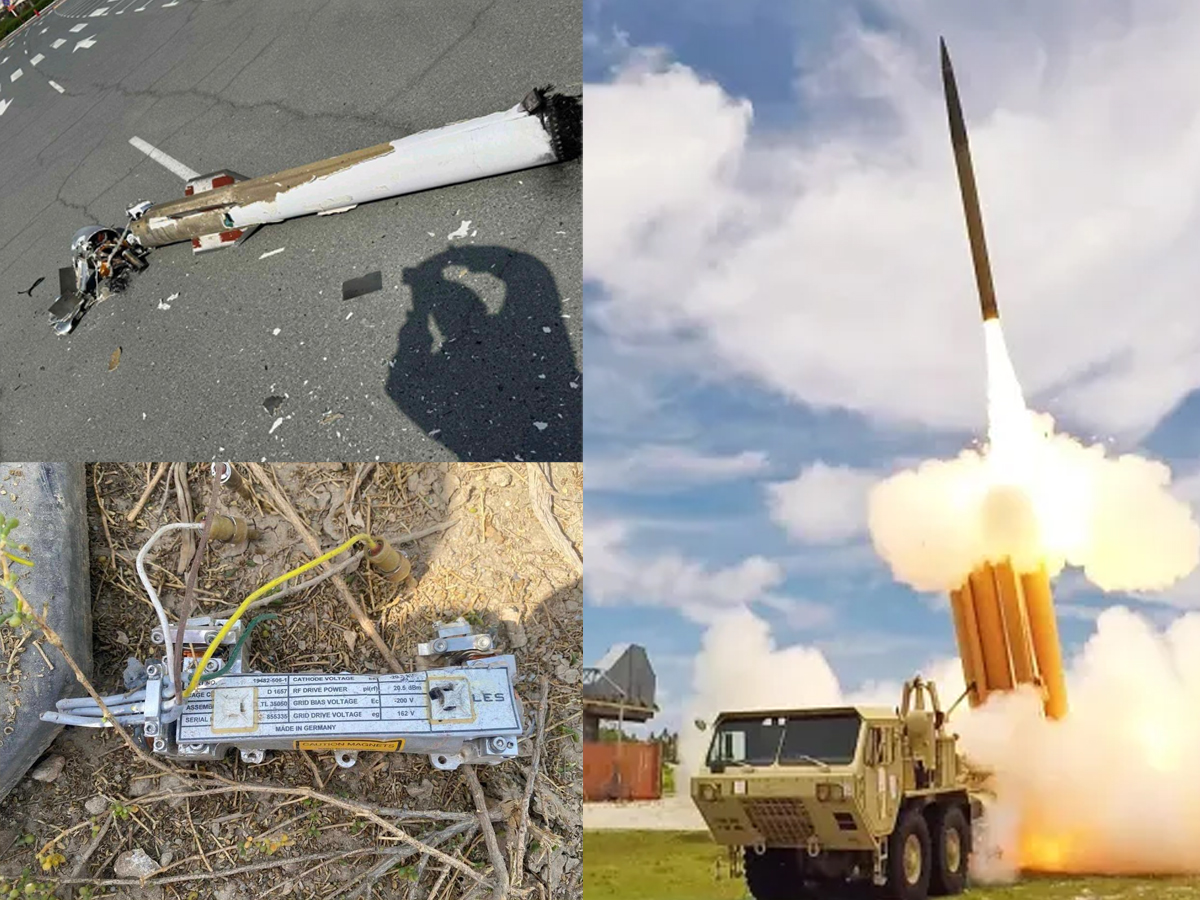
THAAD does not operate alone. The UAE also fields the MIM-104 Patriot, a system designed to intercept missiles and aircraft at lower altitudes.
As tensions between Iran, Israel, and the United States spilled across the Middle East on Saturday, the United Arab Emirates found itself directly in the path of Iran’s retaliation. After Tehran launched ballistic missiles toward US military positions in the Gulf, the UAE activated its air defence network, THAAD, intercepting several incoming threats before they could hit their targets.
The UAE Ministry of Defense confirmed that air defence systems successfully destroyed multiple ballistic missiles mid-air. However, despite the interceptions, debris from one destroyed missile fell in Abu Dhabi, killing one civilian and underlining a grim reality: even successful missile defence can still carry deadly consequences.
Iran launched missiles across the Gulf hours after joint US-Israel attacks on Iranian targets. Several of those missiles flew toward areas near strategic military installations in the UAE, including Al Dhafra Air Base, which hosts Emirati and US forces.
Residents in Abu Dhabi described seeing flashes of light in the sky followed by dull explosions, moments that lasted seconds but involved a highly complex defence operation unfolding behind the scenes.
The UAE relies on a layered missile defence architecture designed to stop ballistic missiles at different stages of flight. The system combines high-altitude and low-altitude interceptors, giving operators multiple chances to destroy an incoming missile.
One of the key components is Terminal High Altitude Area Defense (THAAD), developed by Lockheed Martin. THAAD intercepts ballistic missiles during their final descent, smashing into them at extreme speeds using a “hit-to-kill” method rather than explosives.
The UAE became the first country outside the US to deploy THAAD in 2022, after acquiring the system as part of a multibillion-dollar defence agreement.
THAAD does not operate alone. The UAE also fields the MIM-104 Patriot, a system designed to intercept missiles and aircraft at lower altitudes.
Together, these systems form a layered defence that works in rapid succession:
All of this unfolds in minutes.
Ballistic missiles travel at extraordinary speeds, sometimes exceeding 20,000 kilometres per hour. At that velocity, a missile can cross the UAE in just a few minutes, leaving defence systems with a narrow window to react.
Missile defence depends on radars capable of tracking objects moving at hypersonic speeds and interceptors that can meet those objects at a precise point in space. Any delay or miscalculation can allow a missile to slip through.
Saturday’s fatality in Abu Dhabi highlights a critical limitation of missile defence. When interceptors destroy a ballistic missile, fragments can scatter and fall back to Earth. While interception prevents large-scale destruction, debris can still land in populated areas.
In this case, officials said falling debris from a destroyed missile caused the civilian death, even though the missile itself never reached its intended target.
Iran is widely believed to possess one of the largest ballistic missile arsenals in the Middle East. As a result, Gulf countries have invested heavily in missile defence to protect cities, oil infrastructure, and military bases.
Saturday’s events showed that while missile shields can stop direct hits, they cannot eliminate risk—especially as regional conflicts intensify.
