200,000 Iranian exiles rally in Munich as Prince Reza Pahlavi vows secular transition and urges US help. Trump calls regime change 'best thing' as nuclear talks continue.
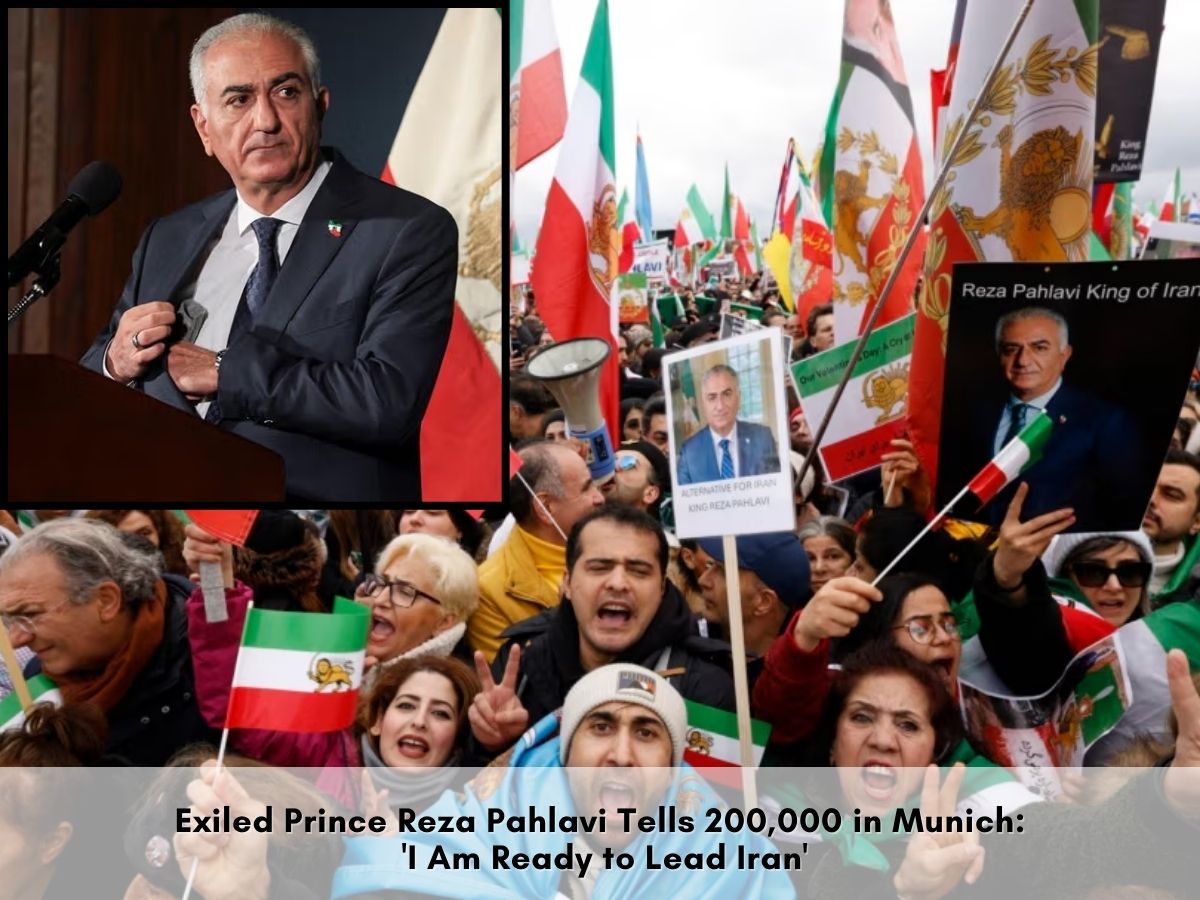
Iran's Opposition Rallies in Germany While US and Tehran Prepare Nuclear Talks (Image: File)
Around 200,000 Iranian exiles and opposition supporters gathered in Munich on Saturday to hear Reza Pahlavi, the exiled son of Iran's last shah, declare himself ready to lead the country toward a "secular democratic future." The massive rally coincided with renewed US military pressure on Tehran and came one day after President Donald Trump said a change of government in Iran would be the "best thing that could happen."
Reza Pahlavi, 65, has lived in exile since before the 1979 Islamic revolution that ousted his father, Shah Mohammad Reza Pahlavi. Addressing a sea of supporters waving the green-white-red lion-and-sun flags of the toppled monarchy, Pahlavi positioned himself as a transitional figure. "I am here to guarantee a transition to a secular democratic future," he told the crowd. "I am committed to being the leader of transition for you so we can one day have the final opportunity to decide the fate of our country through a democratic, transparent process to the ballot box."
The crowd erupted in chants of "Javid Shah" (Long live the shah), signaling enduring loyalty to the pre-revolutionary royal family among segments of the diaspora. A 62-year-old protester who gave his name only as Said told AFP: "The Iranian regime is a dead regime. It must be game over."
Speaking Friday, Trump stated that a change of power in Iran would be the "best thing that could happen," though he declined to name who should replace Supreme Leader Ayatollah Ali Khamenei, adding only that "there are people." His administration has simultaneously escalated military pressure, deploying a second aircraft carrier to the Middle East.
Trump had previously threatened military intervention to support anti-government protests that swept Iran in January, which rights groups say were met with a violent crackdown killing thousands. Pahlavi, speaking earlier to reporters at the Munich Security Conference, directly appealed to the US president. "To President Trump... The Iranian people heard you say help is on the way, and they have faith in you. Help them," he said. "It is time to end the Islamic Republic."
Videos verified by AFP show Iranians inside the country continuing to chant anti-government slogans from homes and rooftops, despite an ongoing security crackdown. Pahlavi has urged protesters to chant at 8:00 pm local time Saturday and Sunday to coincide with the Munich demonstrations and similar actions abroad.
According to the US-based Human Rights Activists News Agency, at least 7,008 people, mostly protesters, have been killed in the crackdown, with more than 53,000 arrested. Rights groups warn the actual toll is likely far higher. Iranian authorities have characterized the protests as hijacked by "terrorists" backed by the United States and Israel.
Despite the public rhetoric, Washington and Tehran continue diplomatic engagement through intermediaries. Switzerland confirmed Sunday that Oman will host a fresh round of US-Iran talks in Geneva next week, following discussions last week in Oman. The talks focus on Tehran's nuclear programme, which US forces struck last July during Israel's 12-day war with Iran.
The dual-track approach—military threats and nuclear diplomacy—reflects the complex relationship between the two nations, which have had no diplomatic relations since shortly after the 1979 revolution.
The Iranian opposition remains fractured, and Pahlavi faces criticism on multiple fronts. His highly publicised 2023 visit to Israel fractured attempts to unify opposition camps, as many Iranians view normalization with Israel as politically untenable. Critics also note that Pahlavi has never distanced himself from his father's autocratic rule, which relied on the US-backed SAVAK secret police to suppress dissent. His support base, while large in exile, has unknown dimensions inside Iran, where the Islamic Republic maintains tight control.
A: No. Pahlavi was a child when his father fled Iran in 1979. He has lived in exile, primarily in the United States, ever since.
A: Trump has not explicitly endorsed Pahlavi, stating merely that "there are people" who may take over. The United States continues to engage Tehran diplomatically on nuclear problems.
A: Human rights organizations estimate that at least 7,008 demonstrators have been killed and nearly 53,000 arrested. Independent verification is challenging owing to restrictions on media and foreign observers.
A: Oman will host a new round of talks in Geneva next week, following discussions last week. The talks focus on Iran's nuclear programme, which was struck by US forces in July 2025.
Disclaimer: This information is based on inputs from news agency reports. TSG does not independently confirm the information provided by the relevant sources.
