
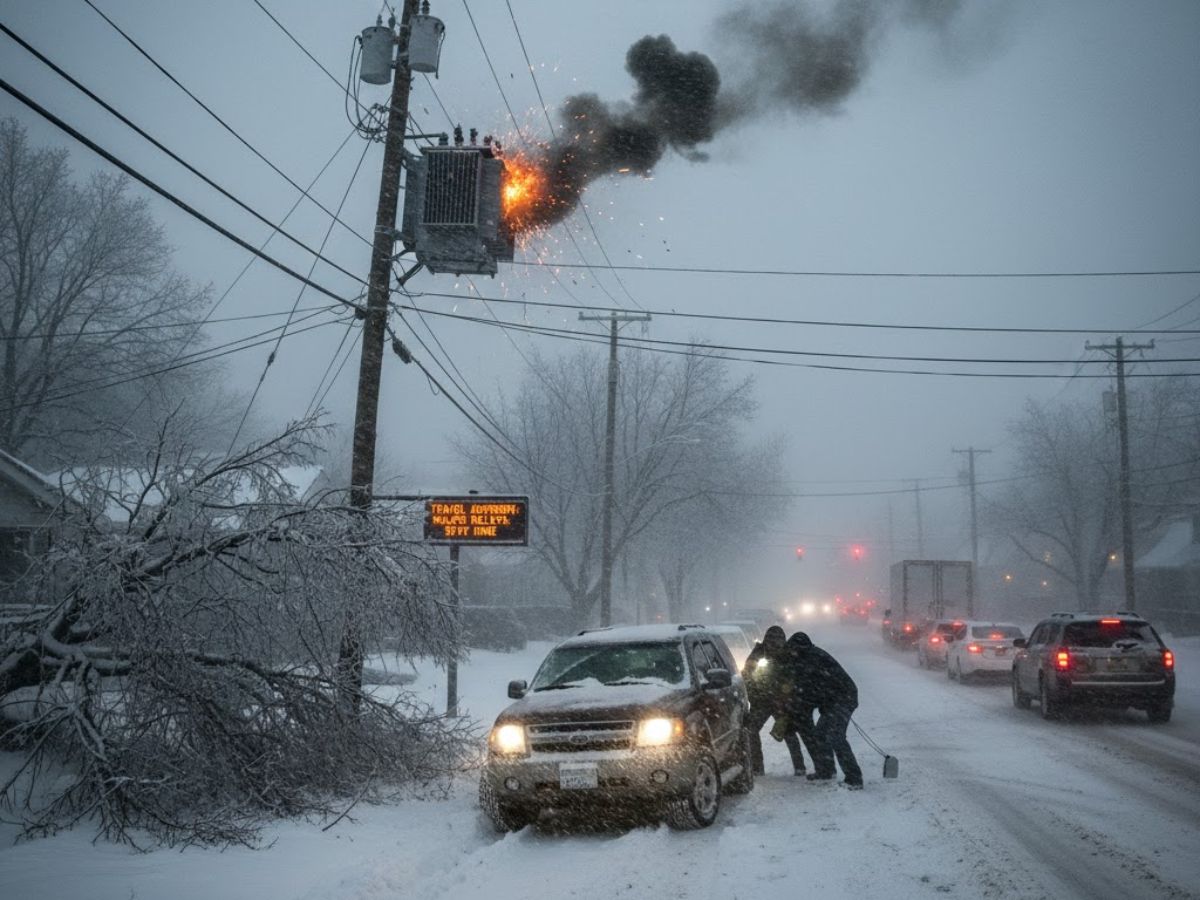
A massive, destructive winter storm is causing major disruptions across the eastern United States, cutting power to more than one million customers and paralyzing both air and road travel nationwide.
The storm’s effects are split by region: dangerous ice buildup is triggering widespread power failures in the South and mid-Atlantic, while heavy snow is burying the Northeast, including major cities like New York and Boston.
Crisis in the South: Ice and Power Outages
The South is facing a crisis of ice and darkness. Accumulating ice has brought down trees and power lines, leading to massive outages that officials warn could last for days, especially in hard-hit areas like Nashville, Tennessee.
Power: Over 1 million customers are without electricity, according to PowerOutage.us. Tennessee (330,000+), Mississippi (160,000+), Louisiana (135,000+), and Texas (90,000+) are among the hardest-hit states.
Fatalities: At least seven storm-related deaths have been reported. In Austin, Texas, the mayor confirmed one death was due to exposure to the extreme cold.
Severe Weather: The same storm system spawned a confirmed tornado in Florida’s Panhandle on Sunday afternoon, with warnings for residents to take immediate cover.
Northeast Buries Under Heavy Snow
Meanwhile, the Northeast is dealing with its most significant snowfall in years.
- Heavy snow is falling along the I-95 corridor. New York City had recorded 7.2 inches in Central Park by early afternoon, with amounts nearing a foot in northern New Jersey. Boston is bracing for its largest snowfall in years.
- The weather has made travel nearly impossible. New York’s LaGuardia Airport closed entirely on Sunday to clear runways. Nationally, over 17,000 flights have been canceled since Saturday, making it the worst day for U.S. air travel in half a decade outside of the pandemic.
- The severe conditions forced the postponement of the NBA game between the Memphis Grizzlies and Denver Nuggets just 30 minutes before doors were set to open.
Prolonged Dangerous Cold
The severe cold linked to the storm is a serious concern. Temperatures are the coldest this winter and are expected to last into the week, raising risks for vulnerable people, especially those without power or shelter. Officials across affected states urge residents to stay indoors, check on neighbors, and use caution daily.




