ICJ to hear Rohingya genocide case against Myanmar from Jan 12–29, 2026, with 11 states intervening; first merits hearing in a decade.
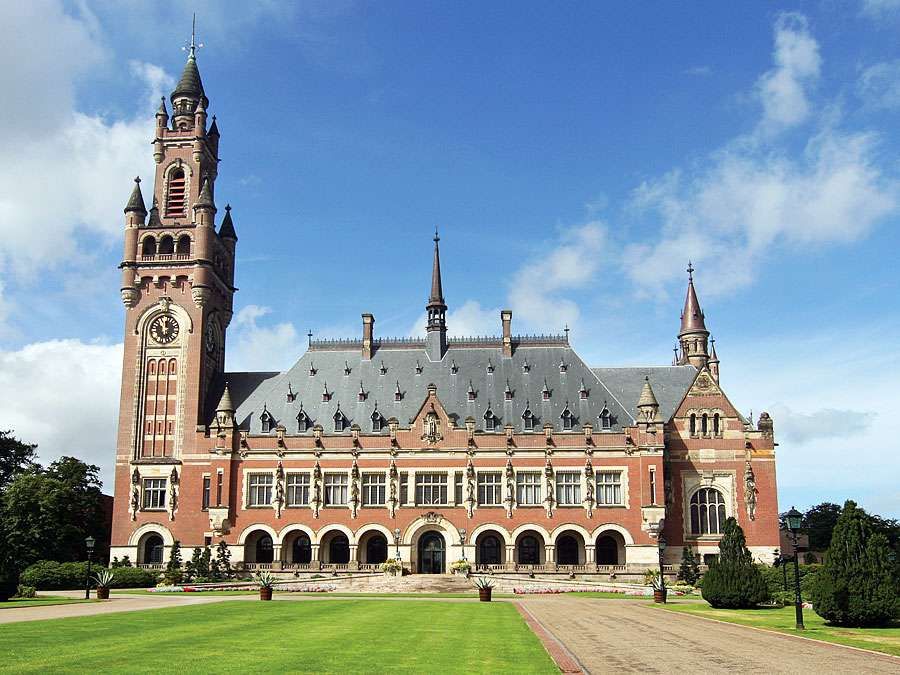
The Hague's Peace Palace to host ICJ hearings on Myanmar-Rohingya genocide case, marking a decade since the court last examined genocide on merits (Photo: Pinterest)
The Hague: The International Court of Justice (ICJ), the principal judicial organ of the United Nations, will hold public hearings in January 2026 in the case concerning allegations of genocide against Myanmar over its treatment of the Rohingya community. In a press release issued on Friday, the ICJ said the hearings in the case titled Application of the Convention on the Prevention and Punishment of the Crime of Genocide (The Gambia v. Myanmar), with the intervention of 11 States will take place From Monday, January 12. to Thursday, January 29, 2026, at the Peace Palace in The Hague.
The case was instituted on November 11, 2019, when The Gambia filed an application before the Court accusing Myanmar of violating the UN Convention on the Prevention and Punishment of the Crime of Genocide. The application relates to alleged acts committed against members of the Rohingya group.
Myanmar has consistently denied allegations of genocide, rejecting claims that its military and Buddhist militias carried out a violent crackdown against the Rohingya community in 2017. According to the release, The Gambia has asked the Court to declare that Myanmar breached its obligations under the Genocide Convention, to order it to immediately cease any internationally wrongful acts, to fulfil obligations of reparation in the interest of Rohingya victims, and to provide assurances and guarantees of non-repetition.
The Gambia has invoked Article IX of the Genocide Convention to establish the Court's jurisdiction, and its application was accompanied by a request for provisional measures. On January 23, 2020, the ICJ issued an order containing several provisional measures directed at Myanmar, including steps to prevent acts within the scope of the Genocide Convention and to preserve evidence related to the allegations.
Following the order, both parties submitted their written pleadings on the merits of the case in two rounds. "The hearings will be devoted to the merits of the case and will include the examination of witnesses and an expert called by the parties," the ICJ said.
According to Al Jazeera, the hearings are expected to have broader implications, as they could influence South Africa's case against Israel over the war in Gaza. Notably, this will be the first time in more than a decade that the ICJ hears a genocide case on its merits.
