
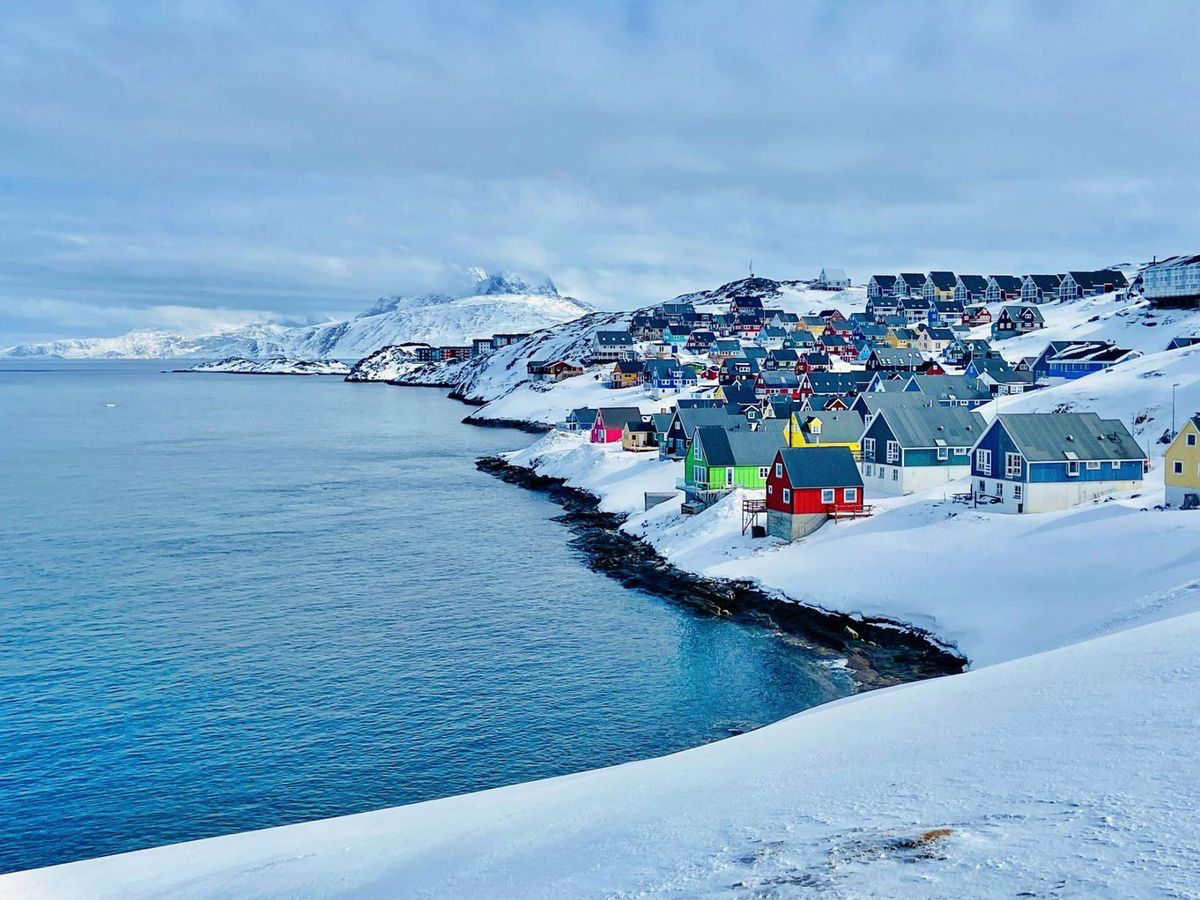
The notion of a possible U. S. attempt at seizing Greenland through force sounds unlikely at best, but recent statements have brought the topic from the fringes of policy discussions to the heart of contemporary debate. As a self-ruling area of Denmark, effectively part of the NATO area of influence, a possible effort at forceful persuasion would challenge the validity of formal legal norms and the political will of the transatlantic partnership. A challenge to Arctic regional security amid a rise in great power contention brings the topic of Greenland to the forefront.
How International law could stop the US Attack on Greenland
- The UN Charter bars the threat or use of force against another state’s territory.
- Greenland’s status as part of Denmark gives it legal protection under Danish sovereignty.
- Any forced transfer without consent would be legally void under treaty law.
- International courts could rule against annexation, even if enforcement is political.
- Sanctions and diplomatic isolation remain lawful responses to aggression.
How NATO Article 5 Protects Greenland
Greenland has NATO protection because Denmark is one of the founding members of NATO. In the 1949 North Atlantic Treaty, it was made clear that any attack against the territory of one member state was to be seen as an attack on all of them. It was in the 1951 defense treaty on Greenland that the U.S. itself accepted the sovereignty of Denmark over Greenland. In law, any attack on Greenland will be defined as attacking Denmark, making it possible for NATO to discuss Article 5. Though it does not automatically lead to military action, there is still the duty to discuss collective security.
US Veto Power & Its Role in NATO Deterrence
Law and politics part ways within NATO. The US contributes about 70 percent to overall NATO military expenditure. It also houses essential NATO command infrastructure. There is no realistic possibility for other alliance members to effectively challenge the US military. This symmetry makes it practically a veto on invoking Article 5 over the US. This paradoxical situation presents a paradoxical situation wherein Greenland is secure, though its protection is conditional upon the solidarity of all alliance members, which would split over it.
How UN Charter Article 2(4) Stops Aggression
Article 2(4) of the Charter of the United Nations is one of the strongest norms within international law. It explicitly forbids the use of force as well as the threat of force regarding the territorial integrity or political independence of any nation. Military intervention is only lawful if it is a form of self-defense or if it is sanctioned by the Security Council. Greenland does not have any military threat towards the US, which makes any kind of forceful acquisition unlawful.
What are the Right of Greenlanders to Self-Determination
Greenlanders were given a high degree of autonomy in Greenland by the Self-Government Act of 2009, which confirms the people of Greenland’s right to self-determination in international law. Indeed, it has been reaffirmed in United Nations human rights instruments. Sovereignty can never be altered against the wishes of the Greenlanders, normally after a referendum has been held. Force would not guarantee any agreement based on the Vienna Convention of the Law of Treaties, so it is dead in the water anyway.
How Article 4 Could Allow Denmark to Seek NATO Support for Greenland
Article 4 gives any country in the NATO alliance a right to request for consultations in the event that country feels its security is under threat or its territorial integrity is violated. Article 4 is political in nature, unlike Article 5, which is more military in orientation. Denmark could use Article 4 as a first step in order to force the entire alliance to engage in a dialogue even without the use of force.
When was Article 4 Last Time It Was Invoked
According to NATO, Article 4 has been triggered nine times since the end of the Second World War in 1949. These have included instances by Turkey, such as in the lead-up to the invasion of Iraq in 2003 and in the conflict that has had spill-over effects from the Syrian conflict. There have also been consultations requested in 2025 related to airspace and drone incidents involving NATO members in Northern Europe, as reported in the public domain.




