
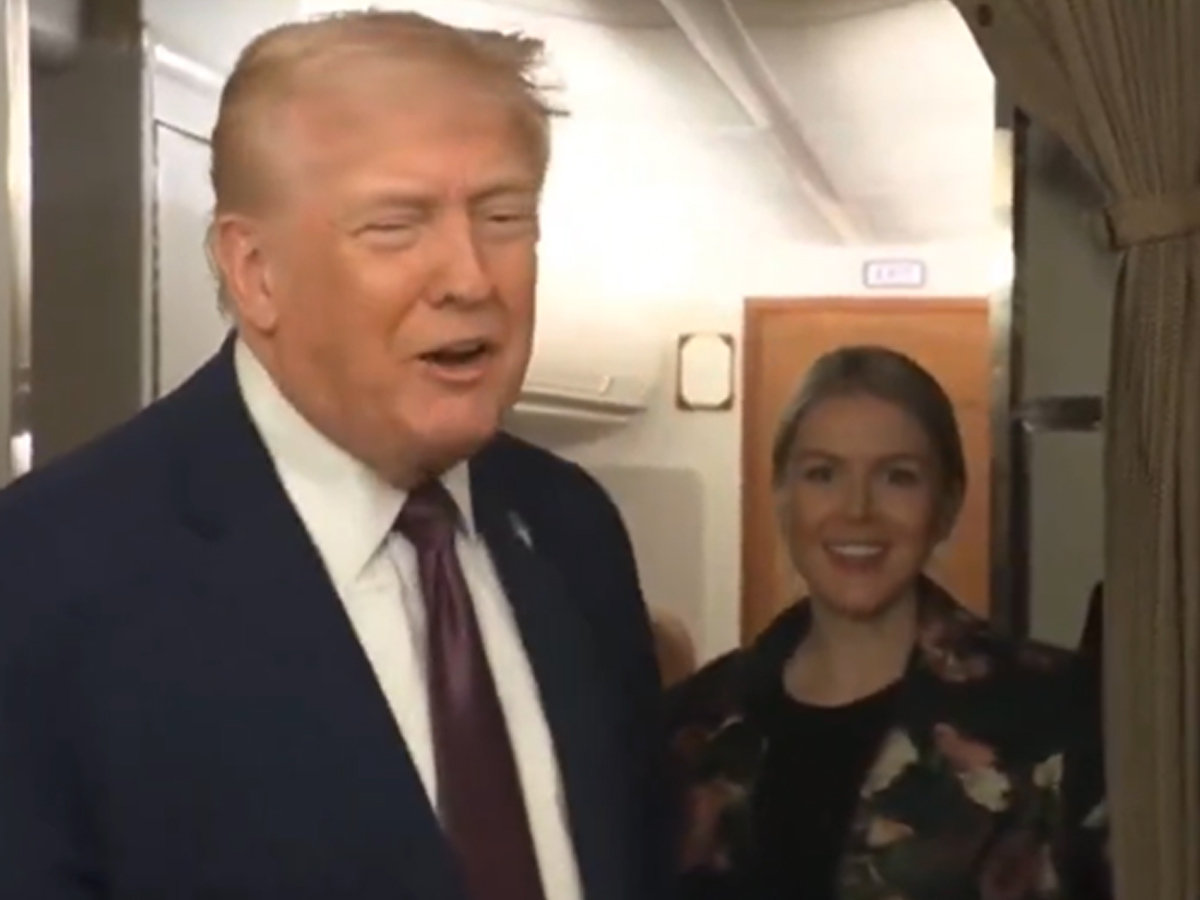
US President Donald Trump once again grabbed headlines, not for policy, but for an unusual comment about his White House press secretary, Karoline Leavitt, while aboard Air Force One on January 11. During a press gaggle mid‑flight, the plane hit unexpected turbulence, prompting Trump to joke about searching for something to hold onto. That’s when he made a remark involving Leavitt standing behind him.
He said, “I’m looking for something to grab here because it’s going to get rough. I don’t seem to be in a great… I think you did this to me. You put me in a position where there is absolutely nothing to grab. So I’m looking for something to grab, and it’s not going to be Karoline.”
🚨EXCLUSIVE: Trump interrupts a press conference on Air Force One because he’s afraid of falling as turbulence hits. Watch him struggle to find something to hold.
“I’m looking for something to grab, and it’s not going to be Karoline.” pic.twitter.com/JRQKO04AIv
— CALL TO ACTIVISM (@CalltoActivism) January 12, 2026
The clip of the exchange quickly spread online, adding to the string of headlines surrounding Trump’s comments about his press secretary, and raising questions about appropriateness and tone from the White House podium.
Previous Flirt: ‘Machine Gun Lips’ Comment That Sparked Backlash
This isn’t the first time Trump has made remarks about Leavitt that have ignited public reaction. Earlier, he offered lengthy praise for her physical appearance along with her professional role. He said, “She’s become a star. It’s that face. It’s that brain. It’s those lips, the way they move. They move like she’s a machine gun.”
That comparison to a “machine gun” drew immediate online criticism, with many calling the remark awkward or inappropriate given Leavitt’s position as a senior government official.
While speaking with the press on Air Force One, President Trump joked about replacing White House Press Secretary Karoline Leavitt, remarking that “those lips they move like a machine gun.” pic.twitter.com/G9SDNgT0X6
— New York Post (@nypost) October 14, 2025
Leavitt, who is 27/28 years old, holds the distinction of being the youngest White House press secretary in history, a spotlight that has kept her in the media narrative beyond typical press office duties.
How the Latest Comment Unfolded on Board Air Force One
The turbulence occurred while Trump was returning to Washington from his stay at Mar‑a‑Lago in Florida. As shaking intensified mid‑air, Trump turned toward reporters and surveyed the cabin, searching for something stable to grab. With no support nearby, he made the remark that included Karoline Leavitt’s name, prompting laughter from those around him.
While the comment was partly a light‑hearted attempt to break the tension caused by the rough flight, it also thrust Leavitt back into the spotlight, this time tied to an off‑record quip rather than policy discussion.
Who Is Karoline Leavitt? The Press Secretary at the Center of It All
Karoline Leavitt became White House press secretary in Trump’s second term after serving as a key communications figure in his 2024 campaign. At just 27, she made history as one of the youngest individuals to hold the position, leading daily press briefings and coordinating messaging between the White House and the press corps.
Her role often places her front and center during media interactions, making her a familiar face to reporters and television audiences alike. This visibility partly explains why comments about her—even off-hand ones—spark intense reaction across social media and news platforms.
Flirt with Karoline Leavitt: Tone and Leadership Perception
In today’s highly charged political environment, presidential remarks about subordinates’ appearance—especially noted publicly—resonate beyond simple humor. They can influence how the leadership tone is perceived both domestically and internationally. What might be intended as a joke can become a talking point about professionalism, respect, and presidential conduct.
Whether seen as playful banter or inappropriate commentary, Trump’s latest remarks about Karoline Leavitt underscore how even small moments during routine press interactions can generate fresh controversy and dominate headlines.




