
NEW DELHI: The near-collapse of India-Bangladesh relations in December 2025 did not stem from a single incident. Officials and analysts say these developments did not represent a sudden breakdown, but rather exposed long-standing weaknesses in India’s ability to anticipate political transitions in its neighbourhood. What unfolded in Bangladesh has drawn comparisons with earlier Indian setbacks in Sri Lanka and the Maldives. In each case, New Delhi underestimated domestic political churn, failed to get timely information, act on it, invested heavily in incumbent regimes, and failed to build institutional resilience against regime change. Seen in this context, the Bangladesh episode is increasingly being viewed within the strategic community as an institutional and strategic failure rather than a discrete diplomatic setback.
Official sources, serving and retired, said that what we are seeing today would not have happened if the watchers of such developments had given timely information to the North and South block so that appropriate steps could have been taken to prevent what happened in August 2024. India’s foreign policy architecture is not structured to consistently detect or respond to gradual political decay, according to former diplomats and security officials. The Ministry of External Affairs, intelligence agencies, and security institutions function in parallel silos, each focused on narrow mandates. Diplomatic reporting prioritises continuity and access to governments in power, intelligence assessments are heavily weighted towards security threats, and defence agencies focus on operational cooperation. Other indicators such as political legitimacy, public sentiment, elite fragmentation, and youth mobilisation often fall outside these formal reporting frameworks.
In Bangladesh, warning signs accumulated over several years, including shrinking political space, growing youth alienation and an economic pressure masked by headline growth figures. These indicators were visible but did not translate into strategic recalibration in New Delhi. One official familiar with internal assessments claimed that the issue was not a lack of information, but the absence of institutional mechanisms to treat the concerns as a core strategic variable. Sources said that reporting by embassies, by design, tends to be conservative. Maintaining access to incumbent governments remains a priority, creating incentives to frame instability as manageable and dissent as contained. As a result, suppressed opposition activity is often interpreted as neutralised opposition. By the time instability becomes unavoidable, strategic options are significantly narrowed.
These institutional constraints were reinforced by India’s leader-centric approach to neighbourhood diplomacy. India has been increasingly anchored its regional strategy to personal equations with incumbents, implicitly assuming regime durability. In Bangladesh, Sheikh Hasina became the central interlocutor for security cooperation, connectivity projects, and regional initiatives. Parallel engagement with opposition parties, emerging political actors, youth groups, and non-state power centres remained limited. Officials say this reflected a deliberate policy choice rather than oversight. Indian diplomacy has traditionally avoided structured engagement with opposition forces in neighbouring countries, citing concerns over non-interference and reputational risk.
The costs of this approach became apparent during political transition. Following Hasina’s exit, India found itself with few political buffers or alternative channels. Strategic investments accumulated over years were rapidly reframed domestically in Bangladesh as partisan, contributing to a sharp erosion of access and trust. Comparable dynamics were visible earlier in Sri Lanka, where India underestimated the depth of public anger and economic fragility under the Rajapaksa administration, and in the Maldives, where nationalist mobilisation against India was initially dismissed as fringe rhetoric before reshaping electoral outcomes.
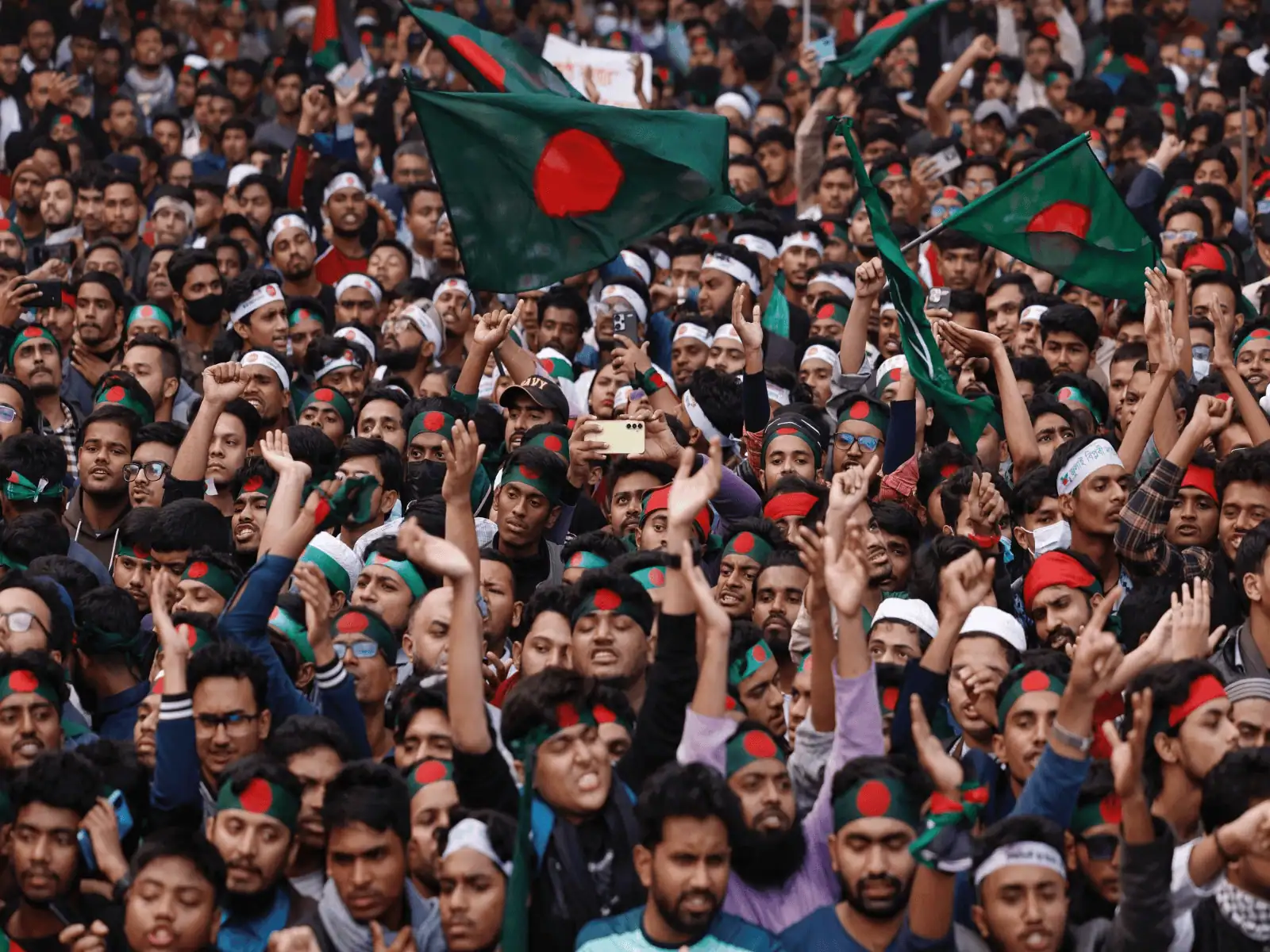
The developments of December 2025 marked the point at which these structural weaknesses became operationally visible. The shift from political uncertainty to direct bilateral disruption underscored how domestic instability had externalised into foreign policy. Protests and unrest in Bangladesh translated into security concerns around diplomatic facilities, reciprocal suspensions of visa and consular services, and a sharp contraction in routine diplomatic engagement. For some Indian officials, the episode has triggered internal reassessments about how neighbourhood risks are identified and managed. Bangladesh remains central to India’s eastern security architecture, connectivity to the Northeast, counter-terrorism cooperation, and Bay of Bengal strategy. The rapid deterioration of ties has therefore been interpreted not merely as a bilateral problem, but as a regional signal. Analysts note that India has demonstrated an ability to manage crises once they erupt. What the Bangladesh episode highlights is a persistent weakness in anticipating political transitions in neighbouring states.




