India-EU Trade Deal: European Commission chief says EU & India are "on the cusp" of a major trade pact. Here's what it covers, why it matters now, and its impact on key sectors.
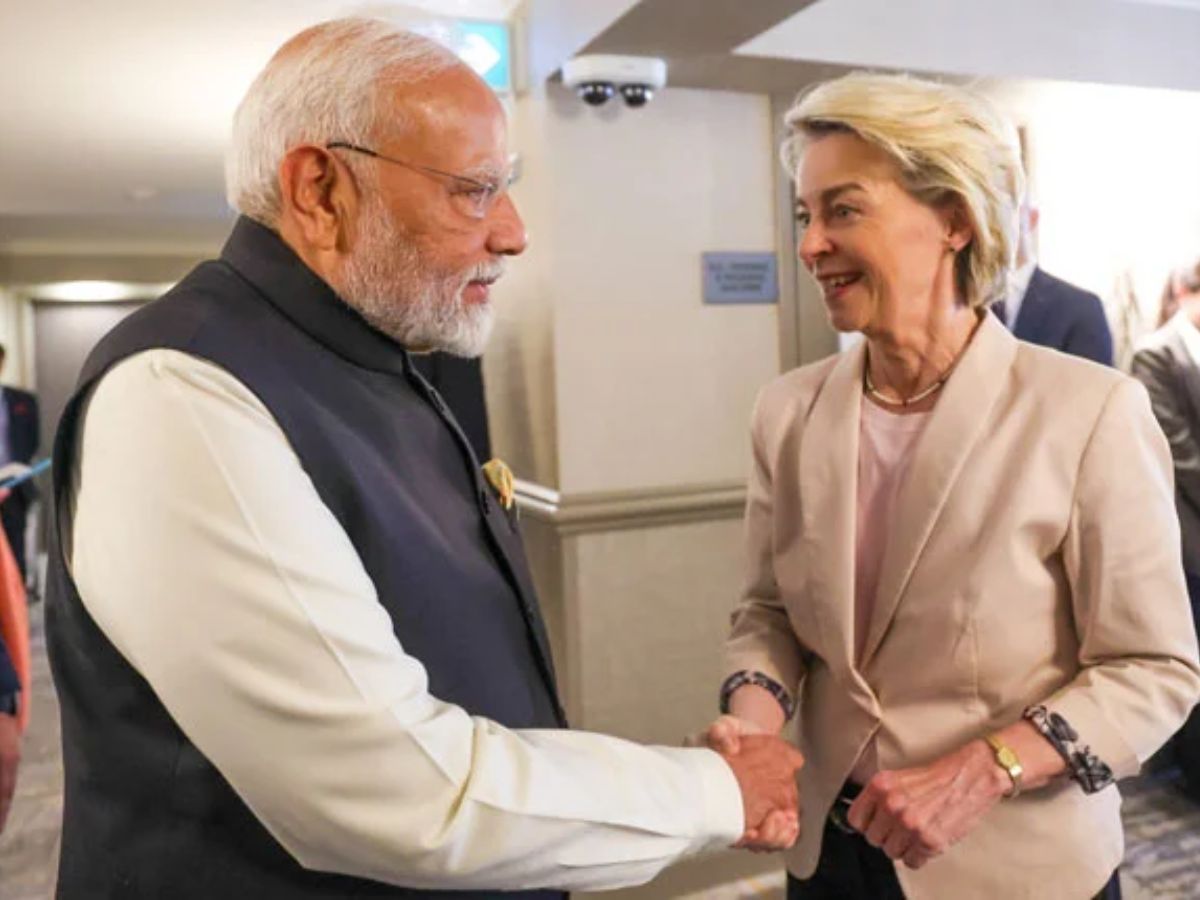
India and EU Close to Signing Trade Agreement, Says European Commission Chief (Image: X)
NEW DELHI, January 20 — European Commission President Ursula von der Leyen said the European Union is close to signing a major trade agreement with India. The deal, which some officials have called the “mother of all deals,” aims to create a vast new economic bloc linking two of the world’s largest markets.
Speaking at the World Economic Forum in Davos on Tuesday, von der Leyen confirmed her travel to India next week. “There’s still work to do, but we are on the cusp of a historic trade agreement,” she stated. She emphasized the deal would give the 27-member EU bloc a “first mover advantage” in one of the world’s fastest-growing regions. Both von der Leyen and European Council President António Costa will be chief guests at India’s Republic Day celebrations on January 26 and will co-chair the India-EU Summit on January 27.
The agreement would connect economies representing nearly a quarter of global GDP. It would create a combined market of around two billion people. Last week, India’s Commerce Minister Piyush Goyal also referred to the upcoming pact as the “mother of all trade deals,” noting it would be comprehensive and address both sides’ interests.
The push comes amid shifting global trade dynamics. A key factor is the shared economic challenge posed by China.While the EU aims to lessen its excessive reliance on China for vital technologies, India looks for alternatives to scale industries like solar energy. The deal also gains urgency as India’s trade pact with the United States remains uncertain and amid recent U.S. tariff threats on allies.
Talks for an India-EU trade deal first began in 2007 but stalled in 2013. Negotiations were re-launched in July 2022 and have progressed rapidly since. Commerce Secretary Rajesh Agarwal said last week that 20 of the 24 chapters in the agreement have been closed, with both sides aiming to conclude the deal before the EU leaders’ visit.
A: While not officially confirmed, senior officials indicate it could be finalized around the India-EU Summit on January 27, during the EU leaders' visit.
A: India primarily aims to boost exports in labour-intensive sectors like textiles, leather, and jewellery by securing better market access and lower tariffs in the EU.
A: In addition to maintaining secure supply chains, the EU aims to lower tariffs on its agricultural products, such as wine and cheese, and industrial items, particularly autos.
A: Strained ties with China and evolving U.S. trade policies are present geopolitical and economic factors driving political momentum to address unresolved issues.
