
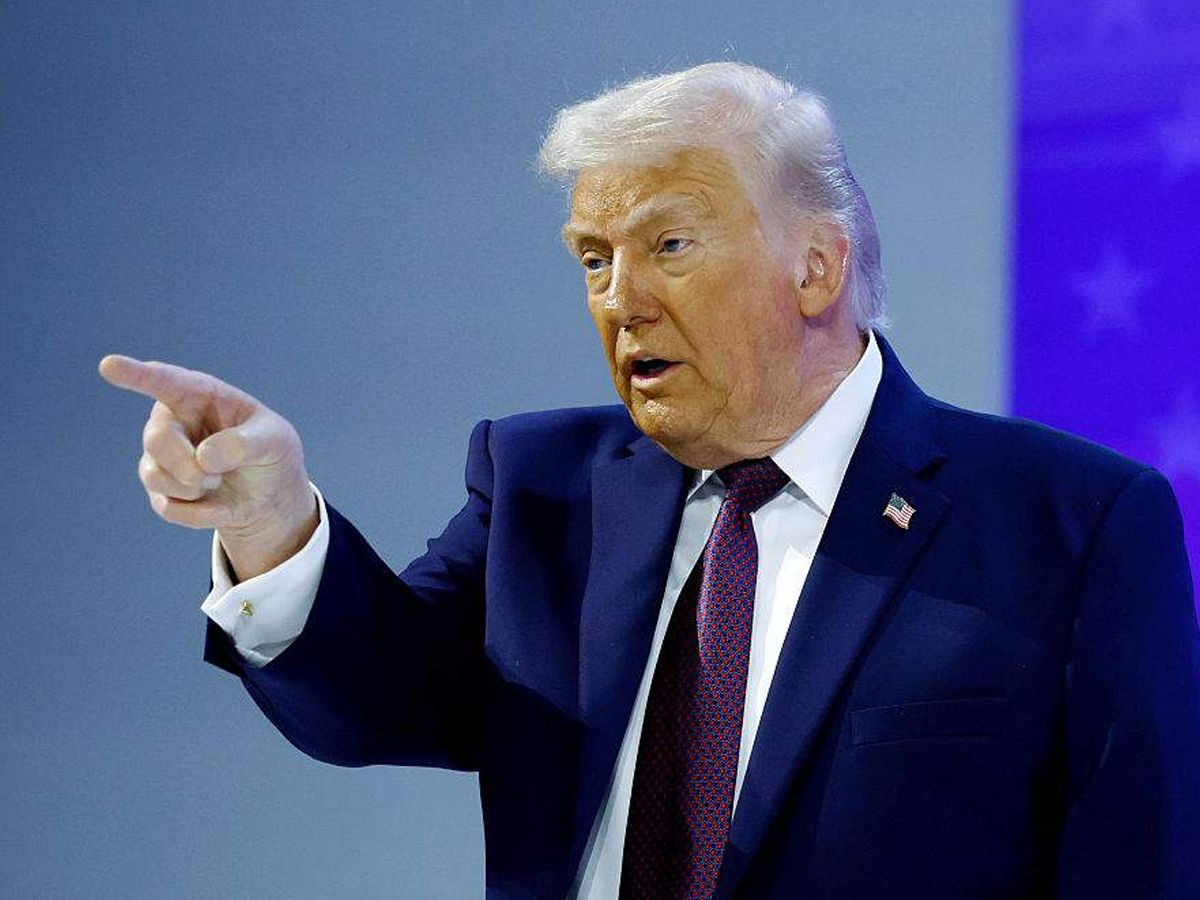
US President Donald Trump on Wednesday once again claimed that he played a decisive role in stopping a military escalation between India and Pakistan, telling American lawmakers that his intervention prevented what he described as a possible nuclear war between the two neighbours.
Speaking during his State of the Union address before Congress, Trump said tensions between New Delhi and Islamabad could have spiralled out of control without US involvement. He portrayed himself as a central figure in halting the conflict that followed the deadly terror attack in Jammu and Kashmir last year.
What Trump Said About India-Pakistan Conflict
Addressing members of Congress, Trump made sweeping claims about the gravity of the situation and the impact of his actions.
“Pakistan and India would have been in a nuclear war,” Trump said, adding that “35 million people, said the Prime Minister of Pakistan (Shehbaz Sharif), would have died if it were not for my involvement.”
The US President asserted that his administration used economic pressure to push both sides toward de-escalation, though he did not provide details of any direct negotiations.
What Triggered the India-Pakistan Standoff?
Trump was referring to the military confrontation that followed the Pahalgam terror attack on April 22, 2025, in which 26 civilians were killed. The attack triggered strong retaliation from India.
In response, India launched Operation Sindoor, carrying out targeted strikes on terror infrastructure in Pakistan-occupied Kashmir (PoK) and inside Pakistan. The four-day confrontation raised alarm across the region and internationally, given that both countries possess nuclear weapons.
A ceasefire understanding was eventually reached on May 10, bringing an end to hostilities along the Line of Control.
Trump’s Repeated Mediation Claims
Since the May 2025 standoff, Trump has repeatedly claimed credit for stopping the conflict. In recent months alone, he has made the assertion more than 80 times in speeches and public events.
Earlier last week, speaking at his Board of Peace event, Trump again insisted that he had forced both sides to step back by threatening economic consequences.
“…I called them, and I said, listen, I’m not doing trade deals with you two guys if you don’t settle this up… And all of a sudden, we worked out a deal. I said, if you fight, I’m going to put 200 per cent tariffs on each of your countries,” he said.
Trump has also made varying claims about fighter jets being shot down during the hostilities, though he has never clarified which country’s aircraft he was referring to.
India Rejects Third-Party Mediation Narrative
India has consistently rejected Trump’s version of events. New Delhi has maintained that the ceasefire understanding reached on May 10 came through direct communication between India and Pakistan, without any external mediation.
Indian officials have reiterated that India does not accept third-party involvement in bilateral issues with Pakistan, including matters related to security and military de-escalation.
This position aligns with India’s long-standing diplomatic stance that disputes with Pakistan must be resolved bilaterally under existing agreements.
Why Trump’s Statement Matters Now
Trump’s remarks come at a time when global focus remains on geopolitical flashpoints and nuclear risk. His comments also resonate politically in the US, where foreign policy achievements often feature prominently in major speeches.
By repeating the India-Pakistan claim in a high-profile forum like the State of the Union, Trump has once again brought international attention to an issue where Washington’s role remains contested by New Delhi.




