Newly released Epstein documents reveal an Indian victim and show US authorities trying to contact her through the embassy to seek compensation from a victims’ fund.
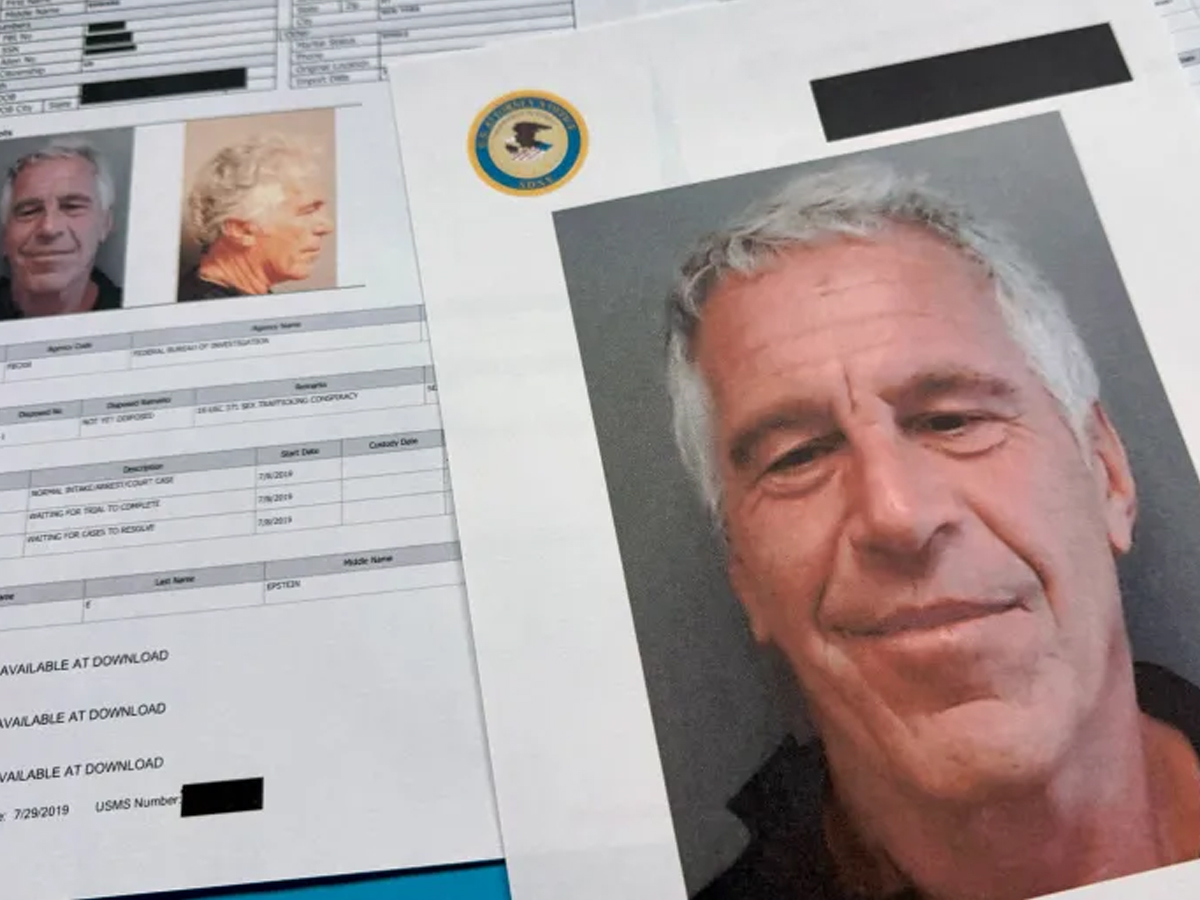
According to an internal US government email titled “Epstein Victims,” officials discussed the need to locate an individual believed to be living in India. (Photo: AP)
Newly disclosed documents from the Jeffrey Epstein investigation have shed light on the global reach of his abuse network, revealing that one of his victims may be an Indian woman and that US authorities were trying to locate her to provide compensation. The development emerged from a heavily redacted email dated January 13, 2020, which discusses coordination with officials in India to trace the woman’s address and contact information.
The message highlights that investigators were looking to use the New York Crime Victims Compensation programme to support victims, including therapy and other assistance. This revelation has sparked renewed discussion about the international scope of the Epstein files and the challenges in ensuring justice and support for survivors worldwide.
According to an internal US government email titled “Epstein Victims,” officials discussed the need to locate an individual believed to be living in India. The email instructed colleagues to contact the US embassy in India once the victim’s details were available. “If you can get me her address and contact information, I will coordinate with our colleagues at the embassy there,” the message states.
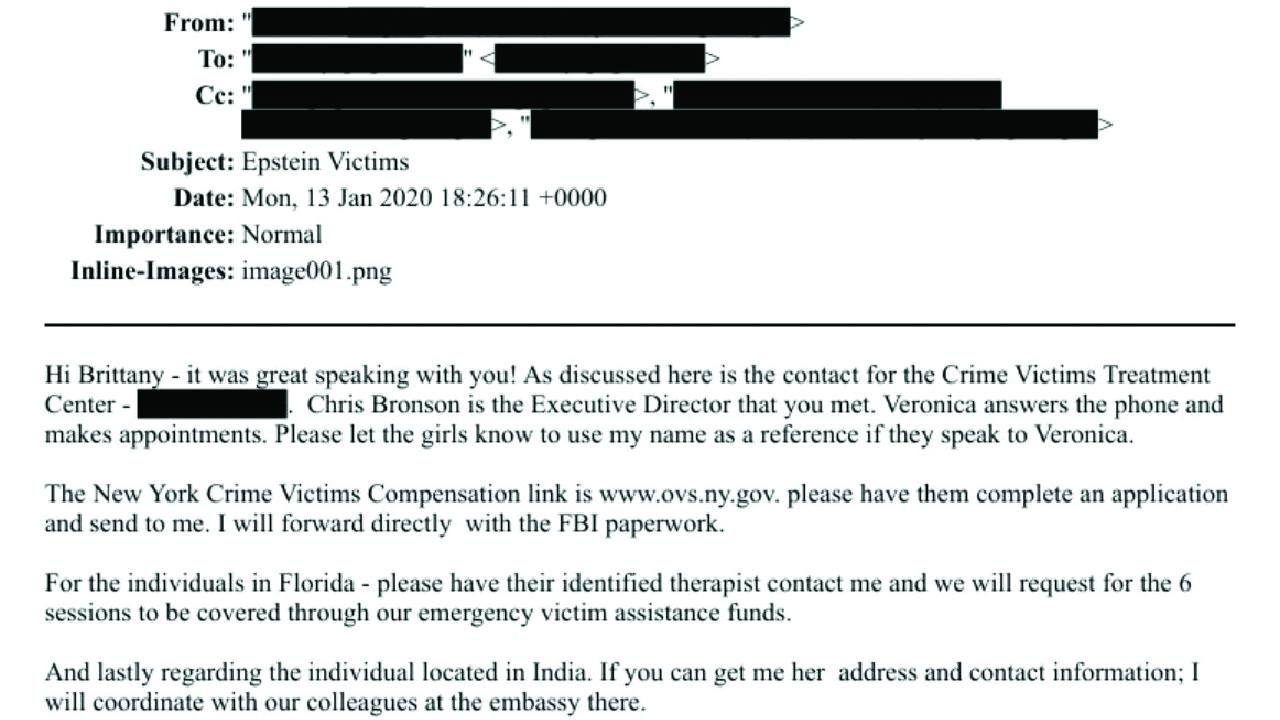
Key personal information about the Indian victim was blacked out in the released documents, making her identity unknown. However, the fact that authorities mentioned specific plans to reach out to the embassy suggests serious efforts to ensure she was informed of her rights and possible compensation. Officials also referenced support mechanisms, including therapy sessions under emergency victim assistance.
Experts say the Supreme Court‑mandated Epstein Files Transparency Act required the US Department of Justice to make previously confidential records public, leading to the release of more than 3.5 million pages of material. This vast archive contains emails, internal memos, and correspondence that point to the international dimension of Epstein’s abuse network.
The recently released Epstein documents indicate that one of the victims may be an Indian woman, though her identity has not been publicly revealed due to privacy redactions. US authorities, as shown in internal emails, were actively trying to locate her to provide access to the New York Crime Victims Compensation fund and emergency support services, including therapy.
The email instructs officials to coordinate with the US embassy in India to obtain her contact details, highlighting the government’s effort to ensure that international victims of Epstein’s abuse network are not overlooked.
While the documents do not provide personal details, the reference confirms that Epstein’s exploitation extended beyond the United States, affecting victims in other countries as well.
The New York Crime Victims Compensation programme is a government fund designed to help victims of violent crimes recover certain costs, including medical and counselling support. According to the email, authorities were urging lawyers and victim advocates to guide the India‑based victim through the application process and forward necessary paperwork to the Federal Bureau of Investigation (FBI) for review.
The compensation plan also includes financial coverage for emergency counselling and therapy. While details in the Epstein files remain redacted, the reference indicates that officials wanted to ensure the individual in India could apply for both monetary compensation and mental health support, much like other documented survivors of Epstein’s abuse network.
The revelation of an Indian connection in the Epstein files underscores that the abuses and exploitation extended beyond any single country or region. Investigators’ willingness to collaborate with the US embassy in India highlights the effort to ensure that no victim is overlooked, regardless of where they now live.
Public reaction has been mixed, with some observers expressing support for survivors’ access to justice and compensation, and others urging caution due to heavy redactions and incomplete context. What remains clear is that the latest batch of federal documents continues to reshape understanding of the long‑running Epstein scandal.
As authorities and advocates work to track down individuals mentioned in the files, the international dimension of one of the most controversial abuse cases of recent decades continues to unfold.
