IndiGo Delhi–Manchester flight turns back after 7 hours due to Middle East airspace restrictions amid Iran-US-Israel conflict, highlighting aviation disruption.
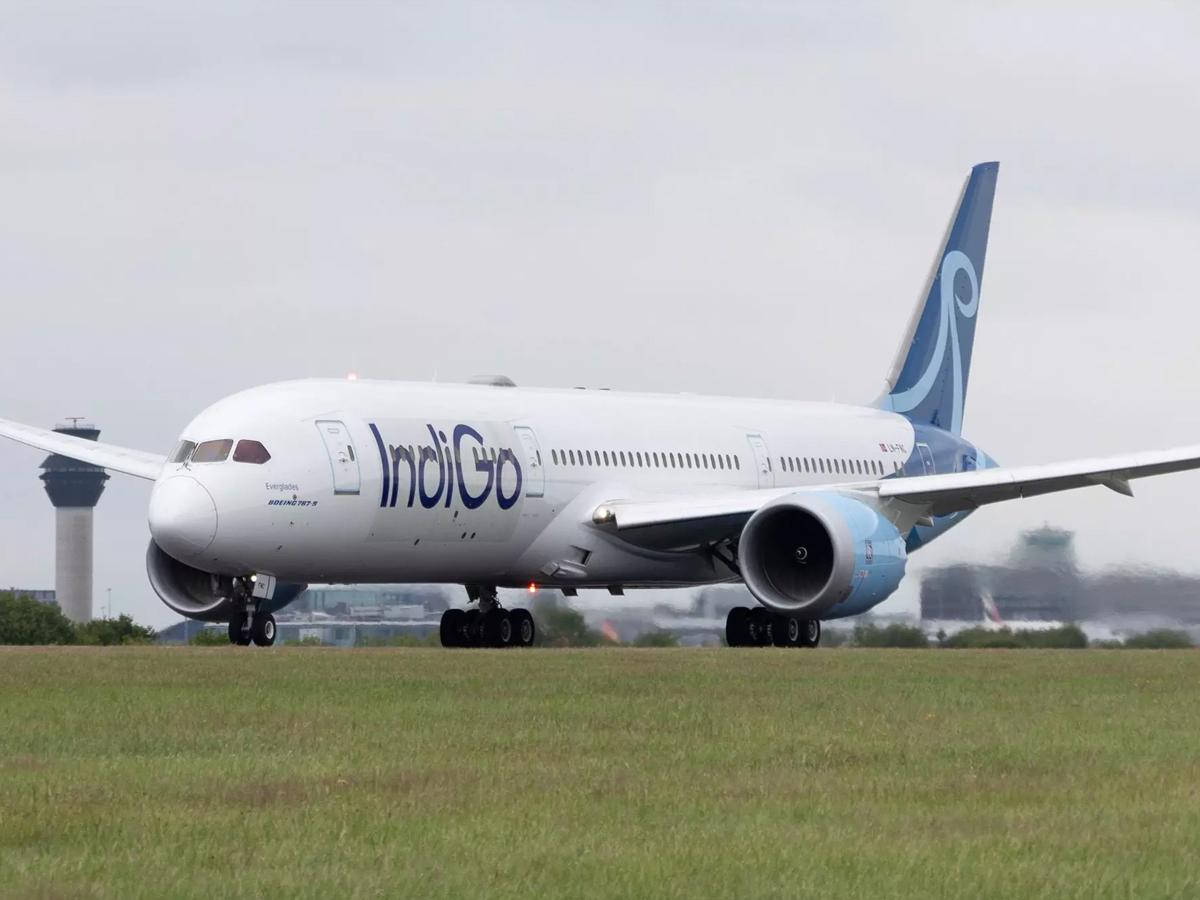
The IndiGo flight, operating between New Delhi and Manchester, had already travelled thousands of kilometres before the crew decided to turn around. (Photo: Social Media)
Passengers travelling from New Delhi to Manchester faced an unexpected disruption on Monday when their long-haul flight had to return to India after spending nearly seven hours in the air. The IndiGo flight was forced to make a mid-air U-turn because of sudden airspace restrictions linked to the ongoing conflict in West Asia.
The incident highlights how the growing military tensions in the Middle East are now affecting global aviation routes. Airlines operating flights between Asia and Europe have started facing major challenges as several countries restrict access to their airspace due to security concerns.
The IndiGo flight, operating between New Delhi and Manchester, had already travelled thousands of kilometres before the crew decided to turn around.
According to flight tracking data, the aircraft changed course near the border between Ethiopia and Eritrea after authorities issued last-minute restrictions affecting the flight path.
IndiGo flight 6E33 (operated by Norse) made a U-turn on the border between Ethiopia and Eritrea and is returning to Delhi.
— Flightradar24 (@flightradar24) March 9, 2026
This was the first IndiGo Delhi - Manchester flight since the 26th of Feb. pic.twitter.com/McCeAUd2tS
The plane is now heading back to the Indian capital after being unable to continue toward Europe due to the evolving security situation.
The airline confirmed the development in an official statement.
“Due to the evolving situation in and around the Middle East, some of our flights may take longer routes or experience diversions. Our flight 6E 033 operating from Delhi to Manchester had to return to its origin due to last-minute airspace restrictions, owing to the ongoing situation in West Asia. We are working with the relevant authorities to explore the possibilities of resuming the journey. As always, the safety and security of our customers, crew, and aircraft is of utmost importance to us."
The disruption comes as the conflict in West Asia continues to intensify. The war began on February 28, when the United States and Israel launched coordinated strikes on Iranian military and government facilities.
Since then, Iran has responded with missile and drone attacks targeting American military bases across several Gulf countries.
The conflict has affected airspace in parts of the Middle East, forcing airlines to adjust routes to avoid potential danger zones.
As a result, many flights between Asia and Europe are taking longer paths that bypass the region.
Airspace closures in the Middle East have created major challenges for airlines operating long-haul flights.
Countries such as Oman, Qatar, the United Arab Emirates, and Bahrain have witnessed military activity linked to the ongoing conflict. Some governments have imposed temporary flight restrictions to ensure civilian aircraft avoid areas of potential military operations.
Because of these restrictions, airlines are often forced to make last-minute route changes, diversions, or even cancel flights altogether.
In some cases, aircraft may not have enough fuel to safely follow alternative routes after reaching a certain point in their journey. This can lead to decisions like turning back to the departure airport.
Aviation experts say airlines prioritise passenger safety above all other considerations when conflicts affect flight paths.
If pilots receive updated information about potential risks in the airspace ahead, they may be instructed to change course or return to the origin airport.
The IndiGo Delhi–Manchester flight incident shows how geopolitical tensions can quickly disrupt international travel, even thousands of kilometres away from the actual conflict zone.
For now, airlines continue to monitor the situation closely while coordinating with aviation authorities to maintain safe flight operations as tensions in West Asia remain high.
