After Ali Khamenei’s reported death, Hassan Khomeini emerges as a potential successor. Can the grandson of Iran’s founder become the next Supreme Leader?
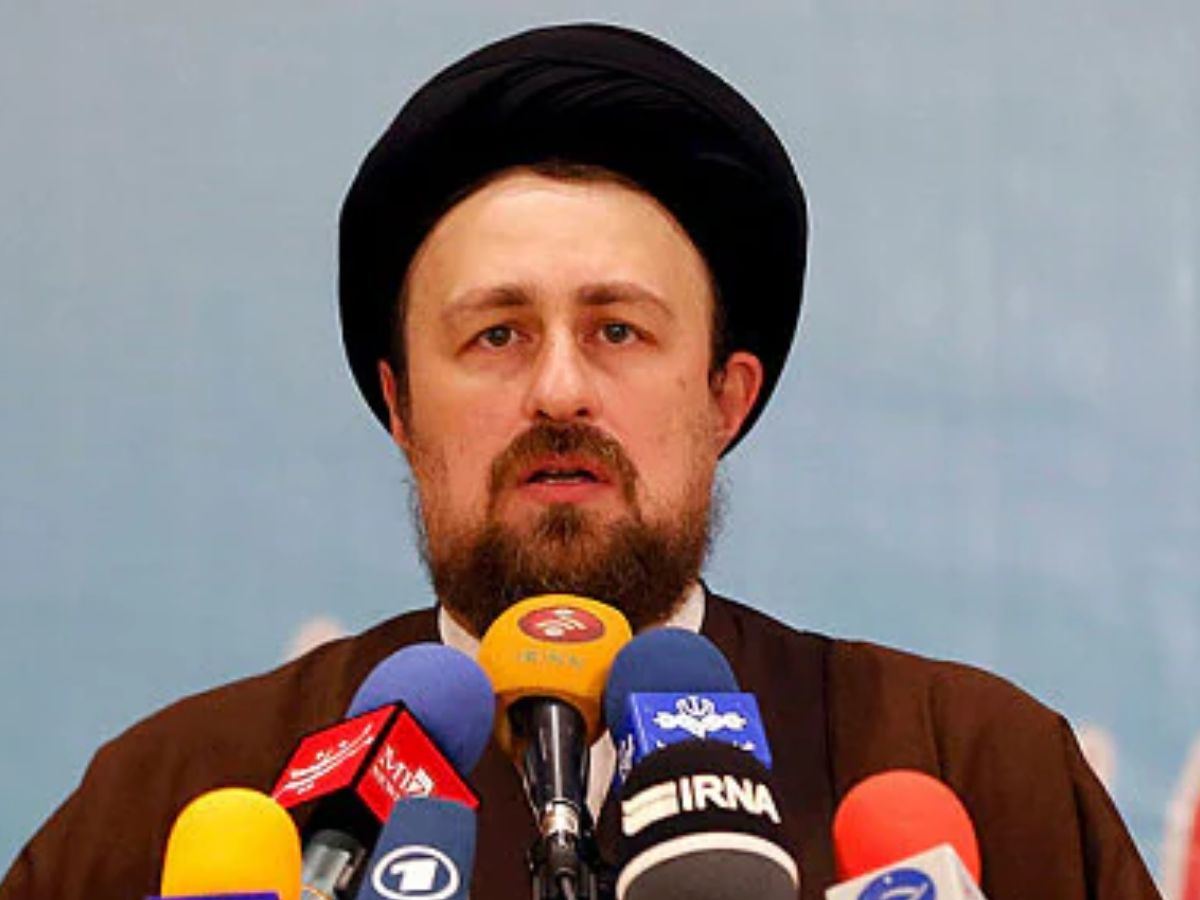
After Ali Khamenei’s reported death, Hassan Khomeini emerges as a potential successor [Photo: X]
Iran stands at a historic political crossroads after the reported death of Supreme Leader Ali Khamenei. With tensions escalating and uncertainty gripping the Islamic Republic, attention has shifted to possible successors. Among the most discussed names is Hassan Khomeini, the grandson of revolutionary leader Ruhollah Khomeini.
Though he has never held a formal government office, Hassan Khomeini’s lineage, religious credentials and political positioning have placed him at the centre of speculation.
Iran’s next Supreme Leader will be chosen by the Assembly of Experts. While Hassan Khomeini’s revolutionary lineage and reformist ties make him a compelling figure, his path remains uncertain.
Hardliners may resist his rise, particularly if they favour Mojtaba Khamenei or another conservative cleric. Yet, in a time of internal unrest and geopolitical pressure, some within Iran’s establishment may see value in a figure who bridges reformist and conservative camps.
For now, Hassan Khomeini remains one of the most closely watched figures in Iran’s succession debate, balancing legacy, reformist sympathy, and institutional loyalty.
Born on July 23, 1972, Hassan Khomeini is an Iranian cleric and the most prominent grandchild of Ayatollah Ruhollah Khomeini, who founded the Islamic Republic after the 1979 revolution. He has served for decades as the custodian of his grandfather’s mausoleum in Tehran and is widely recognised within Iran for both his religious education and connections to reformist circles.
Unlike many clerics who rise through formal political ranks, Hassan’s influence stems from his religious pedigree and symbolic legacy. He remains a mid-ranking cleric with the title of Hojatoleslam, one step below Ayatollah — a fact that previously curtailed his political ambitions.
Hassan has long been seen as a moderate figure within Iran’s establishment, balancing ties between conservative religious circles and reformist thinkers. He has worked closely with figures like former presidents Mohammad Khatami and Hassan Rouhani, who supported engagement with the West and domestic reforms.
This moderate reputation has led many observers to view Hassan as a possible counterweight to hardline successors, especially compared to Mojtaba Khamenei, the late leader’s son, who carries strong support among conservative factions but faces criticism over the idea of hereditary succession in the Islamic Republic.
Hassan’s position could appeal to Iranians seeking a less oppressive leadership style after years of internal unrest and economic hardship.
Unlike some establishment clerics, Hassan Khomeini has occasionally voiced criticism of the system. In 2021, when reformist candidates were barred from contesting the presidential election, he publicly objected, saying, "You can't pick someone for me and tell me to vote for them!"
Following the 2022 death of Mahsa Amini in police custody, he called for transparency and accountability. Authorities "must transparently and precisely account for what has happened to this 22-year-old girl under the pretext of 'guidance and education'," he said.
However, Hassan has also shown loyalty to the system’s core structure. During anti-regime protests, he criticised demonstrators who chanted against Khamenei and accused rioters of serving Israel. After the Supreme Leader’s death, he described him as someone who would forever "be the hero of the people of Iran and Muslims".
He added, "The noble people of Iran will once again walk the path of the Imam (Khomeini) by overcoming this incident." These positions suggest he balances reformist sympathy with clear loyalty to the Islamic Republic.
Hassan Khomeini once attempted to enter formal politics. In 2016, he sought a seat in the Assembly of Experts, the powerful clerical body responsible for selecting the Supreme Leader. Although he initially received informal backing, the Guardian Council later disqualified him, reportedly questioning his clerical rank.
He holds the title of Hojatoleslam, one step below Ayatollah, which some hardliners argued was insufficient for higher authority.
In 2008, he also appeared to criticise the political involvement of the Islamic Revolutionary Guard Corps (IRGC), stating that those loyal to his grandfather’s legacy must ensure the military does not interfere in politics. Despite this, he maintains working relationships with key institutions, including the IRGC.
His past exclusion from the Assembly of Experts highlights the resistance he may face from conservative power centres.
Immediately after Khamenei’s death, Iran’s constitution activated a temporary solution. A three-member Interim Leadership Council took control, including President Masoud Pezeshkian, judiciary chief Gholam-Hossein Mohseni-Eje’i, and senior cleric Ayatollah Alireza Arafi. Arafi’s role gives him significant influence in this transitional period.
Arafi serves as a representative of the Guardian Council and brings his deep clerical credentials and long tenure overseeing seminaries and the Assembly of Experts. His interim position positions him as a key figure until a permanent successor is chosen.
Supporters describe Hassan as a progressive theologian, especially on issues such as music, women’s rights and social freedoms. He engages with Western philosophy alongside Islamic scholarship and reportedly follows social media trends.
Fluent in Arabic and English, he once dreamed of playing football before his grandfather encouraged him to pursue religious studies in Qom at 21. He is married to Sayyeda Fatima, the daughter of an Ayatollah, and they have four children.
His blend of modern outlook and traditional religious credentials gives him a unique profile within Iran’s clerical elite.
