
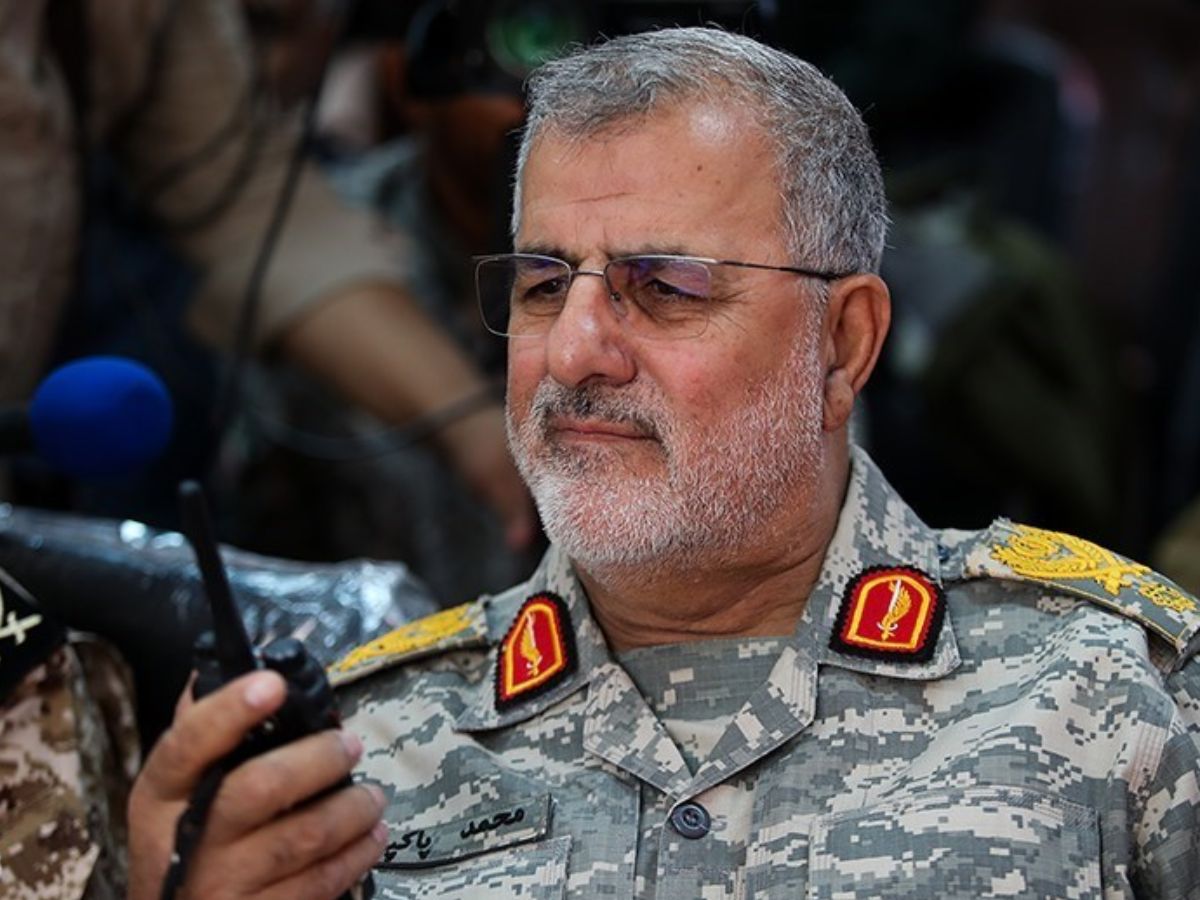
The Iran-Israel war entered a more volatile phase after Israeli officials assessed that senior Iranian military leaders were likely killed in fresh strikes on Iranian targets. Among those reportedly killed is the chief of Iran’s Islamic Revolutionary Guard Corps (IRGC), Gen. Mohammad Pakpour.
While Iran has not officially confirmed the reports, the claims have intensified regional tensions and triggered warnings of possible retaliation across the Middle East and beyond. The developments come amid growing fears that the conflict could widen, with Iran-backed groups threatening American military bases and Israel issuing urgent security advisories to its citizens worldwide.
Iran-Israel Tensions: IRGC Chief Mohammad Pakpour Killed in Strikes
Israeli officials believe that Gen. Mohammad Pakpour, the commander of the IRGC, was likely killed during coordinated strikes on Iranian military facilities. Intelligence assessments suggest he was present at one of the targeted locations when the attack occurred.
Pakpour had taken charge of the IRGC after Israel killed his predecessor, Hossein Salami, at the beginning of the June 2025 war. His leadership played a key role in overseeing Iran’s regional military strategy, including missile and drone operations.
Officials also assessed that Iran’s minister of defence and chief of intelligence may have been killed in the same wave of strikes. However, Iranian authorities have not confirmed these claims, and the Israeli Defence Forces have not issued final verification.
Reports further indicate that several high-ranking Iranian figures were targeted, including Supreme Leader Ali Khamenei and President Masoud Pezeshkian. The outcome of those specific strikes remains unclear.
Who is Mohammad Pakpour?
Gen. Mohammad Pakpour served as one of Iran’s top military commanders and headed the powerful Islamic Revolutionary Guard Corps. The IRGC operates separately from Iran’s regular army and plays a central role in the country’s defence strategy, intelligence operations, and regional influence.
Pakpour built his reputation within the Guard through decades of service. He oversaw strategic planning, coordinated with allied militia groups across the region, and managed missile capabilities that formed a core part of Iran’s deterrence strategy.
Under his command, the IRGC expanded its influence across Iraq, Syria, Lebanon, and other parts of the Middle East. His reported death would mark a significant blow to Iran’s military leadership structure.
Iran-Israel Tensions: Pro-Iran Iraqi Militia Accuses US of Bombing
The conflict expanded further when a pro-Iran Iraqi militia accused the United States of carrying out an airstrike on one of its facilities. Kataeb Hezbollah claimed that US forces targeted an Iraqi military base housing members of the group.
The militia strongly condemned the strike and warned of retaliation. It declared that it would “soon start assaulting American bases in response to their attacks.”
The statement raised serious concerns about the safety of US troops stationed in Iraq and neighbouring countries. American military installations have previously faced rocket and drone attacks from Iran-backed groups during periods of heightened tensions.
US officials have not released detailed information about the alleged strike, but security levels at American bases across the region remain high.
Iran-Israel Tensions: NSC Tells Israelis Abroad to Take Precautions
Amid fears of possible attacks outside the Middle East, Israel’s National Security Council issued a strong advisory to Israelis travelling or living abroad. “The escalation with Iran increases the likelihood that the Iranian regime will intensify efforts to carry out terrorist attacks abroad against Israeli/Jewish targets, starting immediately,” the council stated.
“In addition, and based on experience, the motivation to harm Israelis abroad may also increase among other terrorist elements, alongside local initiatives (including lone attackers),” the NSC warned.
Authorities urged Israelis to avoid sharing real-time travel details on social media and to stay away from public events identified with Israel or Judaism unless security arrangements are in place. The advisory also encouraged citizens to remain alert and report suspicious activities to local law enforcement.
Iran-Israel Tensions: What This Means for the Iran-Israel War?
If confirmed, the death of a senior IRGC commander could significantly escalate the Iran-Israel conflict. Such a development would likely prompt a strong response from Tehran, either directly or through allied militia groups operating across the region.
Threats from Iraqi militias against American bases also suggest that the confrontation could widen beyond Israel and Iran. Military analysts warn that any retaliatory strikes on US assets may further deepen regional instability.
As both sides continue to assess damage and issue warnings, the situation remains highly unpredictable. Diplomatic efforts to reduce tensions face growing challenges as military actions and threats intensify across multiple fronts.




