Iran-Israel Tensions: Iran apologizes to Gulf states but launches fresh strikes on US bases in UAE and Bahrain as Middle East war enters second week. Israel hits Lebanon, Trump rejects apology.
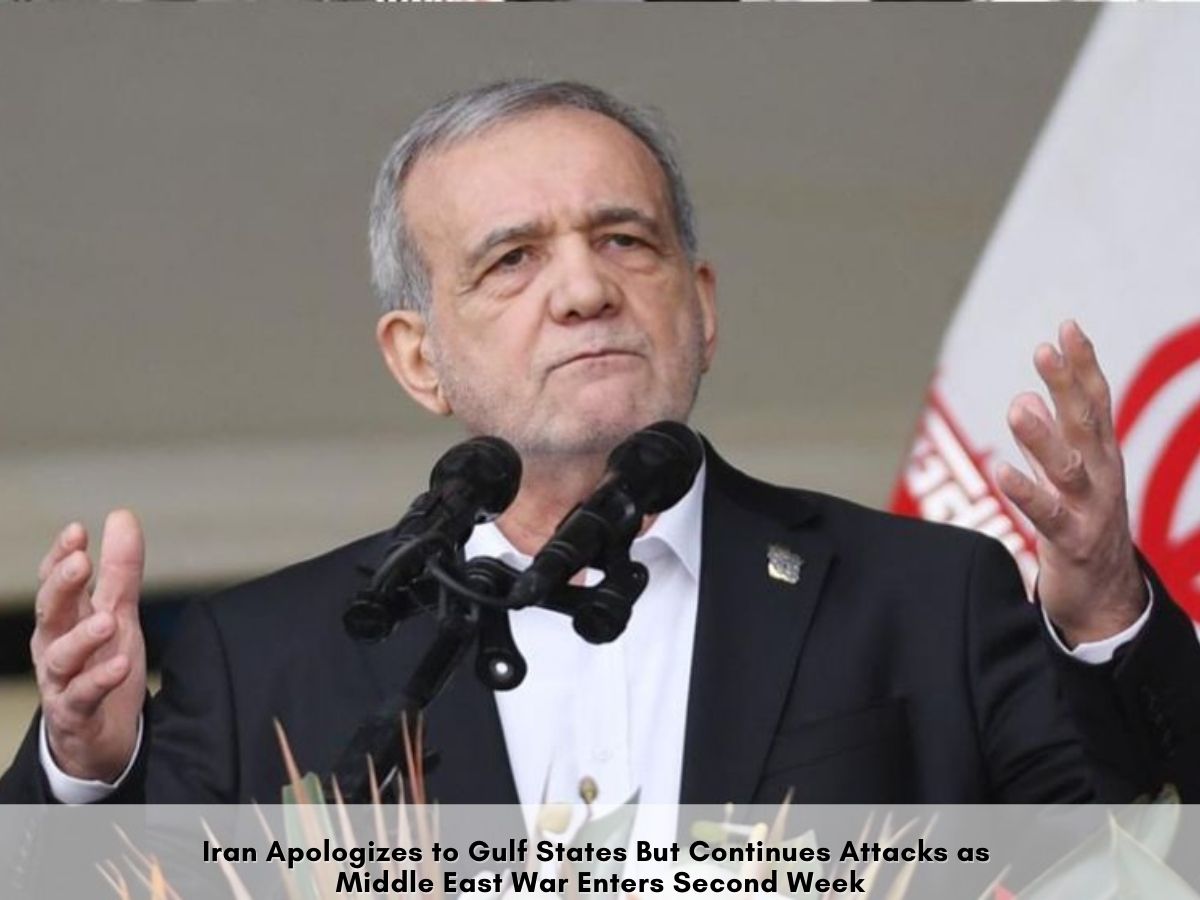
Iran Apologizes to Gulf Neighbors—Then Launches Fresh Strikes (Image: File)
Iran's President Masoud Pezeshkian stunned the region Saturday with a personal apology to Gulf neighbors battered by Tehran's missiles, even as Israeli jets pounded Tehran and Revolutionary Guards drones screamed toward American bases in the UAE and Bahrain. The extraordinary gesture—coming after a week of civilian strikes that enraged Abu Dhabi, Riyadh, and Doha—promised a pause in attacks unless US-Israeli fire came from their soil. But hours later, explosions rocked Al Dhafra Air Base and Bahrain facilities, exposing the razor-thin line between diplomacy and defiance.
Pezeshkian addressed "neighbouring countries affected by Iran's actions," urging them to reject joining the US-Israeli offensive that killed Supreme Leader Ayatollah Ali Khamenei. His temporary leadership council suspended strikes on nearby states, calling Trump's unconditional surrender demand "a dream." Gulf capitals, reeling from hotel and port hits despite neutrality, heard the words warily—years of mended fences with former rival Saudi Arabia now tested by rubble and outrage.
Hardline cleric Hamid Rasai branded the stance "unprofessional, weak and unacceptable" on X, as judiciary chief Gholamhossein Mohseni-Ejei vowed heavy retaliation against countries hosting US strikes. Hours after the announcement, Revolutionary Guards claimed drone hits on Al Dhafra near Abu Dhabi and Bahrain bases—blasts echoed in Doha too. State media couldn't hide the fracture: a president seeking de-escalation, commanders chasing vengeance.
UAE officials demanded immediate end to "aggression against the Gulf states," insisting Tehran hurts only itself by attacking its neighborhood. Qatar, Bahrain, Kuwait, Oman, Saudi Arabia, and Iraq all reported drone and missile strikes despite neutrality. An Emirati voice captured the fury: "We don't want the war to expand." Civilian infrastructure—hotels, ports, oil facilities—bore the brunt, shattering recent diplomatic thaws.
Israel warned Lebanon of "very heavy price" if Hezbollah isn't reined in, leveling Beirut southern suburbs where a toddler's toy car lay amid smoking rubble. Death toll hit 294 since Monday's barrage followed evacuation orders. Israeli jets meanwhile hammered Tehran and Isfahan, intercepting eight Iranian missile waves Saturday that triggered nationwide sirens. The multi-front inferno showed no containment.
Iran's UN ambassador tallied 1,332 civilian deaths from US-Israeli strikes, thousands wounded. Iranian retaliation killed 10 Israelis, six US service members. Early Saturday, Iranian navy drones targeted Israel plus US points in Abu Dhabi, Kuwait; Revolutionary Guards sank a Marshall Islands tanker in Hormuz. Trump boasted sinking 42 Iranian ships in three days, rejected by Iran's envoy who vowed leader selection "without foreign interference."
A: Pezeshkian apologized to Gulf neighbors hit by strikes, suspended attacks unless strikes originate from their territory.
A: Al Dhafra Air Base UAE, Bahrain facilities; blasts also reported in Doha.
A: 294 Lebanese since Monday per health ministry after heavy Beirut suburb bombardment.
A: 1,332 killed, thousands wounded per UN ambassador Amir Saeid Iravani.
Disclaimer: This information is based on inputs from news agency reports. TSG does not independently confirm the information provided by the relevant sources.
