Burj Khalifa evacuated after Iranian missile strikes in UAE. Explosions reported in Dubai as tensions rise between Iran, US and Israel in Middle East conflict.
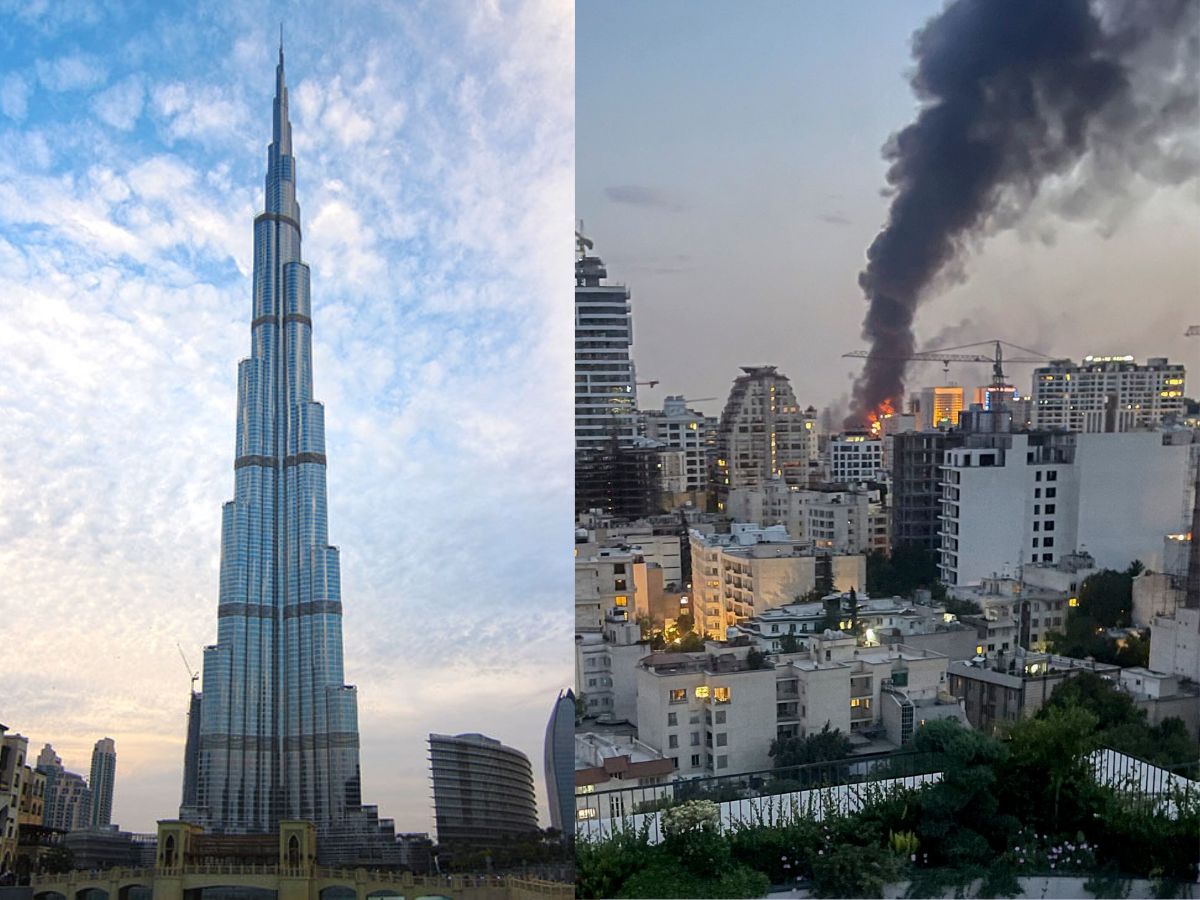
Burj Khalifa evacuated after Iranian missile strikes in UAE [Photo: X]
A major security scare unfolded in Dubai on Saturday after explosions were reported across parts of the city, prompting authorities to evacuate the Burj Khalifa as a precaution. The incident came amid rapidly escalating tensions in the Middle East following Iran’s large-scale missile response targeting US military positions in the region.
Residents reported hearing loud blasts, while emergency services rushed to central Dubai and other sensitive locations. Officials tightened security across the UAE as fears grew that the widening confrontation between Iran, the United States and Israel could spill further into Gulf nations.
Authorities cleared visitors and staff from the Burj Khalifa, the world’s tallest building, after reports of missile activity and explosions nearby triggered emergency protocols. Police cordoned off surrounding streets and advised residents to remain calm while investigations continued.
Iran launched what it described as a retaliatory missile operation targeting US-linked military infrastructure in the Gulf. Air defence systems reportedly activated in parts of the UAE as sirens sounded in several areas. While officials have not confirmed direct damage to the tower, the evacuation highlighted the seriousness of the alert.
Airspace monitoring increased across the country, and some flight schedules experienced temporary disruption as security agencies assessed the situation.
Iran initiated the missile strikes following heightened military exchanges involving US and Israeli forces. Tehran signalled that it intended to respond firmly to actions it viewed as hostile against its territory and strategic interests.
The UAE hosts American military assets under longstanding defence agreements. Analysts believe Iran aimed to send a strong message by targeting areas linked to US operations in the Gulf region. By expanding its retaliation beyond immediate borders, Iran demonstrated its capacity to influence regional security dynamics.
The strike marked a significant escalation in an already volatile standoff, raising concerns that other Gulf countries could face similar threats if tensions continue to rise.
Initial reports suggested that missile trajectories aligned with zones housing US defence facilities. Air defence systems reportedly intercepted multiple incoming projectiles, though authorities have not released detailed information regarding impact locations or potential casualties.
The US maintains a strategic military presence in the UAE to protect maritime trade routes and support regional security operations. Any confirmed strike on American bases could prompt further military response, potentially widening the conflict.
Security agencies across the UAE increased surveillance and mobilised additional units to safeguard critical infrastructure, including ports, airports and energy facilities.
Explosions heard across Dubai created panic among residents and tourists, especially in high-rise and commercial districts. Emergency teams responded swiftly and conducted precautionary evacuations at prominent landmarks, including the Burj Khalifa.
Officials have urged the public to rely on verified information and avoid spreading unconfirmed reports. Authorities continue to investigate the source and impact of the blasts while maintaining a heightened state of readiness.
Financial markets in the region reacted cautiously, and energy prices showed signs of volatility as investors assessed the risk of prolonged instability in the Gulf.
The UAE plays a crucial role in global trade, aviation and energy supply. Any sustained military escalation in the region could disrupt shipping lanes, particularly around the Strait of Hormuz, a key corridor for global oil exports.
Airlines have begun reviewing flight paths to avoid potential conflict zones, while international leaders call for restraint and diplomatic engagement. Market analysts warn that continued missile exchanges could affect oil prices, investor confidence and tourism in the region.
Although authorities have stabilised the immediate situation in Dubai, the broader geopolitical environment remains tense. As Iran, the US and Israel continue to exchange signals and military moves, the risk of further escalation persists.
The evacuation of the Burj Khalifa underscores how quickly regional conflicts can impact civilian life and global economic stability, placing the UAE at the centre of a rapidly evolving crisis.
