Escalating US-Israel strikes on Iran, a deadly school airstrike in Minab, and drone attacks on the US Embassy in Riyadh raise fears of a wider Middle East war.
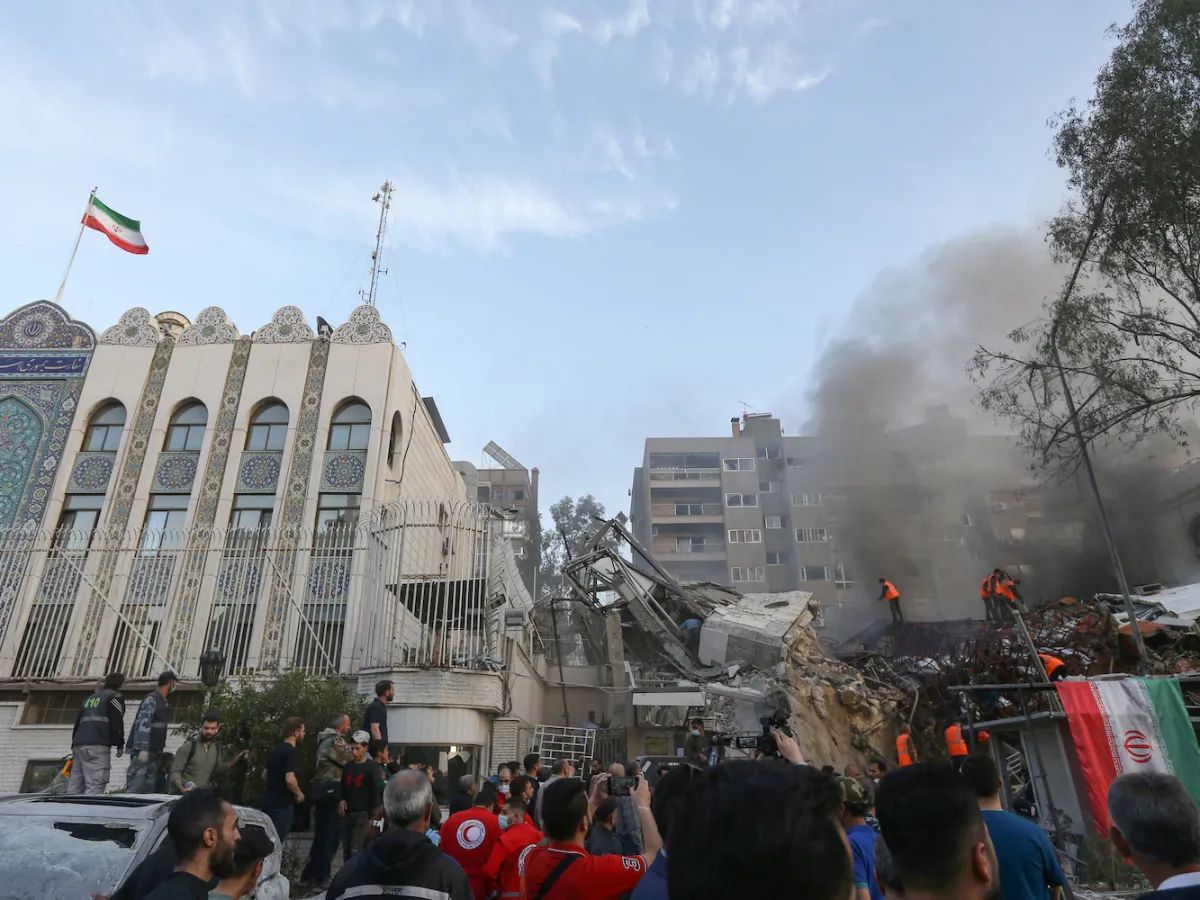
Escalating US-Israel strikes on Iran, a deadly school airstrike in Minab [Photo: X]
The conflict between the United States, Israel, and Iran has sharply intensified, pushing the Middle East into a dangerous new phase. What started as targeted military strikes has quickly expanded into a wider regional crisis. Gulf nations now face direct security threats as missile and drone attacks spread.
Civilian casualties are rising, and diplomatic tensions are mounting across the region. Airspace closures and infrastructure risks have added to the instability. With no clear end in sight, fears of a prolonged regional war continue to grow.
In a significant escalation, Iranian-launched drones struck the US Embassy in Riyadh, Saudi Arabia, causing a small fire and minor damage, according to Saudi authorities. The incident marks one of the first direct attacks on American diplomatic premises in the kingdom in decades.
The State Department issued shelter-in-place orders for Americans in Riyadh, Jeddah and Dhahran after the attack. Evacuation warnings were also expanded to Bahrain, Jordan and other Gulf countries, citing heightened threats.
Iranian officials reported that a girls’ elementary school in the southern city of Minab was hit by an airstrike, killing more than 100 people, primarily students, and injuring many others. The attack occurred on February 28 during joint US-Israeli military operations aimed at crippling Iran’s strategic capabilities.
Rescue teams were seen digging through debris, pulling out school supplies and clearing rubble amid grieving crowds. Iran’s authorities have condemned the strike as a war crime. Despite Iranian claims, American and Israeli forces have not independently confirmed targeting the school.
The Pentagon says it is investigating reports of civilian damage, and US officials have denied deliberately attacking educational institutions.
Iran has launched a series of missile and drone attacks across the Gulf region, escalating the conflict beyond Iran’s borders and hitting multiple targets in Saudi Arabia, the UAE, Kuwait, Qatar, Bahrain, and other states hosting US forces.
Explosions were reported in cities such as Abu Dhabi, Doha, and Kuwait City, underscoring the conflict’s expansion.
Israeli Prime Minister Benjamin Netanyahu has said this conflict “may take some time” but will not be a forever war, positioning the campaign as an effort to alter the region’s strategic balance.
US President Donald Trump similarly stated that Washington has “the capability to go far longer” than previously projected timelines, underlining that the offensive is expected to extend beyond the initial few weeks.
The US government has advised citizens to immediately depart more than a dozen Middle Eastern countries, including the UAE, Jordan, Oman and Egypt, because of mounting missile and drone threats. This broad travel advisory reflects concerns over civilian safety given the unpredictable nature of hostilities.
Major airports throughout the region have faced closures due to ongoing conflict and airspace risk. While a limited number of evacuation flights have restarted in cities like Dubai and Abu Dhabi, hundreds of flights remain cancelled or diverted, leaving thousands of passengers stuck and travel networks severely disrupted.
Gulf states have reacted differently to the crisis. Some, like the UAE, condemned Iranian missile attacks and closed their embassy in Tehran, recalling diplomats. Others have coordinated with US and allied military forces to enhance air defence and share intelligence.
Beyond tactical strikes, the wider Iran-US-Israel crisis risks sparking a larger regional war. Multiple fronts, including attacks by Iran’s proxies such as Hezbollah in Lebanon, suggest that frontlines are spreading. Diplomatic solutions remain elusive as violence intensifies.
