
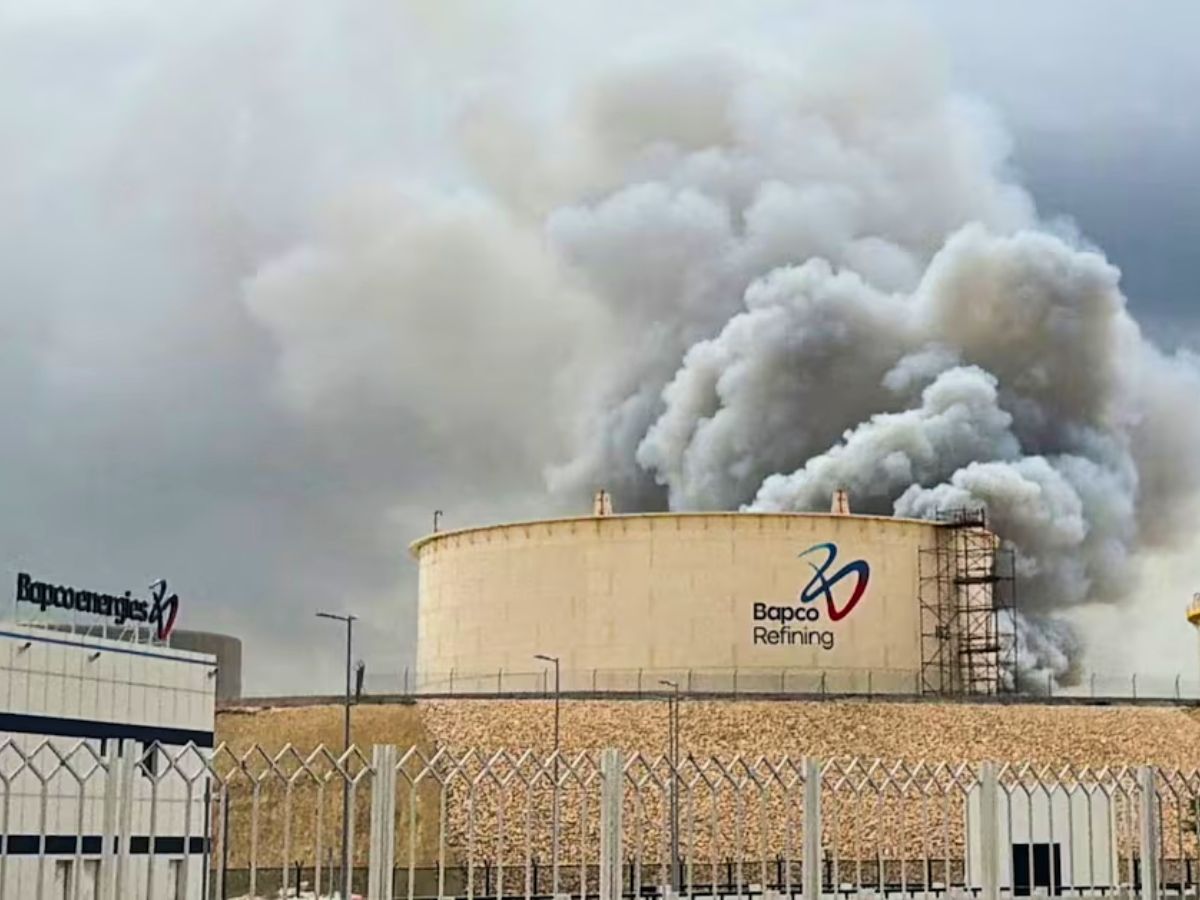
Fresh tensions in the Middle East have triggered new concerns in global energy markets after a major oil facility in Bahrain came under attack. The strike targeted infrastructure linked to the country’s state-owned energy company, disrupting refinery operations and forcing authorities to respond quickly to contain the damage.
Following the incident, Bahrain’s national oil firm declared force majeure on some oil shipments, signalling potential supply disruptions at a time when the region already faces heightened geopolitical instability.
Iran-Israel War Latest Update: Iran Attack on Bahrain Oil Facility
Rising tensions in the Middle East have triggered fresh concerns over global energy security after an Iranian strike hit a key oil facility in Bahrain. The attack forced Bahrain Petroleum Company (Bapco), the country’s state-owned oil firm, to declare force majeure on its oil shipments, a move that allows the company to suspend contractual delivery obligations due to extraordinary circumstances.
Footage shows massive fires raging at Bahrain’s only oil refinery after it was struck by an Iranian Shahed-136 one-way-attack (OWA) drones.
Following the strike, Bapco Energies, Bahrain’s state-owned oil company, declared force majeure on its deliveries later in the day, citing… pic.twitter.com/cVUKY3AbVy
— Egypt’s Intel Observer (@EGYOSINT) March 9, 2026
The incident targeted a refinery unit at the Al-Ma’ameer industrial area, a critical part of Bahrain’s energy infrastructure. The strike caused a major fire and structural damage at the facility, prompting emergency response teams to rush to the site and contain the blaze.
Authorities confirmed that despite the damage, domestic fuel supplies remain secure as the government activated contingency plans to maintain energy availability within the country. The attack has also intensified concerns about disruptions across the Gulf’s energy corridor, one of the most important oil supply routes in the world.
What is ‘Force Majeure’ in Oil Contracts?
The declaration of force majeure is a legal measure commonly used in the energy industry when companies cannot meet contractual obligations due to events beyond their control, such as war, natural disasters or political crises.
By invoking force majeure, Bapco has effectively informed its buyers that oil deliveries may be delayed or suspended temporarily due to the damage caused by the strike. Energy analysts say this step signals that refinery operations and exports may face disruptions until the facility is fully assessed and restored.
The refinery complex involved in the incident is Bahrain’s largest oil processing facility and a central pillar of the country’s energy sector.
Iran-Israel War Latest Update: What Happened at the Bahrain Oil Refinery?
According to officials, the attack caused a large fire at the facility, sending thick smoke into the air over the industrial zone. Authorities confirmed that emergency services were deployed quickly to bring the situation under control and assess the damage.
In a statement shared on social media, the Bahrain News Agency said, “Outbreak of a fire due to the Iranian aggression targeting a facility in Al Ma’ameer, with material damage reported but no casualties recorded, and the competent authorities have begun firefighting procedures.”
While the blaze caused material damage to the refinery infrastructure, officials said no fatalities were reported.
Iran-Israel War Latest Update: Why the Strait of Hormuz is Critical to Global Oil Supply?
The attack comes at a time when tensions around the Strait of Hormuz are already disrupting shipping routes in the Gulf. The narrow waterway connects the Arabian Gulf to the Gulf of Oman and carries around one-fifth of the world’s total oil supply, making it one of the most important maritime routes for energy trade.
In recent days, tanker traffic through the strait has slowed sharply amid rising security concerns and the threat of further attacks. Energy analysts warn that any prolonged disruption in the region could significantly affect global oil markets, especially if shipping delays continue.
Iran-Israel War Latest Update: Oil Prices Surge After Bahrain Refinery Strike
Global crude markets reacted immediately to the escalation. The international benchmark Brent Crude Oil jumped above $114 per barrel, marking one of the sharpest price increases in recent months as traders priced in the risk of supply disruptions.
Prices have climbed sharply since military tensions between Iran, Israel and the United States intensified, raising fears of a broader regional conflict affecting energy infrastructure. Analysts say attacks on Gulf oil facilities can rapidly push prices higher because the region exports a large share of the world’s crude oil.
Why the Bahrain Strike Matters for the Global Oil Market?
Although Bahrain is not among the world’s largest oil producers, its refinery plays an important role in processing and exporting petroleum products. The Bapco refinery processes hundreds of thousands of barrels of crude oil per day and supplies fuels to international markets.
When such infrastructure faces disruption, it sends a strong signal to global energy markets that supply risks are increasing in the Gulf region. The strike also highlights how energy facilities have become strategic targets in the ongoing regional confrontation involving Iran and its adversaries.
Rising Energy Security Risks in the Middle East
The Bahrain refinery attack marks the latest incident in a widening conflict that has increasingly targeted critical infrastructure across the Gulf. Energy facilities, shipping routes and ports in several countries have faced security threats in recent weeks, creating uncertainty for oil traders and governments worldwide.
As tensions continue to escalate, markets remain on high alert for further disruptions that could affect both global energy supply and crude oil prices in the coming weeks.




