USS Gerald R. Ford, the world’s largest aircraft carrier, joins Operation Epic Fury in the Iran conflict, boosting US naval firepower and strategic presence in the Middle East.
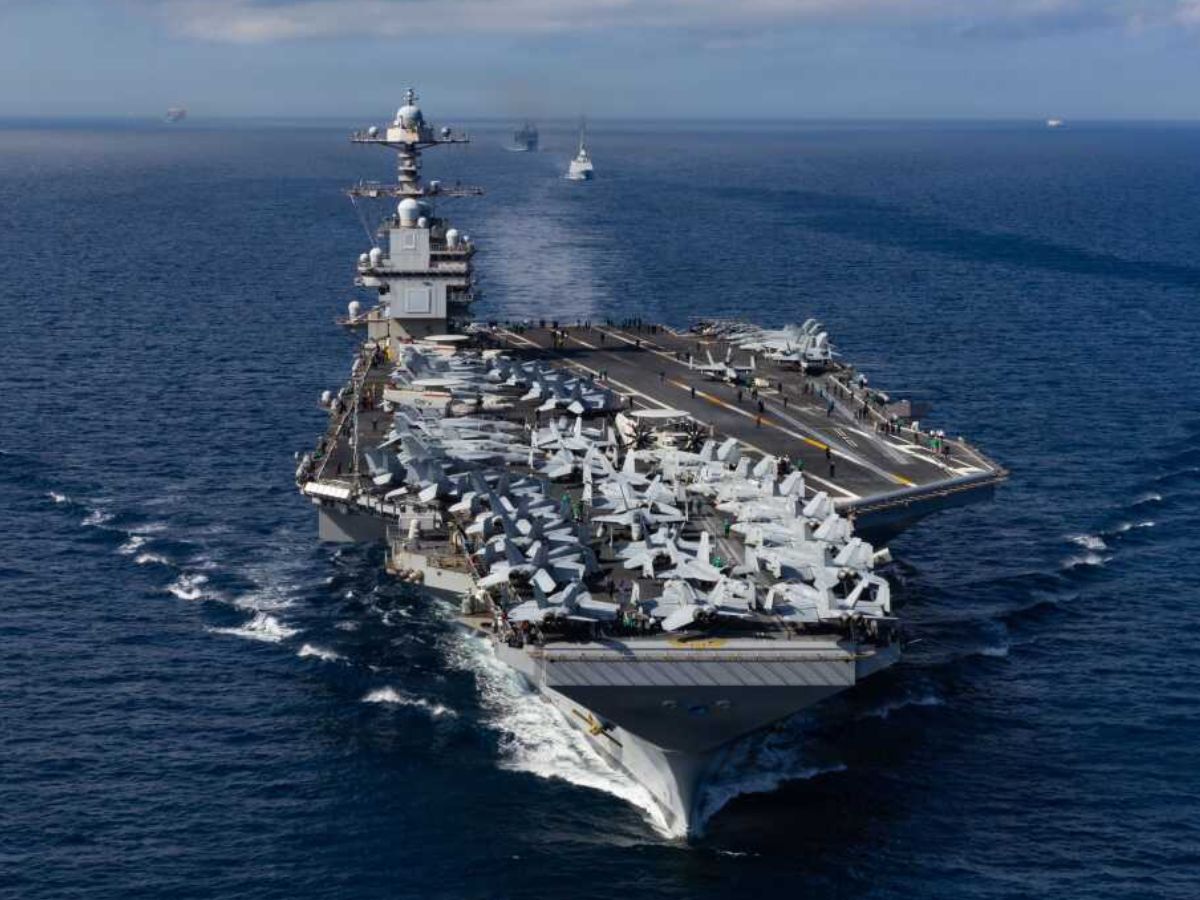
USS Gerald R. Ford, the world’s largest aircraft carrier, joins Operation Epic Fury in the Iran conflict [Photo: X]
The United States and Israel have dramatically escalated military operations against Iran, launching a coordinated offensive known as Operation Epic Fury that has struck hundreds of Iranian military targets.
In a major show of naval force, the USS Gerald R. Ford (CVN-78), the world’s largest and most advanced aircraft carrier, is now actively supporting US forces in the conflict zone, underscoring the widening scale of the confrontation in the Middle East.
The USS Gerald R. Ford, a nuclear-powered supercarrier, has moved into the Middle East theatre to support US military operations against Iran as part of Operation Epic Fury. The US and Israeli forces launched the major strikes against Iranian military infrastructure and leadership on February 28, marking one of the most significant military offensives in recent years.
USS Gerald R. Ford (CVN 78), the world’s largest aircraft carrier, is in the fight with U.S. forces supporting Operation Epic Fury – launching aircraft from the Eastern Mediterranean Sea. pic.twitter.com/olehL4htW4
— U.S. Central Command (@CENTCOM) March 2, 2026
The US Central Command highlighted the carrier’s role in providing aircraft sortie support and maritime power for the ongoing campaign. Its presence reinforces American naval strength in the region and signals a deepening US commitment to sustained military pressure on Tehran.
The USS Gerald R. Ford is named after the 38th President of the United States and represents the most advanced aircraft carrier ever built. It features cutting-edge technologies, an expansive flight deck, and enhanced weapons systems.
Its sheer size and technological edge allow the US Navy to project power far from home shores and provide a sustained offensive and defensive presence in conflict zones.
The USS Gerald R. Ford (CVN-78) is one of the most powerful and technologically advanced warships ever built. The US Navy designed it to project unmatched air power anywhere in the world. While an aircraft carrier does not directly fire the majority of its weapons like a battleship, it serves as a floating airbase capable of launching sustained combat operations for months.
The carrier can deploy more than 75 aircraft, including stealth fighters, electronic warfare jets, surveillance planes, and helicopters. These aircraft carry precision-guided bombs, long-range missiles, and advanced strike systems capable of hitting targets hundreds of kilometres away.
Its deadliness comes from three key strengths:
Beyond offensive strength, the USS Gerald R. Ford operates with a full Carrier Strike Group, including guided-missile destroyers and cruisers, creating a powerful defensive shield around it. Together, this formation can deter or respond to large-scale military threats.
In modern warfare, its ability to strike from international waters without relying on foreign bases makes it a strategic game-changer.
Here are the key specifications of the USS Gerald R. Ford:
The USS Gerald R. Ford represents the next generation of US naval power, combining nuclear propulsion, advanced automation, and cutting-edge combat systems to dominate both sea and air battlefields.
The deployment of the USS Gerald R. Ford forms part of the largest US naval and air power concentration in the Middle East in decades. Alongside the USS Abraham Lincoln Carrier Strike Group and other naval assets, it underpins the logistics and firepower supporting Operation Epic Fury.
American forces have moved significant numbers of fighter jets, missile carriers, and support aircraft into the region to sustain prolonged air operations against Iran’s military network. Early waves of strikes have employed not only traditional aircraft but also low-cost one-way attack drones and advanced munitions integrated into carrier air wings.
Operation Epic Fury began with coordinated US and Israeli airstrikes targeting Iranian leadership and strategic sites. Iranian Supreme Leader Ayatollah Ali Khamenei was reported killed in the initial attacks, intensifying the conflict. Tehran has responded with missile and drone barrages against Israel and US bases throughout the region.
The conflict has triggered widespread military activity, with Iranian missiles intercepted over allied territory and numerous air defence systems activated to counter escalating threats.
The Gerald R. Ford’s presence serves both offensive and defensive purposes:
Naval analysts note that such a deployment places a potent blend of offensive aircraft and defensive systems close to areas of high tension, offering both strike options and immediate response capabilities to hostile actions.
While the USS Gerald R. Ford enhances the US military's reach, its involvement also increases the potential for confrontation. Iran has claimed attacks against US naval assets, including allegations that ballistic missiles struck the USS Abraham Lincoln, though US forces deny any successful hits.
Three US service members have also been reported killed in operations connected to the Epic Fury campaign, marking the first confirmed American casualties in the conflict.
The deployment of the world’s largest aircraft carrier underscores how the regional confrontation has expanded beyond isolated strikes to broader US military engagement. The presence of advanced naval power supports sustained operations while also heightening the risk of direct clashes with Iranian forces or their allies.
With tensions continuing to escalate, the USS Gerald R. Ford’s role will likely remain pivotal in shaping the military dynamics of the Iran-Israel conflict and broader Middle East stability.
