The US may deploy ground troops to secure Iran’s remaining uranium hidden at the Isfahan Nuclear Facility after airstrikes failed to destroy it.
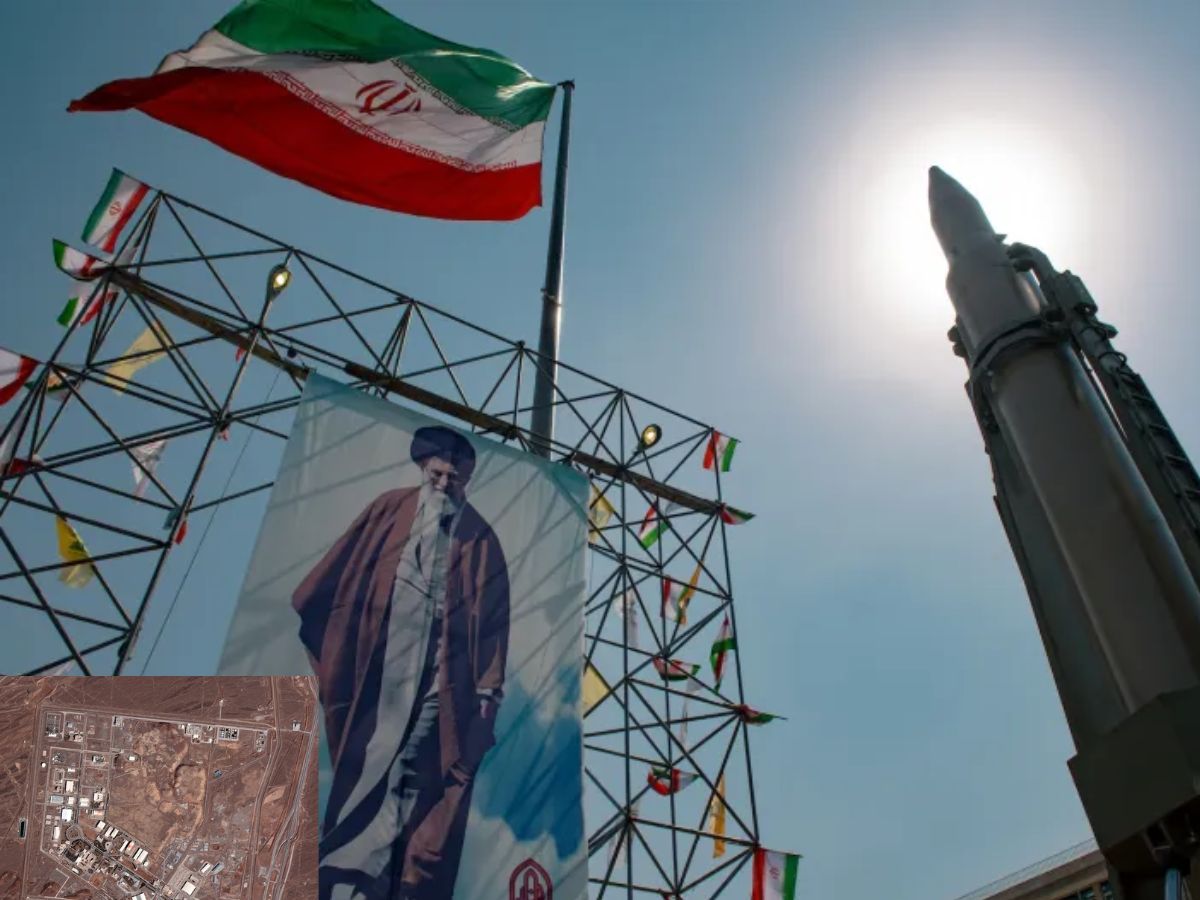
What Happens to Iran’s Enriched Uranium After US Airstrikes (Source: Reuters)
Iran Nuclear Crisis: The US may need to deploy a large number of ground forces in order to retrieve the remaining stockpile of highly enriched uranium in Iran in the event the US decides to do so, according to US officials who are aware of the US military plans. It has been reported that the nuclear material was not destroyed in the US airstrikes on Iranian nuclear sites last June.
The nuclear material is very sensitive as it has the potential to be used in the development of nuclear weapons. If the US decides to retrieve the nuclear material, it would be a major escalation in the war with Iran.
The authorities believe that this would require more than a handful of special forces but possibly a deployment of more American ground troops.
The deployment would be the first significant deployment of US troops on the ground in this conflict with Iran. At the same time, it would be a dangerous deployment for US troops because they would be in a dangerous conflict with Iranian military forces while dealing with nuclear materials.
Most of Iran’s remaining enriched uranium is stored at the Isfahan Nuclear Facility. The authorities believe that this uranium is stored in underground tunnels, which survived US bombing attempts in the past. The authorities believe these tunnels offer protection from US aerial attacks, making it difficult for them to destroy this stockpile of uranium.
If the US attempts to acquire this uranium or destroy it, US troops would need to go into these underground tunnels, which might be heavily guarded and difficult for them to access.
According to reports, most of the underground tunnels at the Isfahan facility remained intact after last year’s airstrikes. Sources claim that the Iranian authorities have been working for months to clear debris from damaged buildings above ground. The move is reportedly intended to facilitate access to the tunnel systems where the uranium was stored.
Rafael Grossi reported earlier this week that 200 kilograms of highly enriched uranium from Iran are likely stored at the Isfahan facility. Some of it may also be stored at Natanz Nuclear Facility.
Highly enriched uranium is classified as a ‘Dual Use’ material. This means it has the capacity and purpose for both nuclear power and nuclear weapons.
Iran has repeatedly claimed its nuclear programme is for peaceful purposes and energy production. However, nuclear weapons can be manufactured from uranium enriched at 90 percent purity and above. Iran’s stockpile of uranium is currently enriched at 60 percent purity, according to the IAEA.
Military experts believe that bombing alone may not be enough to destroy the uranium hidden deep underground at the Isfahan facility. Reports indicate that the site lacks ventilation shafts or structural weaknesses that would allow bombs to penetrate the tunnel system. This makes it extremely difficult for airstrikes to reach the nuclear material.
Due to these difficulties, there have reportedly been discussions about the deployment of special forces from the U.S. military's Joint Special Operations Command. These special forces could potentially be deployed in conjunction with Israeli special forces to infiltrate the tunnels and either secure or destroy the uranium store. However, the operation will not only involve the infiltration forces. It is likely that dozens or hundreds of additional troops will be required to secure the surrounding area.
Experts believe that the operation would demand special teams that have the capability to deal with the radioactivity. These teams are sometimes referred to as "render safe units." These teams have the responsibility of dealing with dangerous nuclear materials.
According to a special forces officer who has retired from the forces, the operation would involve the best special forces units as well as explosive ordnance disposal units. In addition to these units, security would be provided by larger military units such as the 75th Ranger Regiment or the 82nd Airborne Division.
There would be a need for air support as well. This would include the MC-130J Commando II as well as the MH-47 Chinook helicopters.
However, according to one person who is aware of the discussions about the operation, the operation would be extremely difficult. "The logistics and risk involved would be prohibitive, to say the least."
The United States of America’s President, Donald Trump, has suggested the possibility of American soldiers protecting Iran’s uranium supplies. While speaking to the press on board Air Force One on the 8th of March, he said: “At some point, maybe we will. That would be a great thing."
He continued: “We haven’t gone after it, but it’s something we could do later." While speaking to the press about the deployment of American soldiers within Iranian borders, Trump did not dismiss the idea.
“Could there be? Possibly, for a very good reason, it’d have to be a very good reason," he said. “And I would say if we ever did that, they would be so decimated that they wouldn’t be able to fight at the ground level," he continued.
In addition, it has been reported that MC-130J Commando II aircraft, which are capable of supporting covert operations, are currently based at RAF Mildenhall. Their presence in the UK means they are in a position to quickly move closer to Iran in the event a mission to retrieve the uranium stockpile is approved.
Despite ongoing military discussions, officials say that eliminating Iran’s uranium stockpile may not be possible through force alone. Unless there is a major change in Iran’s leadership, experts believe diplomatic efforts may still be required alongside military options to ensure the nuclear material is secured and cannot be used to develop weapons.
