Israel strikes Iran oil facilities near Tehran, triggering massive fires and reportedly prompting a ‘WTF’ response from the White House as global oil prices surge above $100.
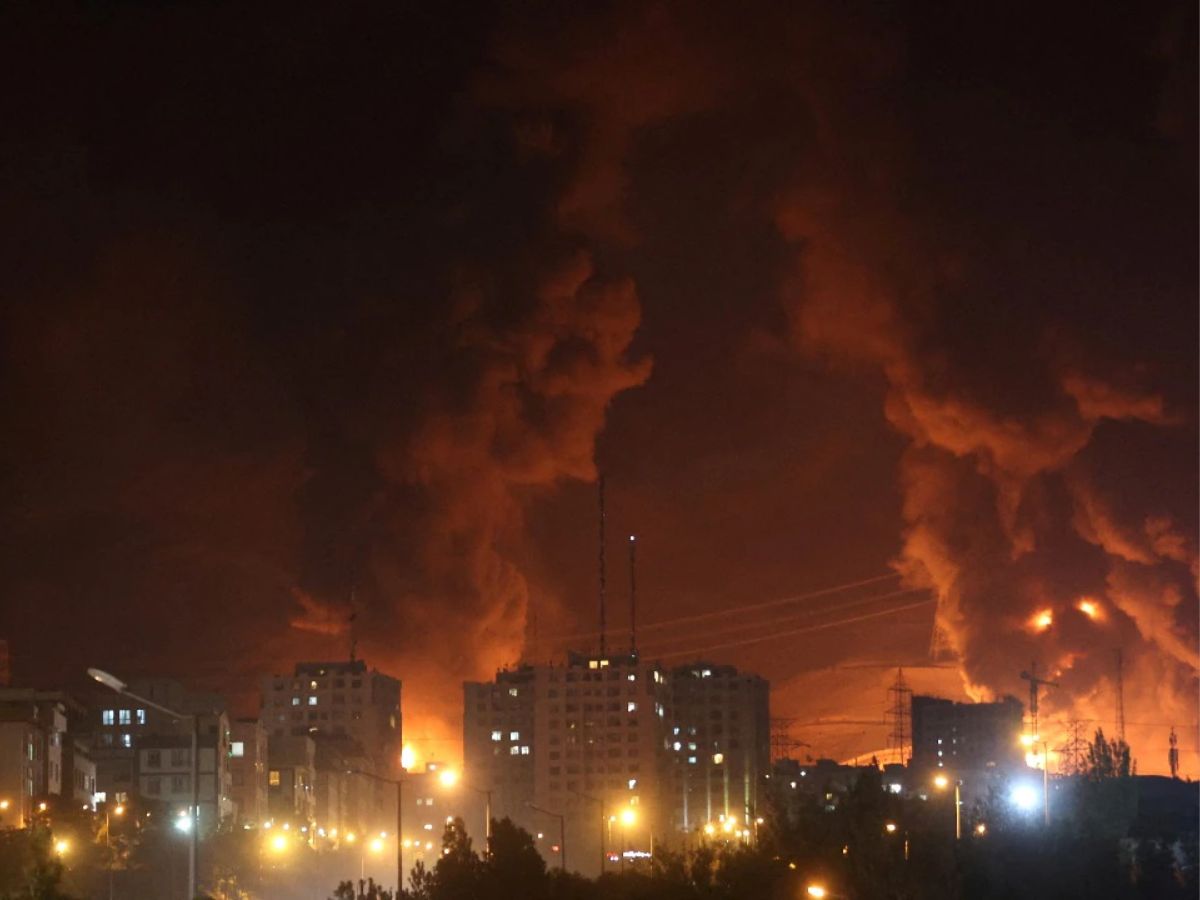
Israel strikes Iran's oil facilities near Tehran, triggering massive fires [Photo: X]
The conflict between Israel and Iran has intensified after Israeli forces launched major strikes on oil storage depots and refinery infrastructure near Tehran. The attacks triggered massive fires, caused casualties and raised concerns about a dangerous escalation that could affect global energy markets.
The strikes targeted multiple energy facilities around the Iranian capital over the weekend. Large explosions were reported at several oil storage depots, with flames and thick black smoke visible from kilometres away.
CRAZY FOOTAGE 🔴
— Open Source Intel (@Osint613) March 7, 2026
Apocalyptic scenes coming out of Tehran right now pic.twitter.com/VVejLZfaVq
Authorities said the attacks killed at least four people and caused severe damage to key oil infrastructure. Emergency teams rushed to the sites to contain the fires as residents were warned to stay indoors due to toxic smoke and environmental hazards caused by burning oil.
The strikes mark one of the most significant attacks on Iran’s energy infrastructure since the conflict between Israel and Iran escalated earlier this year.
The scale of the Israeli strikes reportedly surprised officials in Washington and triggered an unusually blunt reaction from the White House.
According to reports, Israeli authorities had informed the United States about the planned operation, claiming that the targeted facilities were linked to missile fuel supplies. However, US officials said the strikes went much further than they had expected.
A US official reportedly said the American military was surprised by how “wide-ranging” the attacks were. “We don't think it was a good idea,” the official said. An Israeli official said the message from Washington after the strikes was simply “WTF”.
The reported reaction highlights the growing concern within the United States about the potential consequences of targeting oil infrastructure, which could further escalate the conflict and destabilise global energy markets.
Israeli forces reportedly struck three oil depots and a refinery located in and around Tehran. The attacks triggered large explosions that quickly spread fires across parts of the affected facilities.
Witnesses described chaotic scenes as fuel leaking from damaged storage tanks ignited and spread through nearby areas. Some residents said the fires appeared like a “river of fire” flowing across roads near the impacted sites. Videos shared on social media showed enormous flames rising above storage tanks while thick clouds of smoke covered the sky.
Local reports also suggested that polluted rainwater mixed with oil residue and soot fell in some areas after the explosions. Authorities warned residents to remain indoors due to fears of toxic fumes and possible environmental contamination. Emergency services worked throughout the night to bring the fires under control and prevent further damage.
The attack on Iran’s oil facilities had an immediate impact on global energy markets. Oil prices surged sharply following the strikes, crossing the $100 per barrel mark for the first time in nearly four years. Brent crude, the international benchmark, climbed to around $107.97 per barrel after trading resumed.
West Texas Intermediate (WTI), the main US crude benchmark, also jumped significantly and traded above $106 per barrel. Energy analysts say the rise in prices reflects growing fears that the conflict could disrupt oil supplies from the Middle East, which remains one of the world’s most important energy-producing regions.
The market was already under pressure due to rising geopolitical tensions and Iran’s threats to disrupt shipping through the Strait of Hormuz.
Military observers say the attacks on oil storage depots and refineries represent a serious escalation in the ongoing conflict.
Energy infrastructure plays a crucial role in the economic stability of many countries in the Middle East. Targeting such facilities can disrupt production, affect exports and push global oil prices higher.
However, some experts warn that such strikes may also have unintended consequences. Attacks on oil facilities could push Iranian citizens to rally around their government despite internal political divisions. “The president doesn't like the attack. He wants to save the oil. He doesn't want to burn it. And it reminds people of higher gas prices,” a Trump adviser told Axios.
Iran has strongly condemned the Israeli strikes and warned that it may respond if similar attacks continue. A spokesperson for Iran’s military said Tehran has not yet targeted energy infrastructure belonging to its adversaries but indicated that the situation could change.
Iranian officials also warned that continued attacks on oil facilities could trigger a major shock in global energy markets. According to the warning, crude oil prices could surge as high as $200 per barrel if the conflict expands and more energy infrastructure becomes involved.
The latest developments highlight how rapidly geopolitical tensions in the Middle East can affect global energy supplies. Oil facilities, shipping routes and energy export terminals across the region remain highly vulnerable as the conflict continues.
With the Strait of Hormuz handling nearly one-fifth of the world’s oil shipments, any disruption to the route could have a major impact on global energy markets.
As the conflict intensifies, governments and energy companies worldwide are closely monitoring the situation, fearing further attacks on critical infrastructure that could send oil prices even higher in the coming weeks.
