Iran faces its biggest crisis in years as deadly protests grow and Trump warns of US military and cyber action. Here’s what Washington may do next.
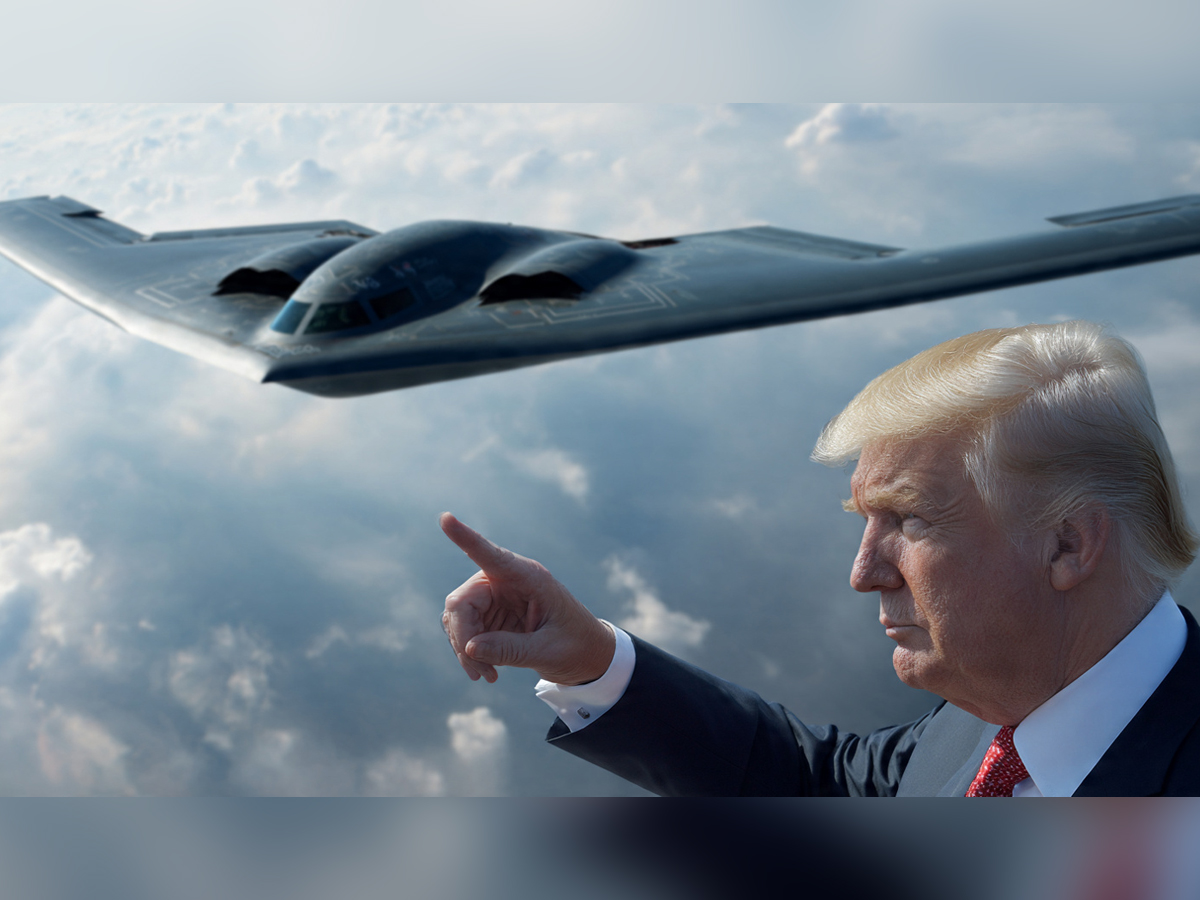
On January 13, Trump addressed Iranian demonstrators directly on his Truth Social platform with a dramatic message of support and warning to Tehran. (Photo: Meta AI)
Iran is facing one of its most serious internal crises in decades as nationwide protests intensify and turn increasingly violent. What began as demonstrations over a collapsing economy and rising cost of living has now transformed into a direct challenge to the clerical leadership that has ruled the country since the 1979 Islamic Revolution.
Thousands of Iranians across cities and provinces have taken to the streets, confronting security forces despite internet shutdowns and mass arrests. The government’s violent crackdown has drawn sharp international attention, particularly from the United States, where President Donald Trump has adopted an increasingly aggressive tone.
On January 13, Trump addressed Iranian demonstrators directly on his Truth Social platform with a dramatic message of support and warning to Tehran.
“Iranian Patriots, KEEP PROTESTING, TAKE OVER YOUR INSTITUTIONS!!! Save the names of the killers and abusers. They will pay a high price. I have cancelled all meetings with Iranian Officials until the senseless killing of protesters STOPS. HELP IS ON ITS WAY. MIGA!!! PRESIDENT DONALD J. TRUMP”
The phrase “MIGA,” short for “Make Iran Great Again,” mirrors Trump’s signature political slogan. However, the president did not clarify what form the promised “help” would take.
Earlier, Trump had already issued a stark military warning, saying that if Iran “violently kills peaceful protesters, which is their custom, the United States of America will come to their rescue,” adding, “We are locked and loaded and ready to go.”
Despite the tough rhetoric, the US military footprint in West Asia is currently smaller than it was during last year’s conflict. In June 2025, the USS Gerald Ford aircraft carrier deployed to the Mediterranean but has since moved to the Caribbean under Operation Southern Spear.
According to military analysts, the carrier would need around 10 days to return to the Mediterranean and another week to reach waters near Iran. Several escort vessels have also left the region, limiting immediate strike options.
The US also rotated a Patriot air defence unit back to South Korea in late 2025 for upgrades. Still, Washington maintains at least 19 military locations across West Asia, including permanent bases in Qatar, Bahrain, Saudi Arabia, the UAE, and Iraq.
Al Udeid Air Base in Qatar remains the most critical hub, hosting about 10,000 US troops. Reports that some personnel were asked to leave the base have raised fears of escalation and possible Iranian retaliation.
The Trump administration often points to the 2025 bombing of Iranian nuclear facilities as proof of its military capability. US B-2 stealth bombers carried out long-range strikes, dropping 14 massive conventional bombs on nuclear targets without suffering any losses.
Those attacks focused strictly on nuclear infrastructure. A future operation linked to the protests would likely target Iran’s internal security forces instead, including IRGC command centres, Basij bases, and police networks.
However, analysts warn that many such sites lie in crowded urban areas, increasing the risk of civilian casualties and potentially strengthening Tehran’s propaganda.
Experts say Washington still has several strike options even without a nearby aircraft carrier. These include Tomahawk cruise missiles launched from submarines and Joint Air-to-Surface Standoff Missiles (JASSMs) fired from aircraft operating far from Iranian airspace.
Unmanned drones could also support surveillance and limited strikes. Increased tanker aircraft movement or repositioning of bombers could signal preparations for action.
Peter Layton, a visiting fellow at the Griffith Asia Institute, told CNN that Trump prefers dramatic but short operations. “The administration is attracted to theater. This means dramatic, media-attracting, head-turning events,” he said.
He added, “The administration likes short-duration raids that involve the lowest risk to the US forces involved.”
Layton suggested that Iranian oil infrastructure could be an attractive target. “The easiest and safest target set,” he said. “It would damage Iran economically in the medium to long term. Some drama in big plumes of smoke and easy for external media to cover.”
Beyond missiles and bombs, the US has expanded cyber and electronic warfare capabilities. American forces have focused on disrupting Iran’s digital surveillance and counter-insurgency systems, while protecting Starlink satellite signals to help protesters stay connected during internet blackouts.
Cyber operations could also weaken Iran’s air defence and drone command systems. Meanwhile, US missile defence networks powered by AI-driven tracking systems remain active in Israel and Qatar.
If Washington acts, analysts believe it will aim for a fast, highly visible operation designed to pressure Tehran without dragging the US into a prolonged conflict.
