
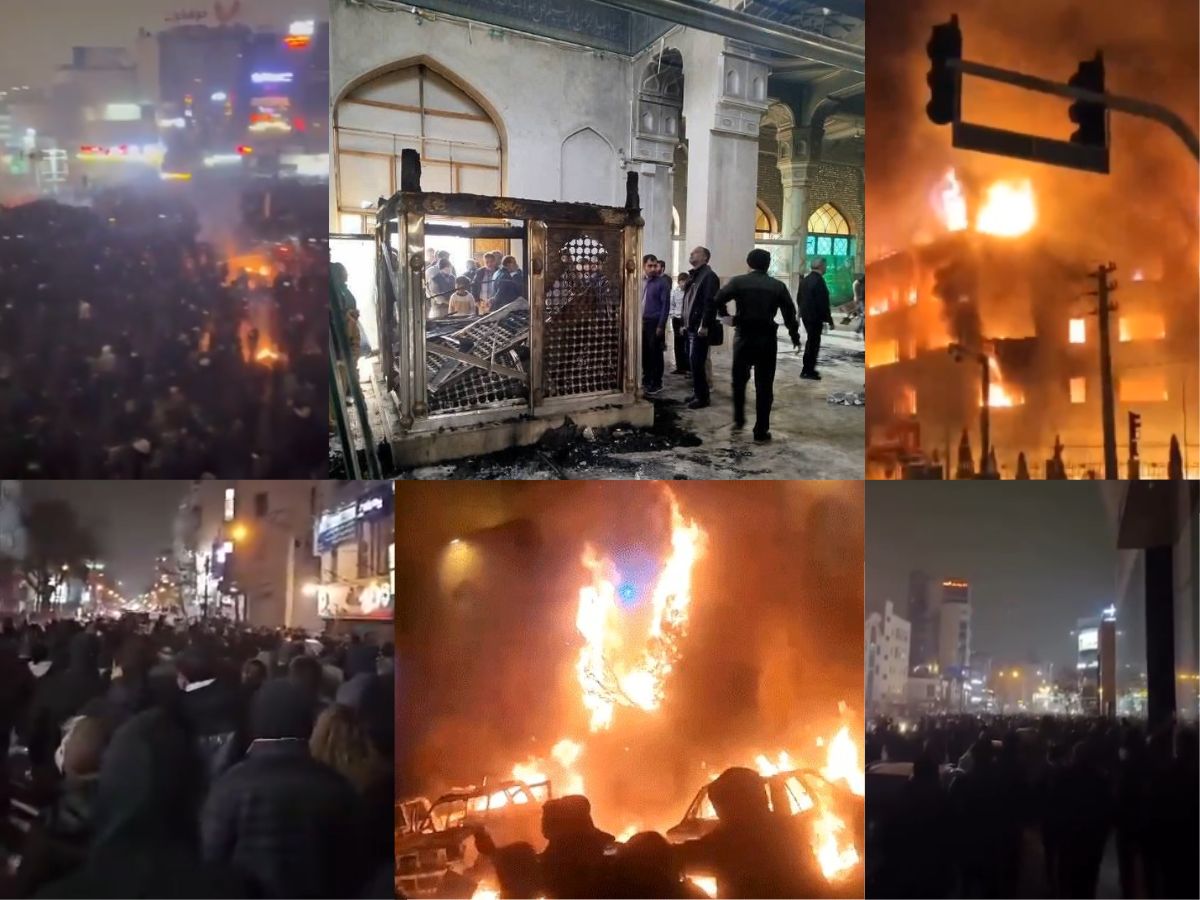
TEHRAN, Iran, January 10 — For a 13th day, protests grip Iran in an information vacuum, as the regime’s nationwide internet blackout enters its second day, concealing the scale of unrest and a death toll now touching 48. The dual crises—domestic fury and severed global links—have drawn a sharp warning from the United States, raising the stakes for a government fighting to control its streets and its narrative.
What is Happening Inside the Blackout?
Iranian authorities have imposed an almost complete shutdown of internet and mobile data, a severe measure now over 24 hours old. This digital barrier makes verifying events on the ground very difficult. Human rights groups, using earlier reports and limited communications, say at least 48 protesters have been killed and more than 2,200 detained. The blackout seems intended to block protest coordination and mask the true extent of the crackdown, leaving families abroad anxious for relatives they cannot contact.
WATCH: Banks set on fire in Shiraz, Iran as protests against government intensify https://t.co/Vtny3bicJ1 pic.twitter.com/o08Rm6qfYh
— Rapid Report (@RapidReport2025) January 9, 2026
Why is This Protest Wave Different?
The unrest, triggered by severe inflation and economic pain, has grown into the strongest challenge to the Islamic Republic in years. Crucially, it has brought in the country’s historic merchant class, the bazaaris, whose closed shops mark a break with a traditionally loyal base. Protesters’ chants have directly targeted Supreme Leader Ayatollah Ali Khamenei, moving beyond economic demands to political confrontation. The regime’s response, cutting off the nation’s digital lifeline—signals it sees the threat as existential.
More footage from Friday night’s uprising in #Tehran amid Iran’s nationwide anti-regime protests. #IranProtests#تهران قیام شبانه مردم در پونک pic.twitter.com/04jNl0qdXK
— Ali Javanmardi (@Javanmardi75) January 9, 2026
How are Khamenei and Trump Confronting Each Other?
A geopolitical clash now overlays the domestic crisis. Khamenei, breaking his silence, dismissed the protesters as foreign-directed “vandals” and told U.S. President Donald Trump to “focus on his own country.” From Washington, Trump fired back, warning Tehran of severe consequences if the killing continues. “We will be hitting them very hard where it hurts,” Trump stated, while ruling out ground troops. This exchange transforms the protests into an international flashpoint.
Total internet blackout. 12 days of protests. Dozens already killed. President Trump warns Iran (again) that if the regime starts killing protesters “we will be hitting them very hard, where it hurts.”
What’s happening in Iran is not a headline, it’s a life-or-death struggle for… pic.twitter.com/hgTnr2711G— realPATRiOT 🫡🇺🇸 (@realP4TRi0T) January 9, 2026
What Role Does the Exiled Prince Play?
Adding another layer, exiled Crown Prince Reza Pahlavi, son of Iran’s last Shah, has publicly urged Trump to be “prepared to intervene” and called for coordinated protest times. While his influence inside Iran is unclear, his vocal stance from Washington provides a symbolic alternative for anti-regime sentiment and complicates the political narrative, even as state media blames the U.S. and Israel for the unrest.
The critical unknown is what happens when—or if—the internet returns. The blackout may suppress immediate organization but could also deepen public rage.
FAQs
Q: Why is there no internet in Iran right now?
A: Iranian authorities imposed a nationwide internet and mobile data blackout over 24 hours ago, a tactic to disrupt protests and control information during the unrest.
Q: How many people have been killed?
A: According to international human rights groups monitoring the situation, at least 48 protesters have been killed since the protests began 13 days ago.
Q: What is Donald Trump threatening of?
A: President Trump has warned the Iranian government it will face severe consequences and that the U.S. will hit them “very hard” if the killing of protesters continues, though he specified this would not involve “boots on the ground.”
Q: What did Iran’s Supreme Leader say?
A: Ayatollah Ali Khamenei called the protesters “vandals” serving foreign powers and stated his government “will not back down,” telling President Trump to deal with America’s own problems instead.




