
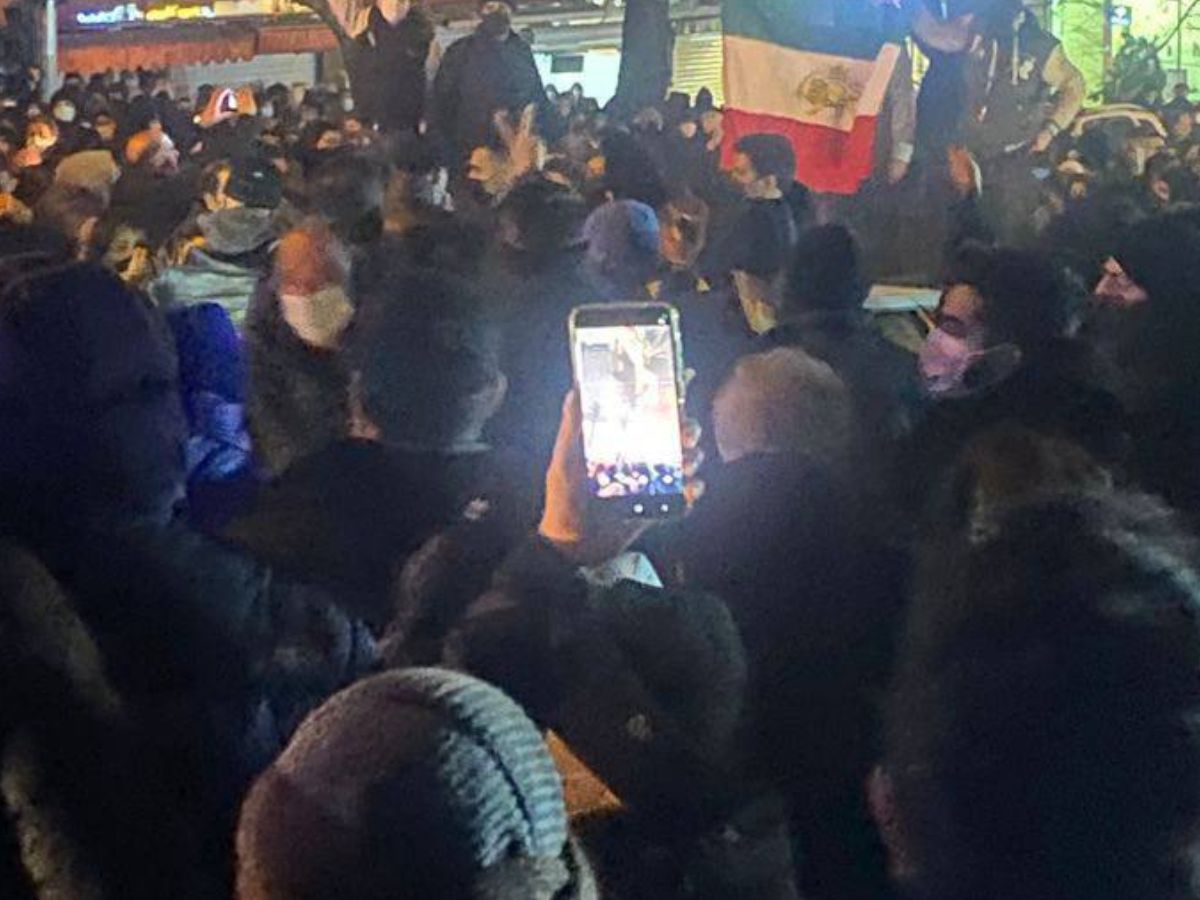
Iran Protest: The protests against Iran’s Islamic regime, led by Supreme Leader Seyyed Ali Hosseini Khamenei, have intensified in Tehran, with Iranians. Now Iran is facing one of its most serious waves of unrest in decades. On Thursday, nationwide protests against the country’s religious leadership entered their 12th straight day.
Massive protest in Tehran, Iran. People had enough. Not much mainstream media coverage. Why? pic.twitter.com/RqIikXbW94
— Lily Tang Williams (@Lily4Liberty) January 8, 2026
Protesters became more aggressive in Iran, setting fire to government buildings in several cities.
BREAKING:
The people of Tehran are burning down regime buildings right now. The crowd is MASSIVE.
— 𝐍𝐢𝐨𝐡 𝐁𝐞𝐫𝐠 ♛ ✡︎ (@NiohBerg) January 8, 2026
At the same time, Iran’s exiled crown prince called for people to take part in a night-time protest. Many Iranians responded by shouting from windows and gathering on the streets. In reaction, the government shut down internet access and blocked international phone calls late Thursday night to stop people from organizing.
Rising Death Toll and Mass Arrests Amid Iran Arrest
The growing unrest has already caused heavy losses. According to the US-based Human Rights Activists News Agency (HRANA), at least 42 people have been killed and more than 2,270 people have been arrested. These figures show how deeply frustrated and angry people have become with Iran’s current rulers.
How the Iran Protests Began
The protests first started on 28 December in Tehran. What began as small demonstrations quickly spread across the country. According to HRANA, protests have now reached more than 280 places across 27 of Iran’s 31 provinces.
Earlier reports said at least 36 people had died, including two members of the security forces, and over 2,076 people were detained. The movement shows no signs of slowing and could become the biggest threat to Iran’s clerical rulers since the 1979 Islamic Revolution.
What Sparked the Iran Unrest?
The protests began when shopkeepers and bazaar traders went on strike after Iran’s currency, the rial, collapsed to a record low against the US dollar.
Iran’s economy has been weak for years. The situation worsened after Donald Trump reimposed US sanctions in 2018 and ended the nuclear deal.
Later, UN sanctions were restored in September 2025, making the crisis worse. The economy took another hit after Israel and the US launched airstrikes on Iran in June last year, targeting nuclear sites during a 12-day conflict.
Today, inflation is near 40 percent, and prices for food like meat and rice have soared as the rial keeps losing value.
Women Brutal Treatment Adds Fuel to Protests in Iran
Iranian women are suffering heavily under the government’s strict hijab rules. Police are forcing women to follow dress codes using violence. In many cities, women have been dragged into vans, beaten, and arrested for not covering their heads properly.
In one case, a mother and daughter in Tehran were surrounded, insulted, and taken away by officers. A female university student said she was tasered, handcuffed, and sexually assaulted inside a police station. These cases show how women are being humiliated and punished simply for how they dress, exposing a serious human rights crisis.
Iran Protests Spread Beyond the Economy
At first, the protests focused on economic problems. But they have now become political, with people openly criticizing the government. On 30 December, students and shopkeepers marched together in Tehran shouting “rest in peace Reza Shah”, a reference to the royal leader removed in 1979.
On 31 December, protesters tried to storm a government building in Fars province. By 5 January, state-linked media said 250 police officers and 45 Basij members were injured. Authorities claimed protesters had weapons, though no proof was given.
Trump’s Big warning if protesters Attacked
On 2 January, US President Donald Trump warned Iran that if it “violently kills peaceful protesters”, the United States will come to their rescue. He also said, “We are locked and loaded and ready to go.” Iran responded angrily, warning that US interference would bring chaos to the region.
Republican Senator Lindsey Graham issued a stern warning to Iran’s supreme leader Ayatollah Ali Khamenei, saying that US President Donald Trump would “kill” him and other leaders in the regime if they continued to harm their citizens amid ongoing protests in the country.
The citizens staged protests that have spread across several Iranian provinces triggered by economic hardship, inflation and public anger over government policies.
The warning became more serious after the US captured Venezuelan President Nicolas Maduro, a close ally of Iran.
How Iran’s Leaders Reacted
President Mr Pezeshkian said the government had asked the interior minister to listen to the “legitimate demands” of protesters.
On 30 December, officials said, “We officially recognise the protests. We hear their voices and we know that this originates from natural pressure arising from the pressure on people’s livelihoods.”
Supreme Leader Ali Khamenei later said that while some protesters were peaceful, rioters should be put in their place. His adviser Ali Larijani warned that US involvement would lead to “chaos across the entire region.”
Where is Iran Supreme Leader Ali Khamenei Amid Protest?
Ayatollah Ali Khamenei is still Iran’s Supreme Leader, even as his exact location has become the subject of heavy speculation amid growing nationwide protests. Officially, he is still in charge and has continued to appear through recorded speeches and meetings with senior officials in Tehran.
In these appearances, Khamenei has acknowledged the country’s economic problems but has described protesters as “rioters” who must be “put in their place,” signalling that the leadership is taking a hard line as unrest spreads across the country. The growth of the protests increases the pressure on Iran’s civilian government and its Supreme Leader, Ayatollah Ali Khamenei.
Has Iran Seen Protests Before?
Iran has experienced major protests in the 1970s, 1990s, early 2000s, and 2022 over rising prices. But the most powerful unrest came after Mahsa Amini, a 22-year-old Kurdish woman, died in morality police custody in 2022.
More than 500 people were killed and over 22,000 were arrested during that crackdown. Now, Iran once again stands at a dangerous turning point.




