Iran warned that any attack on Supreme Leader Ayatollah Ali Khamenei would be treated as an act of war, as tensions with the United States escalated following sharp criticism from President Donald Trump and ongoing unrest in the country
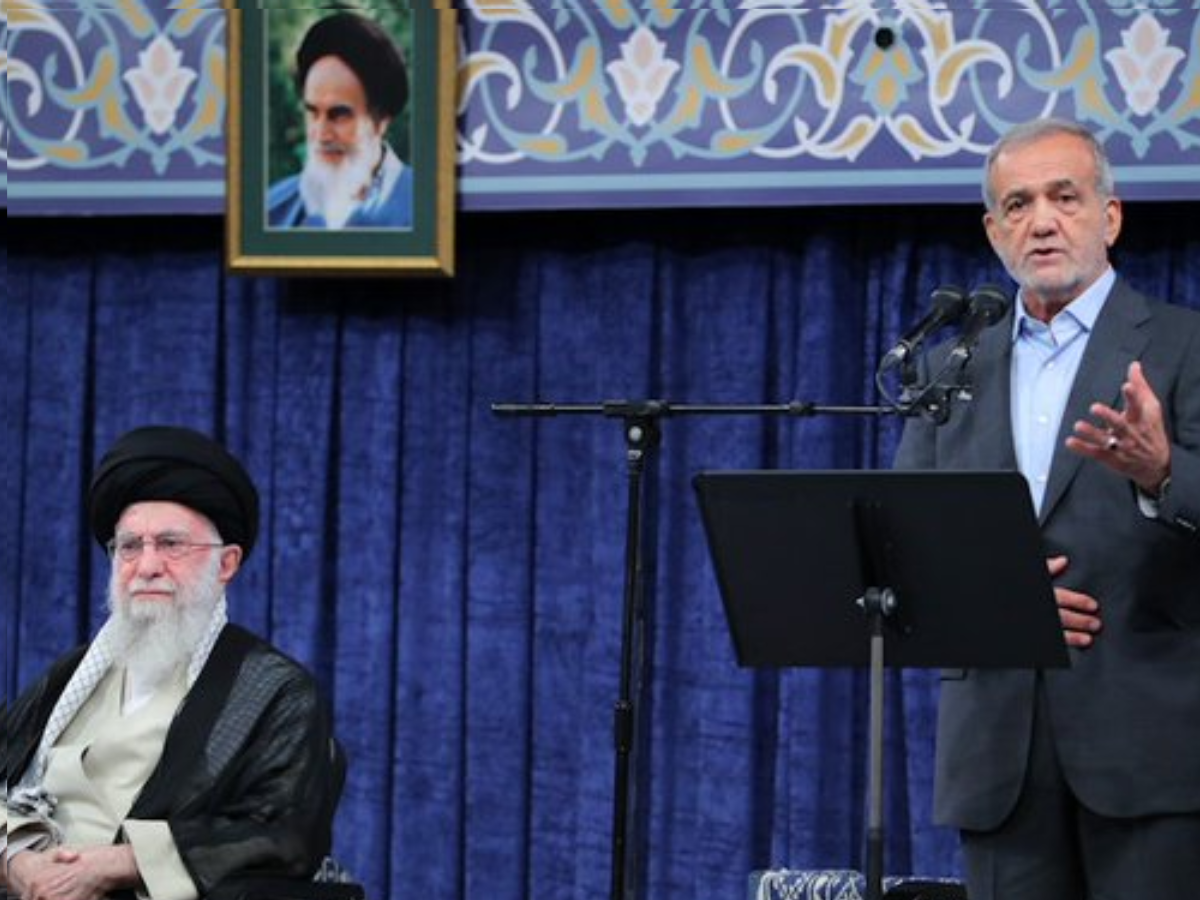
Middle East Tensions Rise as Iran Says Any Attack on Khamenei Would Trigger War (Image Source: X/ @jacksonhinklle)
Iran's Warning to US: Iran Iranian President Masoud Pezeshkian on Sunday issued a strong warning amid rising tensions with the United States, saying that any attack on Supreme Leader Ayatollah Ali Khamenei would be treated as an act of war against Iran.
In a post on X, Pezeshkian said, “Any aggression against the Supreme Leader of our country is tantamount to all-out war against the Iranian nation.” His statement came as diplomatic rhetoric between Tehran and Washington grew sharper.
اگر سختی و تنگنایی در زندگی مردم عزیز #ایران وجود دارد، یکی از عوامل اصلی آن دشمنی دیرینه و تحریمهای غیرانسانی دولت امریکا و همپیمانان اوست.
— Masoud Pezeshkian (@drpezeshkian) January 18, 2026
تعرض به رهبری معظم کشورمان بهمنزله جنگ تمام عیار با ملت ایران است.
Pezeshkian’s remarks followed comments by US President Donald Trump, who openly questioned Iran’s leadership. Speaking to Politico, Trump said, “It’s time to look for new leadership in Iran,” accusing Ayatollah Khamenei of using extreme violence to stay in power.
Trump further alleged, “What he is guilty of, as the leader of a country, is the complete destruction of the country and the use of violence at levels never seen before.” He added that Iran’s leadership should focus on governing the country responsibly, saying, “The leadership should focus on running its country properly, as I do with the United States, and not killing people by the thousands to keep control.”
Iran’s top leadership has repeatedly blamed the United States and Israel for the wave of protests and instability. Supreme Leader Ayatollah Ali Khamenei has called Trump a “criminal” and acknowledged that “several thousand” people were killed during the unrest.
Iranian officials have also indicated that executions connected to the protests could still be carried out. At the same time, internet services have been frequently restricted across different parts of the country to control the flow of information.
The protests in Iran began last month at Tehran’s Grand Bazaar, sparked by rising inflation and the sharp decline in the value of the national currency. What started as demonstrations over economic hardship quickly spread nationwide and turned into broader protests against the clerical establishment.
People from all walks of life including shopkeepers, students, and workers joined the demonstrations, openly demanding political and economic change. An Iranian official has claimed that at least 5,000 people were killed during the unrest.
As protests intensified, authorities deployed heavy security forces in major cities and imposed internet shutdowns to limit communication. Although the demonstrations have eased following a violent crackdown, reports of deaths, arrests, and alleged human rights abuses continue to emerge.
Despite the reduced street protests, tensions remain high both within Iran and internationally, with sharp exchanges between Tehran and Washington adding to fears of further escalation.
