Saudi Aramco shuts Ras Tanura refinery after Iranian drone strike as oil prices surge and shipping through Strait of Hormuz faces severe disruption.
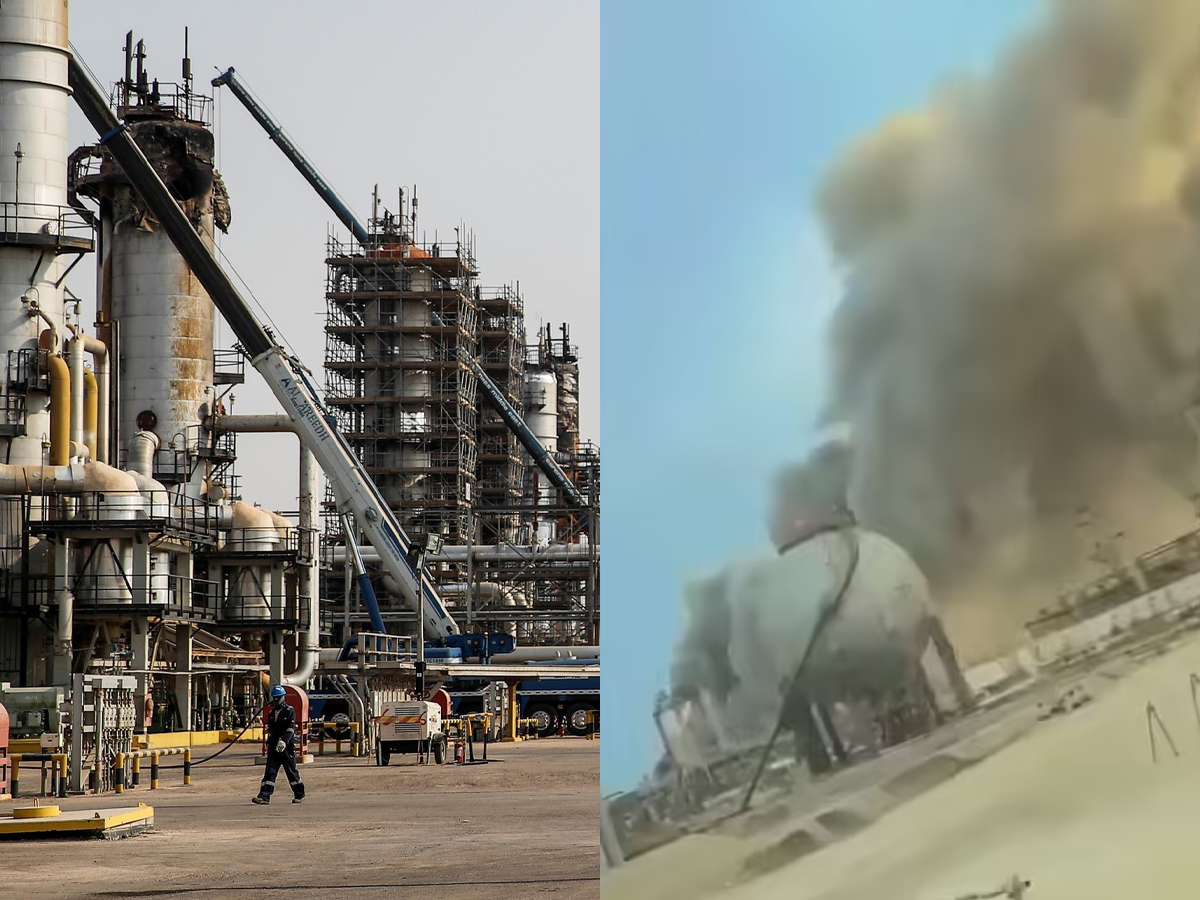
The attack raised immediate concerns about the vulnerability of Gulf energy assets at a time when regional tensions are already running dangerously high. (Photo: Social Media)
Saudi Arabia’s energy sector faced a major shock after Iranian drones struck the Ras Tanura refinery, forcing Saudi Aramco to temporarily shut operations at one of its most critical facilities. The incident has intensified fears of a wider energy crisis as conflict across the Middle East continues to escalate.
The drone strike hit Ras Tanura refinery, a cornerstone of Saudi Arabia’s oil infrastructure and one of the world’s largest refining and export hubs. Saudi Aramco halted operations as a precautionary measure while assessing damage and securing the facility.
The attack raised immediate concerns about the vulnerability of Gulf energy assets at a time when regional tensions are already running dangerously high.
🚨 HUGE! Iran reportedly STRUCK Aramco’s Ras Tanura oil refinery in Saudi Arabia 🤯
👉 The facility is one of the world’s largest oil export hubs. pic.twitter.com/6d8a641yFj— Megh Updates 🚨™ (@MeghUpdates) March 2, 2026
Ras Tanura plays a vital role in processing and exporting Saudi crude to global markets. Any disruption at the facility sends shockwaves through energy markets, given Saudi Arabia’s status as the world’s leading oil exporter. Analysts warn that prolonged downtime could significantly tighten global supply.
The refinery strike comes as shipping through the Strait of Hormuz faces near paralysis. The narrow waterway handles nearly 20% of the world’s daily oil flows, making it one of the most important energy corridors on the planet.
Although Iran has not formally declared the strait closed, several major shipowners have suspended transit due to security concerns. This has created a de facto blockade, worsening fears of supply bottlenecks and delays.
Energy markets reacted swiftly to the developments. Brent crude jumped to around $80 a barrel in early trading as investors priced in the risk of prolonged disruptions across the Gulf.
Traders now warn that any sustained interruption to exports from Saudi Arabia or neighbouring producers could push prices even higher, adding to inflationary pressures worldwide just as global demand strengthens.
The situation deteriorated sharply over the weekend after the United States and Israel launched missile strikes on targets across Iran, urging citizens to rise against the Islamic regime. Tehran responded with a wave of attacks aimed at Israel and US military bases, as well as targets in Saudi Arabia, Qatar, the UAE, Kuwait, and Bahrain.
Saudi Arabia said it successfully repelled Iranian strikes targeting areas near Riyadh and locations in the eastern region. Riyadh stressed that it had not allowed its territory or airspace to be used in operations against Iran.
“The Kingdom of Saudi Arabia expresses its rejection and condemnation in the strongest terms of the blatant and cowardly Iranian attacks,” the Foreign Ministry said in a statement. The attacks “cannot be justified under any pretext or in any way, and which came despite the knowledge of the Iranian authorities that the Kingdom has affirmed that it will not allow its airspace or territory to be used to target Iran,” the statement said.
Saudi authorities also summoned Iran’s ambassador, Alireza Enayati, to protest the strikes.
