
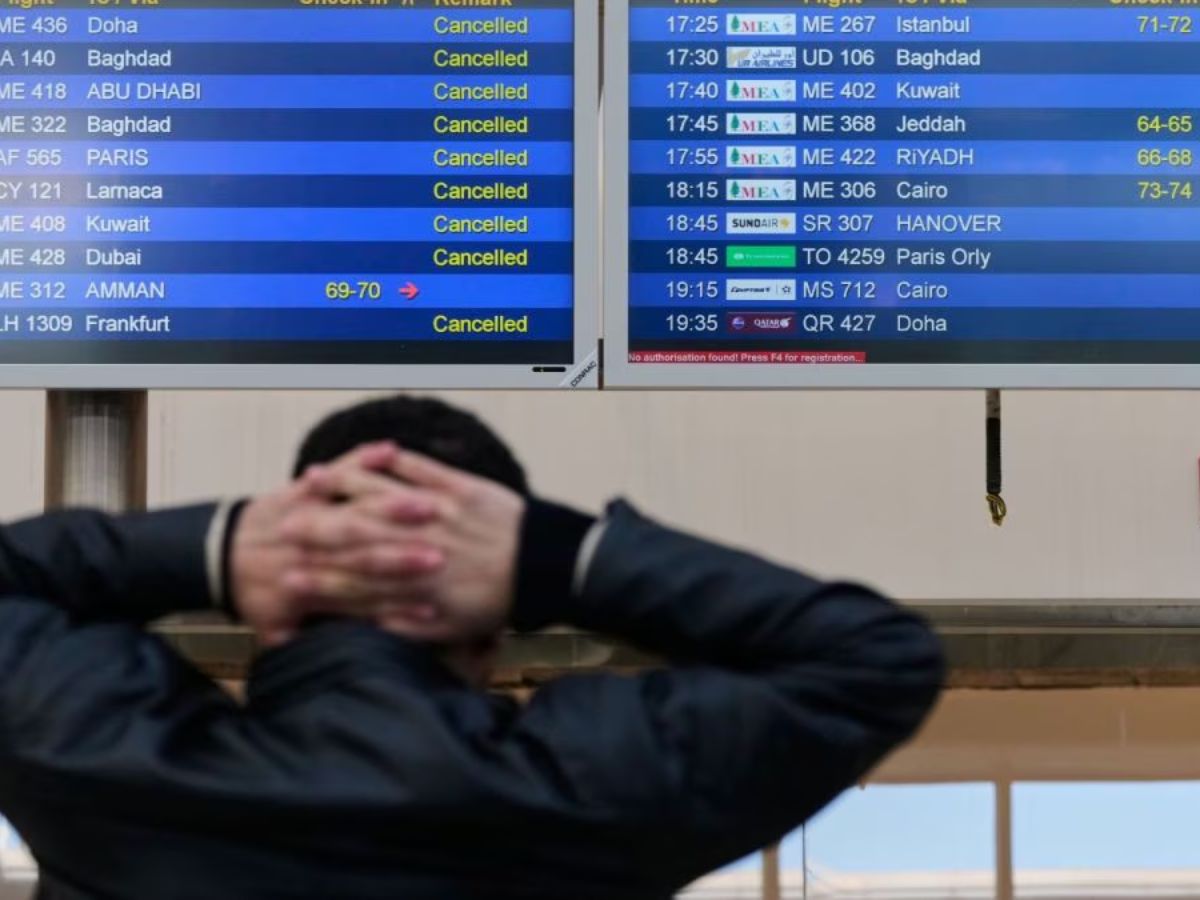
The Iran‑Israel war has unleashed a wave of disruption across the Middle East, hitting not just military targets but also civilian life and travel infrastructure. As Iranian missile and drone strikes extend across the Gulf region, major aviation hubs have shut their skies, leaving thousands of travellers stranded.
With key airports in Dubai, Doha, and Manama effectively offline, evacuees are scrambling for alternative routes out of the region. Amid this chaos, Riyadh has emerged as one of the very few functioning gateways out of the Gulf, marking a dramatic shift in how people are trying to escape the travel freeze.
Iran‑Israel War: How to Get Safely Out of the Middle East Amid the Ongoing War?
With standard flight routes blocked across much of the Gulf, travellers are seeking alternative ways to reach safe skies and international connections. Riyadh has emerged as the primary way out of the region, serving as one of the few operational airports in the Middle East.
Many are taking long overland drives from cities like Dubai, Abu Dhabi, Doha, and Manama to reach Riyadh’s King Khalid International Airport. Others are arranging chartered flights or private jets departing from the Saudi capital.
Foreign governments are issuing travel advisories and providing consular support for citizens trying to leave via Riyadh. Tourists, business travellers, and expatriates are relying on this corridor as a safe passage while the Gulf grapples with missile threats, drone attacks, and widespread airspace closures.
Iran‑Israel War: Why Riyadh is Becoming a Safe Passage Out of the Gulf
While many Gulf states have seen their flight operations grind to a halt, Riyadh’s King Khalid International Airport (RUH) has remained operational. Unlike its neighbours, Saudi Arabia’s skies have stayed largely open, providing a rare travel corridor out of the region.
Because it has not been hit by direct missile activity and its authorities have maintained a neutral airspace policy, Riyadh has become a vital transit point for those eager to leave the Gulf.
Iran‑Israel War: Which Airports Are Open in Riyadh?
Riyadh has become the primary gateway for travellers looking to exit the Gulf amid widespread airspace closures. The main airport facilitating departures is King Khalid International Airport (RUH), which remains fully operational for commercial flights, private jets, and evacuation charters.
Several airlines, including Saudia, Emirates (via re-routes), Qatar Airways, and other international carriers, are currently using Riyadh as a transit hub to route passengers to Europe, Asia, and other destinations.
The airport has implemented enhanced security and crowd management measures to handle the surge in travellers, and charter services are coordinating with ground transport companies to bring passengers safely from other Gulf cities.
Passengers are advised to check flight schedules in advance, as high demand has led to rapidly filling seats and increased ticket costs for last-minute departures. For those stranded in the UAE, Bahrain, Doha, or Kuwait, Riyadh is now the safest and most accessible corridor out of the conflict-affected Gulf region.
Iran‑Israel War: Airspace Closures & Aviation Shutdowns
The escalating conflict has led civil aviation authorities in several Middle Eastern countries to restrict or close their skies for safety reasons. The United Arab Emirates, Qatar, Bahrain, Kuwait, and parts of Saudi Arabia have all reported airspace disruption.
Major airports that once served as global transit hubs are now forced to cancel or reroute flights, leaving travellers with limited options. Commercial carriers have paused schedules or been redirected around the region entirely, creating widespread delays and uncertainty for passengers trying to continue their journeys.
Iran‑Israel War: Long Drives, Soaring Private Transport Demand
The shift toward Riyadh hasn’t come without effort or expense. Passengers from cities like Dubai, Abu Dhabi and Doha are arranging long road journeys, sometimes around **10 hours or more, to reach Riyadh by land.
Private security companies are organising SUV convoys, while charter brokers report a surge in demand for private jets and air ambulances. Because these services are now rare and in high demand, prices for charters to Europe, Africa and Asia have soared, with some routes costing travellers six figures.
Iran‑Israel War: Why Riyadh Airspace Remains Open?
Saudi Arabia’s decision to keep its airspace open appears rooted in both strategic neutrality and practical caution. Unlike other neighbouring states, Riyadh has not indicated that its territory will be used as a base for offensive military operations in the conflict.
This posture seems to have helped shield it from direct targeting, at least so far. As a result, airlines and travellers see Riyadh as a safer option for departures, even as nearby capitals struggle under missile and drone threats.
Iran‑Israel War: Civilian Exodus & Regional Disruption
The closure of major Gulf airports has triggered a civilian exodus unlike anything seen in recent years. Thousands of travellers, residents and expatriate workers are now on the move, either by land or through the limited flight options that remain.
Western governments are stepping in to assist with evacuation logistics, while families separated by the sudden disruption seek ways to reunite or return home. The impact extends across tourism, business travel, and expatriate communities who rely on stable aviation links for daily life.
Iran‑Israel War: What This Means for Travellers & Global Aviation?
The emergence of Riyadh as a key transit hub highlights just how deeply the Iran‑Israel war has shaken global travel networks. With traditional Gulf gateways offline, flight paths that once connected continents have been torn apart.
Airlines and regulators warn that even after the conflict quiets down, restoring regular routes will take time due to rerouted aircraft, displaced crew, and safety validations.
For travellers, this moment serves as a stark reminder that geopolitical instability can rapidly upend global aviation — and that adaptability, awareness and patience are now essential tools for anyone travelling across or out of the Middle East.




