Iran‑Israel‑US War Update: Missile interceptions in Qatar, rising casualties and global diplomatic pressure highlight the growing risks in the escalating US-Israel-Iran conflict.
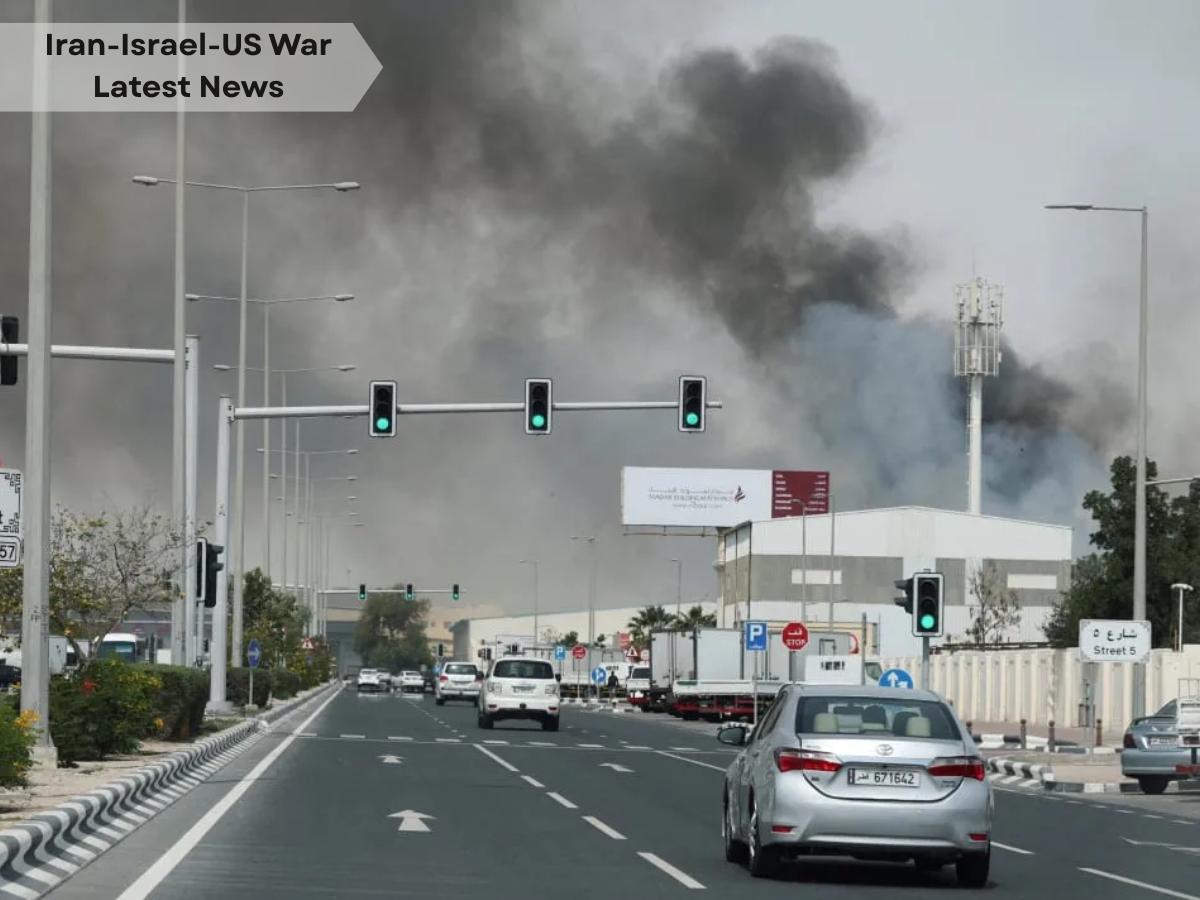
Air defence systems intercept missiles over Doha as tensions rise across the Middle East conflict zone (Photo: X)
Iran‑Israel‑US War Latest News: The situation in the Middle East is still very tense since the dispute between the United States, Israel and Iran is still escalating. The war that escalated following the US-Israeli airstrikes on Iran on February 28 already resulted in numerous victims and disruption in the system stability in the whole region. It is reported that over 1,300 persons have been killed in Iran since the beginning of the strikes and at least 13 or 15 killed in Israel and over 1,900 wounded in retaliatory attacks. New missile action, diplomatic threats and emergency meetings of world leaders demonstrate the changes in the situation in the crisis.
Qatar authorities had confirmed that their defence systems detected five Iranian ballistic missiles targeted towards the country earlier on Tuesday. Other explosions were subsequently reported at the capital, Doha as another missile threat came in and was responded to by air defence units. Authorities claimed that the missiles had been intercepted in time before they hit and therefore there were no casualties and no property was damaged. It demonstrates how the war is not only spreading outside of Israel and Iran, but it is worrying to the neighbouring states in the Gulf, which depend greatly on the stability to conduct their trade and energy security.
A stern warning was given by US President Donald Trump over the likelihood of Iran using naval mines in the Strait of Hormuz, which is a strategic passage through which almost 20 percent of the global oil shipments flow on an average day. Trump asserted the US troops had already destroyed 10 idle mine-laying boats meaning that it will respond strongly to any effort to interfere with the waterway. The military officials have emphasized the fact that even restricted mining would seriously disorient the global energy markets and maritime trade.
The foreign minister of Germany Johann Wadephul also stated that the diplomatic negotiations are still possible yet Tehran now seems to be not interested in the negotiations. Apostate, Wadephul, in a speech following talks with Israeli officials, said that any meaningful dialogue could only be achieved when Iran shows its willingness to compromise. The governments of Europe have been calling on restraint in increasing numbers because the governments fear that the war might lead to a destabilisation of the energy supplies and trade routes that are already experiencing pressure.
A phone discussion also occurred between Russian President Vladimir Putin and Iranian President Masoud Pezeshkian in which he urged Iran to politically end the crisis. This discussion was a mere day following Putin having just talked to Donald Trump indicating an effort by the Moscow to establish itself as a diplomatic go-between. The Kremlin again reaffirmed its backing of de-escalation, and has also admitted that Russia has been rendering humanitarian aid to the regions that are caught in the conflict.
The United Nations Security Council is on the verge of voting on a resolution that demands Iran to desist assaults on neighbouring Arab nations. The draft measure denounces a strike or a threat of strike on Bahrain, Kuwait, Oman, Qatar, Saudi Arabia, the United Arab Emirates and Jordan. According to diplomats, the vote might be a major test of international solidarity as the world powers strive to ensure that the conflict does not spread further to the rest of the Middle East.
1. Why is the Strait of Hormuz so important?
It is a major energy passage in the globe, and it transports an estimated one-fifth of the international oil importations daily.
2. Has Qatar suffered damage from the missile attacks?
No, The missiles were intercepted by the defence systems of Qatar before hitting the country and no damage or loss of lives was reported by the authorities.
3. How many people have died in the conflict so far?
It is reported that there are more than 1300 deaths in Iran and about 13-15 in Israel with numerous others injured.
4. Is the United Nations taking action?
Yes, The UN Security Council is set to pass a resolution that will require Iran to stop attacking other Arab countries.
5. Is there any diplomatic negotiation going on?
Others are insisting on negotiations, yet a number of heads assert that Iran is not yet willing to initiate formal talks.
