Mojtaba Khamenei has emerged as the strongest contender to succeed Iran’s Supreme Leader after the Assembly of Experts reportedly finalized a decision following Ayatollah Ali Khamenei’s death.
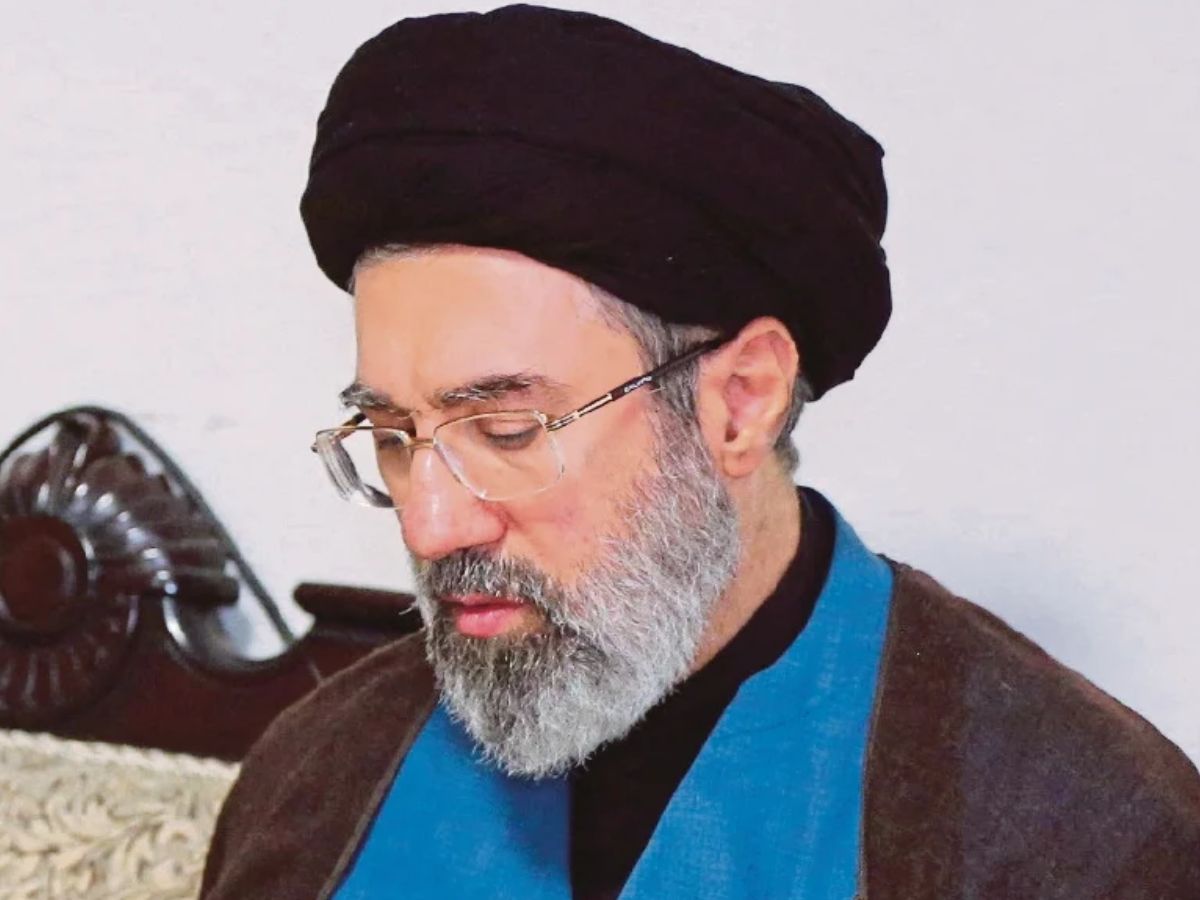
Iran’s Next Supreme Leader: Mojtaba Khamenei in Spotlight After Secret Vote (Image Source: X)
Iran is witnessing a crucial moment in its political history as the country searches for a new Supreme Leader after the killing of Ayatollah Ali Khamenei in joint US-Israeli airstrikes on February 28. While no official announcement has been made yet, one name has increasingly emerged in discussions — Mojtaba Hosseini Khamenei, the son of the late leader.
For most of his life, Mojtaba has remained largely out of the public spotlight. He has never held elected office, delivered public speeches, or taken on a formal political title. Despite maintaining such a low profile, he is now being widely viewed as a leading candidate to lead the Islamic Republic.
Iran’s powerful Assembly of Experts, the clerical body responsible for selecting the Supreme Leader, has reportedly already made a decision regarding the next leader.
Senior clerics confirmed on Sunday that a vote had taken place, though the name of the chosen candidate has not yet been revealed. According to Iran’s Mehr news agency, Ahmad Alamolhoda, a member of the Assembly of Experts, confirmed that the selection process had been completed.
“The vote to appoint the leader has taken place and the leader has been chosen,” Alamolhoda said, adding that the body’s secretariat would announce the name later.
Other members of the assembly also indicated that a decision had been finalized, with one suggesting that the late leader’s son could be the likely successor.
Born in 1969 in the holy city of Mashhad, Mojtaba Khamenei grew up within the political and religious environment of the Islamic Republic. His father served as Iran’s third president from 1981 to 1989 before becoming Supreme Leader.
Although Mojtaba has never held an official government role, he has reportedly played an influential behind-the-scenes role for years within his father’s office. During this time, he built strong connections within Iran’s security institutions, especially the Islamic Revolutionary Guard Corps (IRGC).
Religiously, Mojtaba is considered a mid-ranking cleric and teaches theology at the prominent Qom seminary. However, like his father before becoming Supreme Leader, his religious rank could be elevated by the Assembly of Experts to the title of Grand Ayatollah if required for political reasons.
Experts believe such a move would signal continuity within Iran’s ruling structure.
Iran experts believe that selecting Mojtaba Khamenei would help maintain stability within the Islamic Republic’s power structure.
Georgetown University professor and Iran specialist Mehran Kamrava described the possibility as an effort to maintain the system’s continuity.
“The deep state in the Islamic Republic wants continuity,” Kamrava said. “If Mojtaba indeed is chosen as his father's successor, it would indicate more than anything else that the Islamic Republic is trying to ensure continuity.”
He added that many inside Iran believe Mojtaba holds a strong position among the commanders of the Revolutionary Guards, which could strengthen his chances.
Despite his growing prominence, Mojtaba’s potential appointment has sparked debate within Iran’s political and religious establishment.
Some factions strongly oppose the idea of hereditary leadership, arguing that dynastic succession contradicts the principles of the 1979 Iranian Revolution, which overthrew the monarchy of Shah Mohammad Reza Pahlavi.
Critics say replacing one ruler with the son of another could resemble the very system the revolution sought to dismantle.
While Mojtaba remains a prominent contender, several other figures have also been mentioned as potential successors.
Among them are senior officials and clerics such as Asghar Hijazi, Ali Larijani, Sadeq Larijani, Alireza Arafi, Mohammad-Mahdi Mirbagheri, and Mohsen Araki.
Hassan Khomeini, the grandson of the Islamic Republic’s founder Ayatollah Ruhollah Khomeini, has also been discussed as a possible candidate. Although he commands respect among clerics and reformist groups, his relatively moderate views may make him less appealing to Iran’s hardline leadership.
Ayatollah Alireza Arafi has drawn attention as well. The 67-year-old cleric is a key figure in Iran’s religious establishment and currently serves on the three-member interim leadership council guiding the country during the transition period.
Another influential name is Ayatollah Mohammad Mehdi Mirbagheri, a conservative cleric who is popular among hardliners. Mirbagheri has stated that a consensus on the next leader is nearly complete, though he did not reveal the chosen candidate.
Some comments from members of the Assembly of Experts have further fueled speculation about Mojtaba Khamenei.
Ayatollah Mohsen Heidari Alekasir suggested that the chosen leader fits the late Khamenei’s advice that Iran’s Supreme Leader should be someone disliked by the country’s enemies.
He hinted at Mojtaba when he said, “Even the Great Satan [the US] has mentioned his name,” referring to US President Donald Trump’s statement that Mojtaba Khamenei would be an “unacceptable” choice.
The leadership transition is taking place during an extremely tense period for Iran. The country is currently dealing with the aftermath of major military strikes and a broader conflict involving Israel and the United States.
Iranian cities are still recovering from recent attacks, and parts of the nation’s nuclear infrastructure were heavily damaged earlier in the conflict.
Some analysts believe these conditions could influence the leadership decision.
Sanam Vakil, director of the Middle East and North Africa program at Chatham House, previously suggested that the Assembly of Experts might delay a full meeting until military operations slow down.
“They cannot risk further death and damage to the institution,” she said.
However, assembly members have indicated that an in-person meeting may not be necessary to finalize the appointment.
Experts caution that selecting a new leader may not resolve deeper political divisions within Iran. Vakil noted that periods of leadership transition often strengthen conservative and security-focused factions within the system.
“Moments of succession tend to strengthen conservative and security-driven factions, at least initially,” she said. She also explained that any debates about Iran’s future direction are likely taking place quietly among elite political circles rather than in public.
If Mojtaba Khamenei ultimately becomes Supreme Leader, analysts believe it would signal that hardline factions remain firmly in control of Iran’s political system.
Some observers say this could reduce the likelihood of Iran pursuing negotiations or diplomatic deals in the near future.
For now, Iran’s leadership has taken a defiant stance, declaring that the country is prepared to confront the United States and Israel for months if necessary and even challenging them to attempt a ground invasion.
