Iran blames Israel's Mossad for stirring unrest during mass protests, claiming foreign interference behind the scenes, deepening tensions with Tel Aviv and the US.
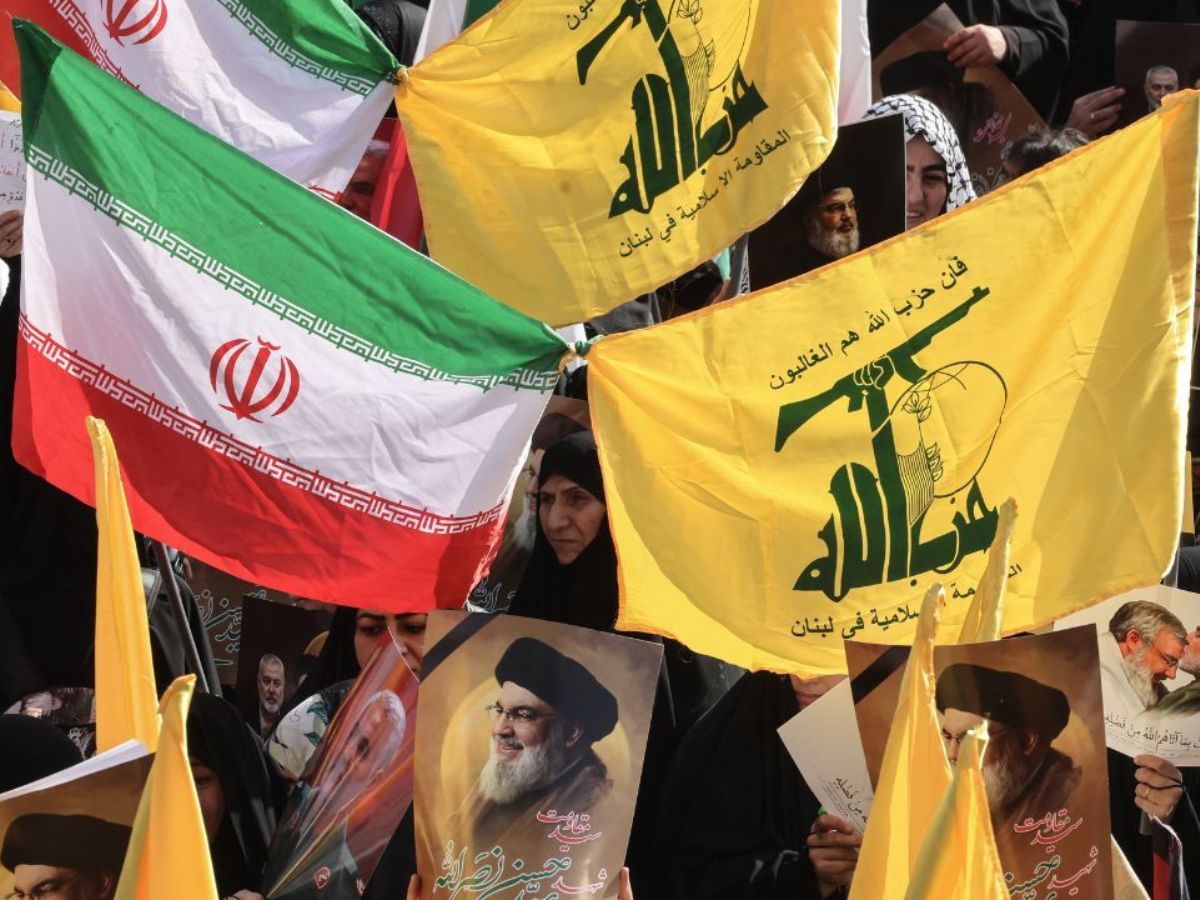
Iran blames Israel's Mossad for stirring unrest during mass protests [Photo: X]
Iran's government has accused Israel's intelligence agency Mossad of playing a role in fomenting unrest during nationwide protests that have gripped the country. Tehran claims foreign interference, especially from Israel and the US, is behind the turmoil.
Iranian leaders describe the unrest as part of a broader campaign to destabilise the Islamic Republic, amid one of the biggest protest movements in years.
Iranian officials have repeatedly claimed that foreign intelligence agencies are exploiting unrest for political purposes. The Islamic Republic asserts that Mossad agents are embedded within Iran to encourage and direct demonstrations against the government. In statements broadcast on state media, authorities have said that “terrorists” and “trained elements sponsored by foreign actors” are attempting to stoke violence in cities and towns.
Security forces also announced the arrest of individuals accused of links to Mossad, claiming they had communication and espionage tools and participated in organising violent incidents during protests. These detentions form part of Iran’s narrative that external forces are behind internal dissent.
Mossad is Israel’s national intelligence agency. It handles foreign intelligence, covert operations and counter-terrorism missions outside Israel. The agency reports directly to the Israeli prime minister.
Mossad is known for secret operations across the Middle East and beyond. Its work includes intelligence gathering, cyber operations and targeted missions against Israel’s adversaries. Israel rarely comments publicly on Mossad’s activities.
Iran has long accused Mossad of operating inside its borders. Tehran claims the agency runs espionage networks, cyber attacks and sabotage missions aimed at weakening the Iranian state. Israel has neither confirmed nor denied these allegations.
The rivalry between Iran and Israel has made Mossad a frequent focus of Iranian accusations whenever unrest, attacks or security incidents occur inside the country.
The unrest initially began late last year over economic hardship and rising prices, but quickly grew into broader anti-government demonstrations in major cities. The government has responded with a heavy security crackdown, including arrests, internet blackouts and threats of severe punishment for perceived subversives.
As protests continued, Iranian authorities insisted they had largely brought the situation under control, but still pointed to foreign interference as a key driver of instability. Officials have labelled demonstrators as “terrorists” and opponents of the state, maintaining the unrest is not purely organic but manipulated by outside powers.
Iran has not limited its accusations to Mossad alone. The government also blames the United States for supporting what it calls hostile acts and “subversive behaviour” within its borders. Iranian leaders allege that the U.S. and Israel aim to weaken the regime and exploit protest movements for strategic gains.
In televised remarks, Iranian President Masoud Pezeshkian described protesters’ actions as violent and destructive, claiming that foreign sponsors have sent terrorists disguised as protestors to exploit the situation and destabilise the nation.
Recent reports circulated by Iranian state-affiliated media and Telegram channels allege that lists of hundreds of Mossad agents operating inside Iran have been uncovered. According to these reports, these agents are accused of coordinating unrest and communicating with central figures tied to protest coordination.
Turkish officials have even echoed similar accusations, with foreign ministers suggesting that Mossad is using online platforms to encourage anti-government demonstrations. Such claims, while unverified independently, have been widely propagated by Tehran’s media.
Iranian security organs have stepped up actions that they say target foreign-linked operatives. Officials in North Khorasan reported the arrest of individuals accused of directing riots and violent acts in coordination with Mossad sources, with weapons and spying equipment seized during raids.
These arrests are part of a broader campaign by Iran’s Revolutionary Guard and intelligence services to root out what officials describe as “infiltrators and saboteurs.” The government uses these claims to justify wider crackdowns and to frame the unrest as an external plot rather than purely domestic dissent.
Foreign governments and independent analysts have generally treated such Iranian claims with caution. Western officials have typically described the protests as driven by economic and political grievances, though some acknowledge external actors sometimes seek to influence such movements.
Most external commentators note that while intelligence operations and influence efforts occur globally, direct evidence of Mossad directing protests inside Iran has not been publicly confirmed. (general knowledge)
These accusations come against a backdrop of heightened tensions between Tehran and Jerusalem, including episodes of military engagement and espionage claims over recent years. Iran and Israel have long engaged in a cycle of mutual distrust, cyber operations, and intelligence rivalry, making such allegations part of a longstanding geopolitical contest.
By framing internal unrest in terms of foreign plots, Iran’s leadership aims to discredit opposition movements and rally nationalist sentiment against perceived external enemies.
