Riyadh’s King Khalid International Airport remains operational amid Middle East tensions. Check RUH flight delays, cancellations, airspace updates and travel advisories.
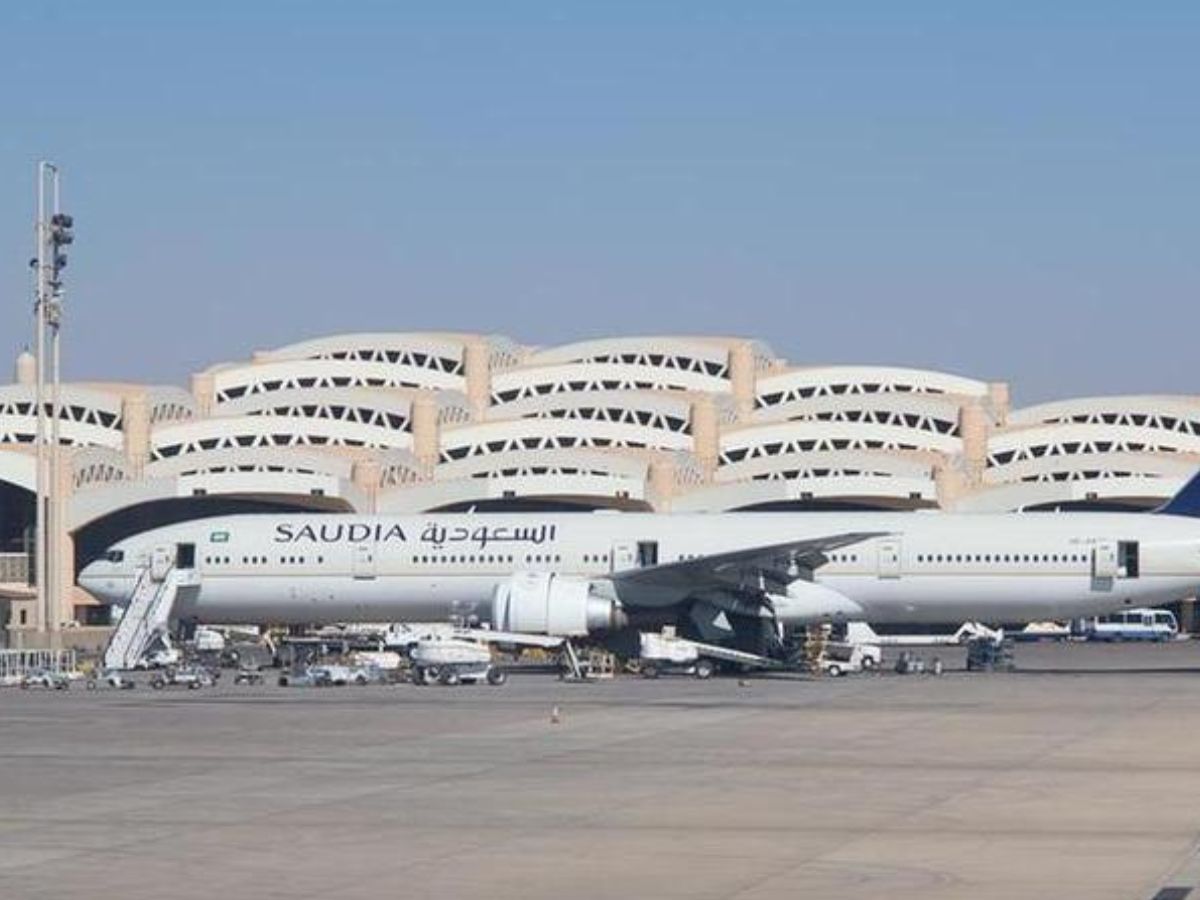
Riyadh’s King Khalid International Airport remains operational amid Middle East tensions [Photo: X]
Air travel across the Middle East has faced widespread disruption after recent strikes involving the United States, Israel and Iran triggered widespread airspace closures and aviation restrictions. Several countries, including Qatar, the UAE and other Gulf states, shut their skies as a precaution, causing thousands of cancellations and delays across the region.
Major aviation hubs like Dubai, Abu Dhabi and Doha were temporarily suspended or highly restricted, affecting global airline schedules. Riyadh’s King Khalid International Airport (RUH) has also been impacted by these developments, though it has not fully shut down its operations.
King Khalid International Airport remains operational, but flights are being managed cautiously due to regional airspace disruptions. Unlike some Gulf airports that saw full suspension, RUH has not been closed completely, but certain flights may be delayed, diverted, or cancelled depending on evolving airspace advisories and airline decisions in response to safety concerns.
Saudi aviation authorities have not announced a full shutdown but continue to urge passengers to confirm flight details with their carriers before heading to the airport.
The broader Middle East airspace crisis has already led to cancellations and diversions that affect travel through RUH:
Because Riyadh is often used as a connecting or alternate hub during reroutes, it has seen diverted aircraft and increased air traffic pressure, which can affect on-time performance.
The airspace challenges stem from regional military escalation, following major strikes involving the US, Israel, and Iran. As a result:
International aviation authorities, including airlines and civil aviation regulators, have issued advisories urging passengers to monitor official updates and check frequently for changing flight statuses.
The adjustments at RUH are precautionary and strategic, aimed at protecting passenger safety amid rising regional instability. Even if Saudi Arabia is not directly involved in military hostilities, neighbouring airspace closures and flight restrictions require airlines to carefully plan flight paths that avoid potentially risky corridors.
This defensive approach aligns with global aviation practice: when airspace near conflict zones is restricted, airlines must choose safer routes, consolidate schedules, or temporarily halt operations in affected regions.
Passengers travelling through Riyadh are advised to:
Saudi officials have stressed that the adjustments are aviation safety measures only and that internal security within the kingdom remains stable.
Passengers affected by flight delays or cancellations at King Khalid International Airport (RUH) in Riyadh are advised to contact airport authorities or their respective airlines directly for updated information on departures, arrivals, rebooking, and refunds.
Passengers can also check live flight updates on the official Riyadh Airports website before heading to the airport.
For passengers travelling with other international carriers, it is recommended to check the airline’s official website or local office numbers for updated flight status and support options.
As conditions are reassessed and security risks evolve:
Travellers should prepare for a gradual restoration of services rather than an immediate return to full operations and remain flexible with their travel plans.
The disruptions at Riyadh reflect a wider aviation crisis across the Middle East, where multiple skies have been restricted or shut following conflict escalation. Hundreds of flights have been delayed or cancelled, with thousands of travellers stranded or rerouted across key hubs.
Airspace closures extend beyond the Gulf, affecting international flight routes between Europe, Asia, Africa and the Americas. Because major Gulf airports function as global connectors, even partial closures have ripple effects on worldwide aviation operations.
