The US announcement of tariff relief for India has sparked debate over whether the India–Russia economic partnership will be strained
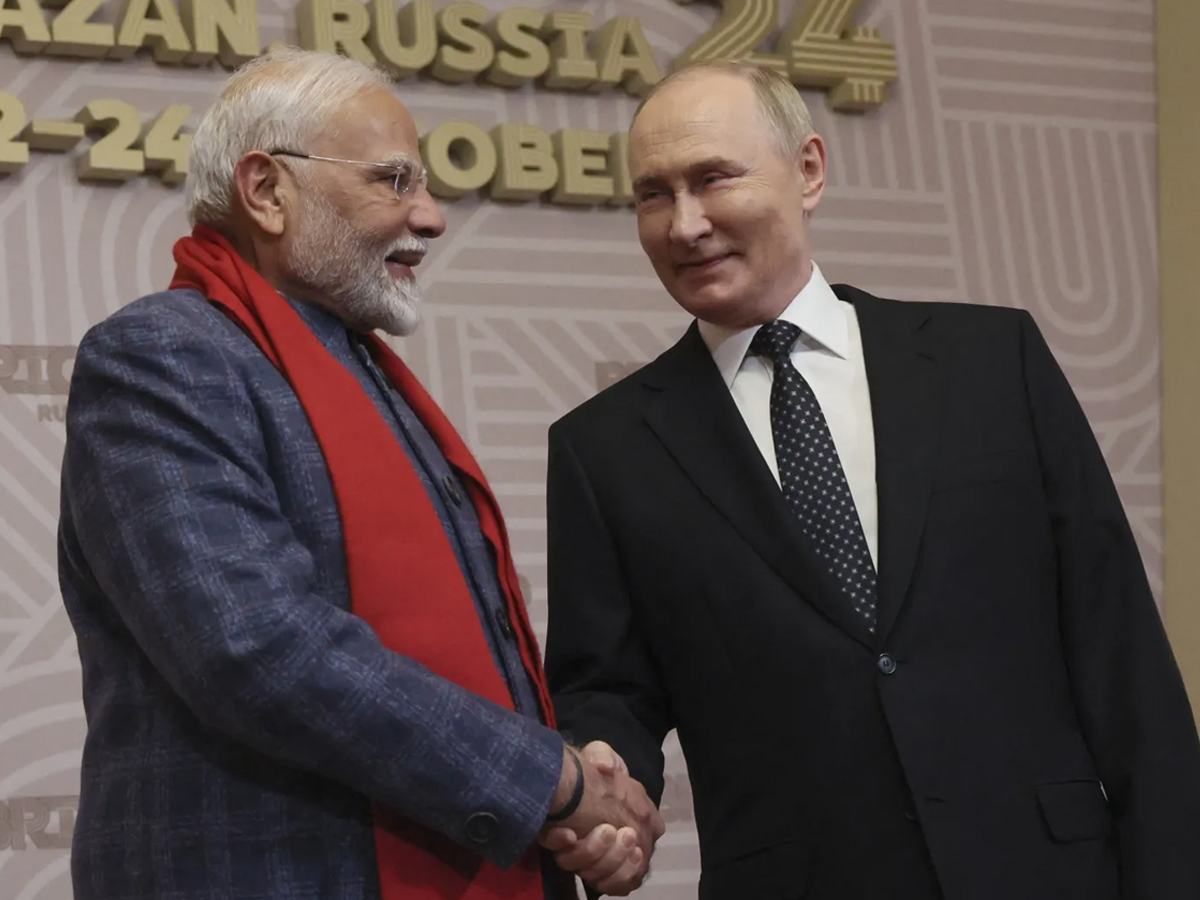
U.S. President Donald Trump announced a deal to cut tariffs on Indian goods from 50% to 18% after India signalled it would halt Russian oil purchases and boost U.S. imports. (Photo: Social Media)
On Monday, after months of negotiations, U.S. President Donald Trump announced a reduction in tariffs on Indian goods from 50% to 18%. While Prime Minister Narendra Modi has not yet confirmed the full terms of the agreement, Trump has claimed that India would halt purchases of Russian oil and remove trade barriers on American goods.
At a time when Russia relies heavily on Indian energy demand to sustain its influence in a sanctions-constrained global economy, the announcement has reignited questions about the durability of India’s decades-old partnership with Russia. Does the shift signal strain in India–Russia ties, or is it an exercise in tactical diplomacy?
Since Western sanctions over the Ukraine war reshaped global oil flows, India emerged as one of the largest buyers of discounted Russian crude oil, providing Moscow with a vital source of economic stability.
India’s neutral stance, marked by its refusal to condemn either side and repeated calls for a negotiated settlement, irritated the U.S. and became a point of contention in its trade policy.
Some analysts note that Washington’s pressure was applied unevenly, with India facing punitive tariffs while other major buyers did not receive comparable measures.
While India initially bore the brunt of these measures and continued trade with Russia, recent events signal a recalibration may be underway. Reuters reports that Indian imports of Russian oil have already slowed, falling from around 1.2 million barrels per day to about 1 million within a month.
Despite Trump's announcement and pressure, a rupture in India–Russia ties remains unlikely.
Firstly, India’s foreign policy has long been defined by multi-alignment rather than alliance switching, which has allowed it to deepen ties with one power without severing others.
Secondly, beyond economics, the India–Russia partnership rests on decades of defence cooperation, sustained technological collaboration, and a shared commitment to strategic connectivity, all of which are expected to continue even if oil imports decline. This is strategic balancing, not realignment.
Whether India continues importing oil from Russia or begins sourcing more from the United States or Venezuela remains an open question. But even if the latter takes place, it can be best understood as careful de‑risking, rather than decoupling from Russia.
The US tariff deal functions as pressure management, prompting New Delhi to recalibrate energy choices without upending its long‑standing ties with Moscow. By navigating competing interests, India preserves strategic ambiguity, maintaining flexibility in both its relationship with Russia and its engagement with the United States.
