Did the US and Israel strike Iran on an ‘Islamic 9/11’? Why the timing of the Ramadan airstrikes is fuelling debate amid escalating Middle East war.
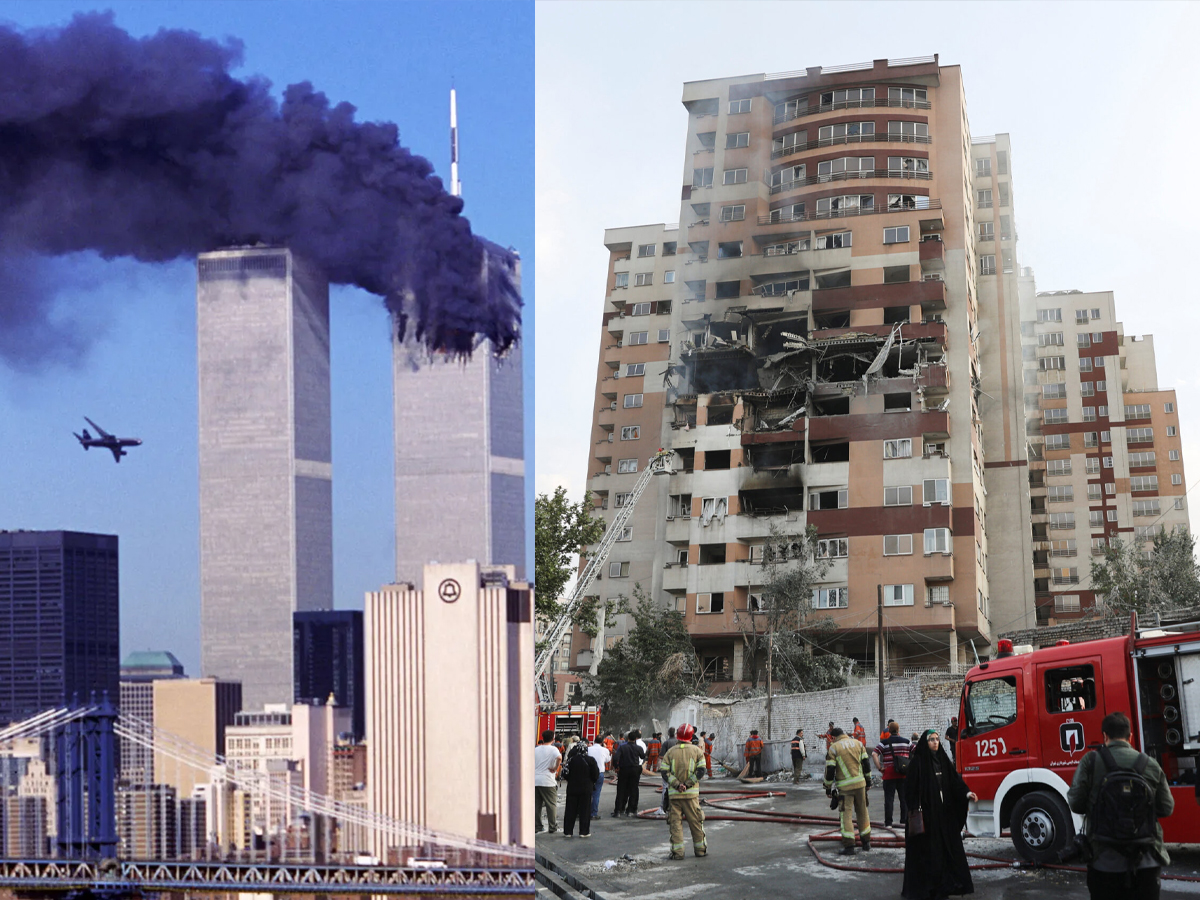
The coincidence of the attack falling on the 11th day of the ninth Islamic month has sparked intense debate online. (Photo: Social Media)
In the early hours of Saturday, February 28, 2026, the Middle East witnessed one of its most dangerous escalations in decades as the United States and Israel launched coordinated military strikes across Iran. The operation targeted key military and intelligence facilities, plunging the region into uncertainty and triggering intense online debate — not just about the scale of the attack, but also its timing.
Within hours, social media users began pointing to a striking coincidence: the assault took place during the holy month of Ramadan and, according to the Islamic lunar calendar, on the 11th day of the ninth month. One X user wrote, "Today is the 11th day of the 9th month according to the Islamic Calendar. Donald Trump attacked the Islamic Republic on 9/11 — and during Ramadan at that." The post quickly went viral, raising questions about whether the date carried symbolic intent.
The joint air campaign hit multiple locations across Tehran, Isfahan, Tabriz, and other major cities. Explosions echoed through urban centres as satellite imagery later revealed damage near sensitive strategic installations.
Israel described the operation as part of a broader effort to neutralise what it called an “existential threat”. The strikes reportedly targeted military command centres, intelligence hubs, and government-linked infrastructure across nearly two-thirds of Iran’s provinces.
Iranian authorities said the attacks caused heavy civilian casualties. Emergency responders reported that at least 200 people were killed and hundreds were injured nationwide.
The coincidence of the attack falling on the 11th day of the ninth Islamic month has sparked intense debate online. Critics argue that launching a military operation during Ramadan — a period of fasting and prayer — could deepen resentment across the Muslim world.
Today is the 11th day of 9th month according to the Islamic Calendar.
— dahlia kurtz ✡︎ דליה קורץ (@DahliaKurtz) February 28, 2026
Donald Trump attacked the Islamic Republic on 9/11 — and during Ramadan at that.
This is spectacular.
Who should play Trump in the upcoming historical epic blockbuster?
And who should play Netanyahu?
Others, however, believe the timing reflected military calculations rather than religious symbolism, citing operational readiness, intelligence windows, and regional dynamics.
Even so, the phrase “Islamic 9/11” has gained traction on social media, amplifying perceptions that the strike carried psychological weight beyond its military objectives.
One of the deadliest incidents occurred in Minab, a southern Iranian city, where an airstrike reportedly hit an all-girls school. Iranian media and humanitarian officials claimed that at least 85 students were killed, with dozens more injured. Images and videos from the area circulated widely, fuelling anger and grief inside Iran and across the region.
Iran reacted swiftly. The Islamic Revolutionary Guard Corps launched waves of missiles and drones toward Israel and US military bases across the Middle East. Air-raid sirens sounded in several Gulf states, forcing temporary closures of airspace and raising fears of wider conflict.
Israeli emergency services reported at least one civilian death in central Tel Aviv and dozens of injuries following Iranian counterattacks.
Early Sunday, Iranian state media outlets confirmed that Supreme Leader Ayatollah Ali Khamenei was killed in the strikes — a claim that, if fully established, would mark an unprecedented blow to Iran’s leadership.
US President Donald Trump responded with a direct message to Iranians, writing, "When we are finished, take over your government. It will be yours to take."
The decision to strike during Ramadan and on a date now framed by some as symbolic may influence how the conflict unfolds. Analysts warn that perceptions matter as much as military outcomes, particularly in a region where history, religion, and politics deeply intersect.
Whether intentional or coincidental, the timing has added another layer of tension to an already explosive situation — one that could shape regional alliances, public opinion, and the next phase of the war.
