
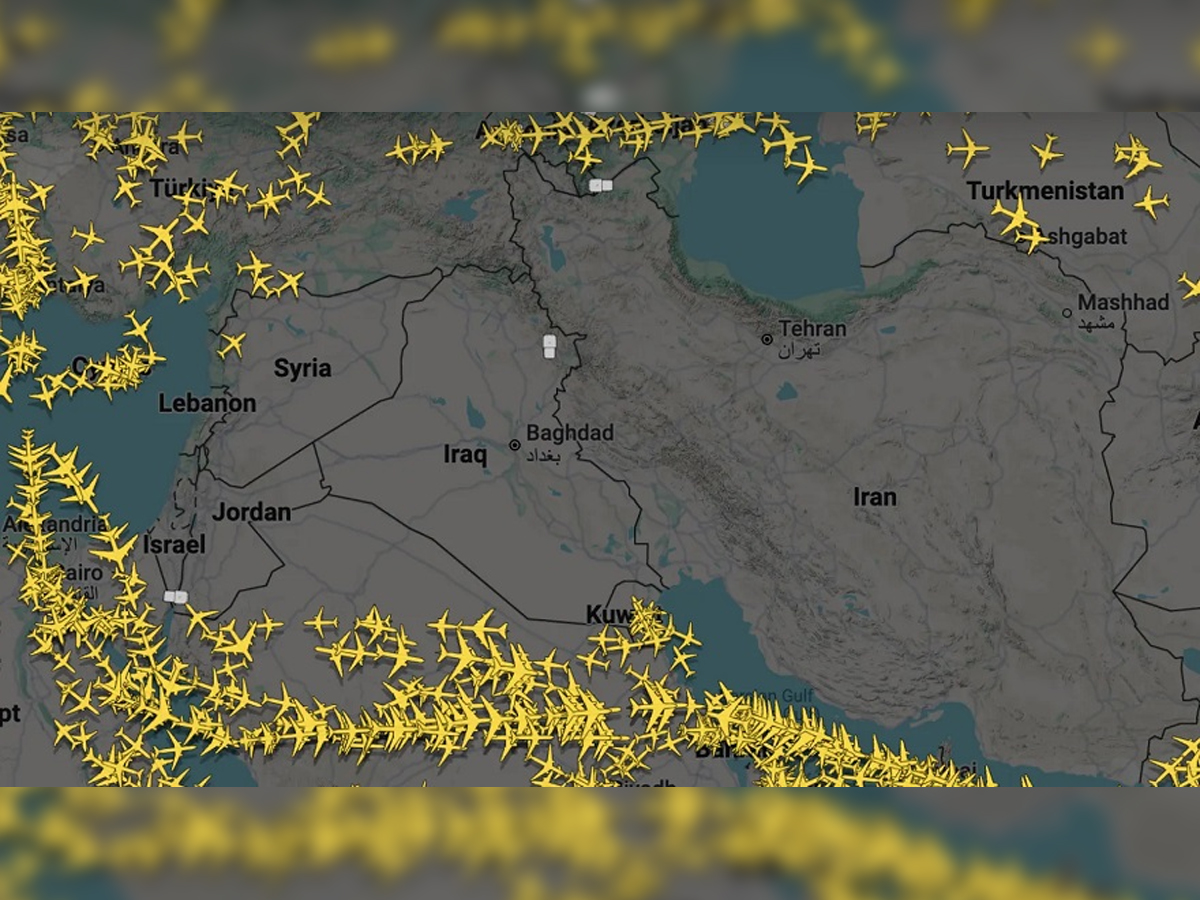
The Middle East witnessed unprecedented disruption to air travel after the United States and Israel carried out joint military operations against Iran, triggering explosions across key cities and forcing several countries to shut their airspace. Airlines cancelled or rerouted flights, leaving thousands of passengers stranded as the region slipped into a state of high alert.
The situation escalated rapidly after reports of blasts in and around Tehran, followed by retaliatory missile and drone launches from Iran targeting Israel and American military installations across the Middle East. Explosions were also reported near US bases in Doha, Manama, and Riyadh, prompting immediate airspace closures.
Israel Attacks Iran: Why Middle East Airspace Was Shut
As tensions intensified, several countries suspended civilian flights as a precautionary measure. Authorities cited safety concerns due to active missile threats, drone activity, and the possibility of misidentification during military operations. The closures affected major aviation corridors linking Europe, Asia, and Africa, causing widespread disruption to global travel networks.
Visitor numbers have skyrocketed over the past few hours, leading some users to see error messages on Flightradar24. Our servers are up, and we’re adding even more capacity as quickly as possible. If you receive an error message, please try again in one minute. pic.twitter.com/L75ObBoox3
— Flightradar24 (@flightradar24) February 28, 2026
International airlines, including major European, Asian, and Gulf carriers, either cancelled services to the region or diverted aircraft to alternative routes, significantly increasing travel times and operational costs.
Israel Attacks Iran: Airlines Cancel Flights, Passengers Stranded
With leading international carriers suspending flights, airports across the Middle East reported chaos as travellers scrambled for updates. Many passengers faced cancellations with little notice, while others endured long delays as airlines worked to reconfigure routes around restricted airspace.
The sudden spike in travel uncertainty caused flight-tracking platform Flightradar24 to experience a temporary outage as millions of users attempted to track aircraft movements and check changing flight paths.
Israel Attacks Iran: Aviation Safety Warning Issued
The European Union Aviation Safety Agency issued an urgent advisory, warning airlines to avoid operating in the Middle East “at all flight levels and altitudes.” The guidance reflected growing concern that the conflict could expose civilian aircraft to significant risk amid rapidly evolving military activity.
Aviation experts noted that such blanket warnings are rare and highlight the seriousness of the security situation.
How the Conflict Triggered Aviation Chaos
Earlier in the day, US-Israel strikes reportedly hit multiple strategic targets in Iran, including locations near the offices of Ayatollah Ali Khamenei. Iran responded with retaliatory missile and drone attacks aimed at Israel and US military bases across the region.
These developments pushed regional governments to act swiftly to protect civilian aviation, even as military operations continued.
Israel Attacks Iran: What This Means for Global Travel
The closure of Middle Eastern airspace has far-reaching consequences beyond the region. Airlines rerouting flights around conflict zones face longer journeys, higher fuel costs, and scheduling disruptions that could last for days or weeks if tensions persist.
As the US-Israel-Iran conflict continues to unfold, aviation authorities and airlines remain on high alert, warning travellers to expect further delays, cancellations, and sudden changes to flight plans.




