Iran claims it struck a US oil tanker in the Persian Gulf after the sinking of warship IRIS Dena near Sri Lanka, raising fears of wider conflict and Hormuz disruption.
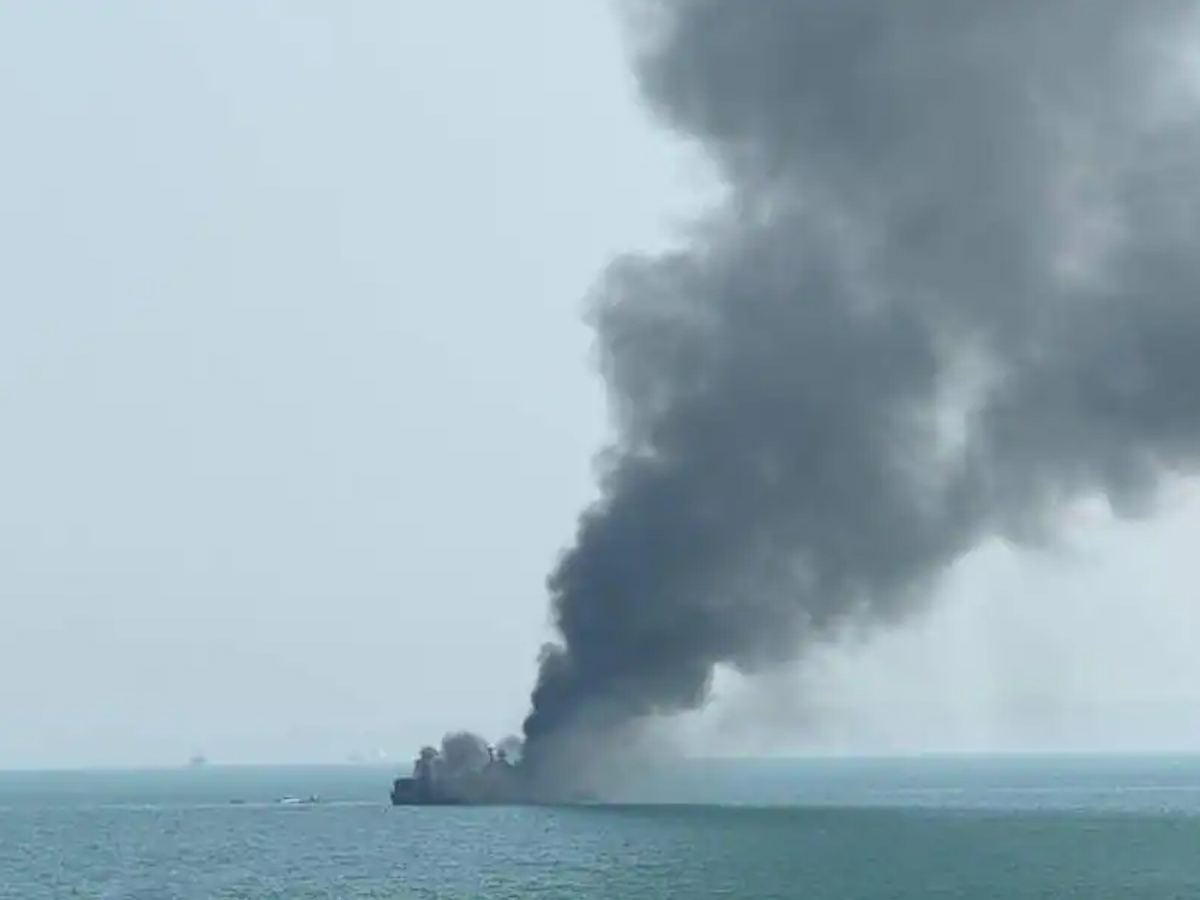
As of now, the United States has not issued an official confirmation or response regarding the alleged tanker attack. (Photo: Social Media)
Tensions between Iran and the United States have intensified after Iran claimed it carried out a missile strike on an American oil tanker in the northern Persian Gulf. The claim came shortly after the sinking of the Iranian naval frigate IRIS Dena in the Indian Ocean, an incident that has already pushed regional tensions to a new level.
Iran’s Islamic Revolutionary Guard Corps (IRGC) said the attack happened early Thursday morning. According to Iran’s Mehr news agency, the military targeted the tanker with a missile and set it on fire. Iranian authorities described the strike as a response to what they called an “act of aggression” against their navy.
As of now, the United States has not issued an official confirmation or response regarding the alleged tanker attack.
The escalation follows the sinking of Iran’s frigate IRIS Dena, which was torpedoed by a US submarine near the southern coast of Sri Lanka on Wednesday. The vessel was reportedly sailing in international waters when the attack occurred.
The ship had previously participated in a multinational naval exercise and fleet review hosted by India in Visakhapatnam before beginning its journey back toward Iranian waters. Around 180 personnel were believed to be on board the vessel at the time of the strike. Reports indicate that 87 sailors were killed, while 32 survivors were rescued by Sri Lankan naval forces during a search and rescue operation. Several crew members remain missing.
Iranian leaders quickly condemned the strike and promised retaliation. Iranian foreign minister Abbas Araghchi issued a strong warning against Washington following the incident.
"The U.S. has perpetrated an atrocity at sea, 2,000 miles away from Iran's shores. Frigate Dena, a guest of India's Navy carrying almost 130 sailors, was struck in international waters without warning," said Iranian foreign minister Abbas Araghchi, adding that Washington will "bitterly regret the precedent it has set."
Iranian officials said the tanker strike was part of a broader response to the loss of their naval vessel and the deaths of sailors.
Along with announcing the tanker strike, the IRGC also issued a warning about shipping routes in the region. Iranian officials claimed they now have “full control” over the Strait of Hormuz — one of the world’s most important maritime routes for oil and gas shipments.
According to the statement, the waterway will remain open only to ships from certain countries.
Iranian authorities said vessels linked to the United States, Israel, European nations, and their allies would not be allowed to pass through the strategic strait. The IRGC also warned that any ships violating the restrictions could become targets.
The Strait of Hormuz connects the Persian Gulf to the Indian Ocean and handles a significant share of global oil exports, making the situation a major concern for global energy markets.
The latest developments highlight how quickly the confrontation between Iran and the United States is expanding beyond a single military incident. Naval activity in the Indian Ocean, tanker routes in the Persian Gulf, and control over major shipping lanes are now becoming key flashpoints.
Security experts warn that attacks on energy infrastructure or shipping routes could disrupt global trade and increase oil prices if tensions continue to escalate.
With both sides trading accusations and military actions, the situation in the region remains highly volatile and could widen further in the coming days.
