Israeli F-35I shoots down Iranian Yak-130 in first air-to-air kill for the stealth jet, marking a major escalation in Israel-Iran conflict.
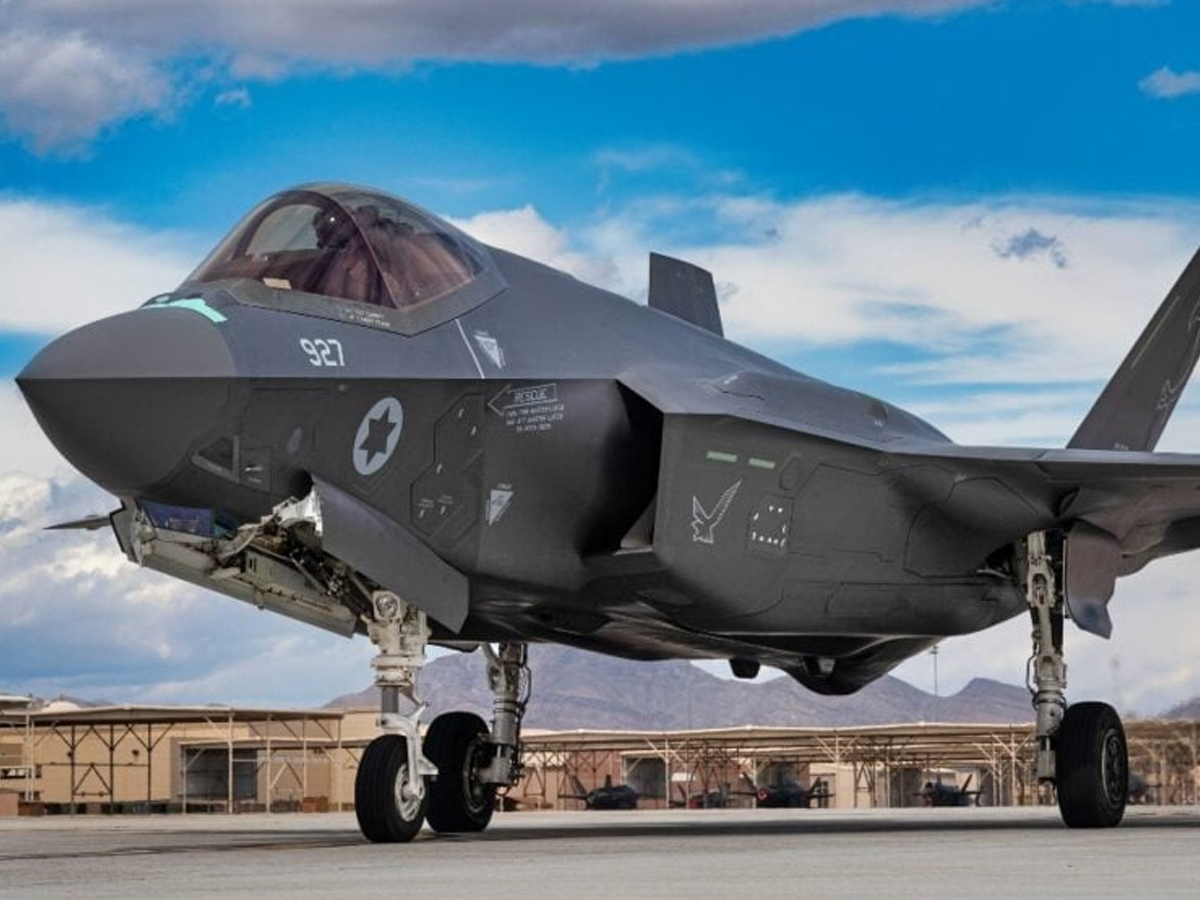
The last such engagement occurred in 1985, when Israeli F-15 jets shot down two Syrian MiG-23 aircraft over Lebanese airspace. (Photo: Social Media)
In a major development in the ongoing Israel-Iran conflict, the Israel Defense Forces (IDF) confirmed that an Israeli F-35I fighter jet successfully shot down an Iranian Yak-130 during an aerial battle. The announcement, made Wednesday morning, marks the first time in history that an F-35 has destroyed a manned enemy aircraft in combat.
The incident signals a significant escalation in direct air combat between the two regional powers. Iranian authorities have not yet officially confirmed the loss.
The Israeli Air Force deployed its advanced F-35I Adir, a customized version of the US-made F-35 stealth jet, during the clash. According to the IDF, the aircraft intercepted and shot down an Iranian Yak-130 without sustaining any damage.
This marks the first recorded instance of an F-35 downing a manned aircraft in live combat. It also represents the first air-to-air engagement involving manned aircraft for the Israeli Air Force in nearly four decades.
🛩️IRANIAN JET SHOT DOWN: An IAF F-35I “Adir” fighter jet shot down an Iranian Air Force YAK-130 fighter jet.
— Israel Defense Forces (@IDF) March 4, 2026
This is the first shootdown in history of a manned fighter aircraft by an F-35 “Adir” fighter jet.
The last such engagement occurred in 1985, when Israeli F-15 jets shot down two Syrian MiG-23 aircraft over Lebanese airspace.
According to Israeli officials, the confrontation occurred after the IDF launched earlier strikes on Iranian fighter jets stationed on runways. On Wednesday, the Yak-130 reportedly attempted to take off and initiate a sortie. The Israeli F-35I intercepted the aircraft mid-air and neutralized it.
The IDF said the stealth fighter demonstrated operational superiority by completing the mission without taking fire.
🚨 IRANIAN JET OVER TEHRAN
— Mossad Commentary (@MOSSADil) March 4, 2026
Footage shows an Iranian Air Force Yak-130 jet flying patrol over Tehran. https://t.co/2NFZa2txAG pic.twitter.com/Ie6xhLttIf
The development highlights the growing intensity of the Israel-Iran air conflict, which has now moved beyond missile exchanges to direct aerial combat.
The Yak-130 is a Russian-designed aircraft developed by Yakovlev in the 1990s. Russia primarily designed it as an advanced jet trainer for pilots transitioning to high-performance fighters like the Su-57.
Although the Yak-130 mainly serves as a training aircraft, several countries use it in light combat roles, including close air support and limited ground attack missions.
Iran acquired Yak-130 aircraft to modernize its aging fleet, which includes older US-era jets such as the F-4 and F-5.
The Yak-130 can reach a top speed of approximately Mach 0.93 (around 1,060 km/h). It has a range of about 2,100 kilometers, depending on mission configuration.
While it offers modern avionics and maneuverability compared to older Iranian aircraft, it lacks stealth technology and advanced radar systems found in fifth-generation fighters like the F-35I.
The Yak-130 reportedly costs between $15 million and $20 million per unit, depending on configuration and export agreements. This makes it significantly cheaper than advanced stealth fighters.
In contrast, the F-35I costs well over $80 million per aircraft, reflecting its advanced stealth design, sensor fusion capabilities, and network-centric warfare systems.
The F-35I “Adir” stands as one of the most advanced fighter jets in the Middle East. It can reach speeds of Mach 1.6 and has a combat radius of around 1,600 kilometers. The aircraft carries advanced air-to-air missiles and precision-guided bombs.
Israel operates more than 30 F-35I jets, giving it a significant technological edge in the region.
A former F-35 pilot explained the operational challenges of deploying stealth fighters in prolonged conflicts.
“Running those top-tier stealth fighters diminishes the resources. You’ve got to balance the cost of keeping them up and running with the benefits they bring. It’s a big deal, especially when you’re in it for the long haul.”
The successful interception underscores Israel’s air superiority and signals a new phase in the Israel-Iran conflict. Direct air-to-air combat between advanced jets raises the stakes and increases the risk of broader regional escalation.
With both sides continuing military operations, defense analysts expect further developments in aerial warfare capabilities.
For now, the F-35I’s first confirmed air-to-air kill marks a historic milestone in modern military aviation.
