
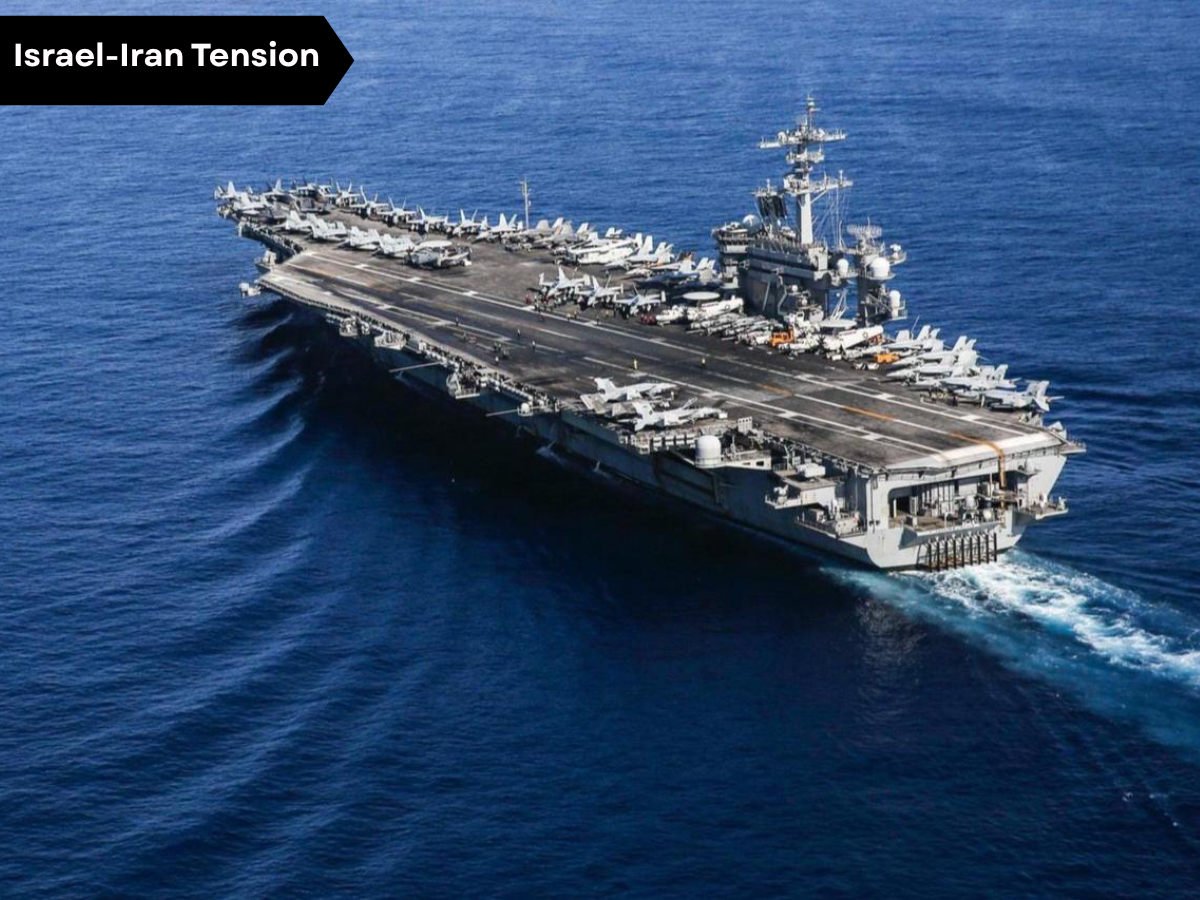
Israel-Iran War Update: The West Asia tensions were intensified when the Islamic Revolutionary Guard Corps (IRGC) in Iran announced that it had damaged the USS Abraham Lincoln which is among the biggest aircraft carriers of the United States that was at the Gulf. The announcement followed hours after a US-Israeli operation purportedly killed the Supreme Leader of Iran Ayatollah Ali Khamenei, which sparked several countermeasures and missile fire between the two superpowers. As nearly as 10,000 other US troops were recently sent to the region, the escalation has been called into question and the claims of the battlefield have been questioned.
Israel-Iran Tensions: Iran Claims It Has Targeted USS Abraham Lincoln with Missiles
The Iranian state media reported with references to the IRGC that four ballistic missiles were directed at the USS Abraham Lincolnthing in the gulf area. According to the Guard, the move involved getting into a new stage of opposition to what it termed as American-Zionist targets. There is as yet no independent testing of damage.
Iran targets USS Abraham Lincoln aircraft carrier with 4 ballistic missiles#BREAKING
— Mehr News Agency (@MehrnewsCom) March 1, 2026
The Mehr News Agency, which is considered semi-official and is funded by the Iranian government, reported on X that Iran had targeted the USS Abraham Lincoln aircraft carrier with four ballistic missiles.
Israel-Iran Tensions: Iran Warns Land & Sea Will Become ‘Graveyard’ for Adversaries
The IRGC threatened in a highly aggressive message that land and water would turn into a graveyard of enemies in case of further military intervention. The rhetoric indicates that Tehran can broaden its target to include the naval resources and regional bases of the US especially in the Gulf countries where American forces are stationed.
Israel-Iran Tensions: Did the US Navy Confirm on the Reported Attack
As of now, the US Navy has not so far confirmed that there was a successful strike on the carrier. The US authorities have not documented any harm or fatalities associated with the ship. In such massive battles, the first claims on the battlefields are usually disputed and verification may take time.
Israel-Iran Tensions: Where is USS Abraham Lincoln Located?
It is estimated that the USS Abraham Lincoln is at the Arabian Sea following weeks of operation in the Gulf area. Carrying approximately 5,000 air and sailors, the carrier is homeported in Naval Air Station North Island in San Diego. Along with the USS Gerald R. Ford, it is one of two US aircraft carriers stationed in the area, along with a group of supporting destroyers, the naval buildup is one of the largest US force concentrations in West Asia in recent years.
USS Abraham Lincoln is the fifth Nimitz-class aircraft carrier in the US Navy. Lincoln includes the latest F-35 stealth jets and capable of evading enemy radar.
Israel-Iran Tensions: Latest Updates From the Middle East Conflict
- Ayatollah Ali Khamenei Ayatollah Ali Khamenei, 86 year old, who was regarded as the senior defence leaders in Iran, was reportedly killed by a US-Israeli strike.
- Iran affirmed his death and named Ayatollah Alireza Arafi as transitory Supreme Leader by Article 111.
- Iran made missile and drone attacks on Israel and US bases in Iraq, Qatar, Bahrain and the UAE.
- Reports of explosions in Dubai, Abu Dhabi, Doha and Manama were reported and then disruption of air travel took place.
- The US has increased the number of troops sent to the region by more than 10,000 troops and several carrier strike groups.
- European, Russian and Chinese leaders among other world leaders have called on restraint and new diplomacy.
- The instability and demonstrations have extended outside the region and it has been reported that some incidences have occurred around the US diplomatic buildings.
FAQ’s: Israel-Iran War Update
Q1: Has the USS Abraham Lincoln been damaged?
There is no confirmation from the US Navy of any damage or successful strike.
Q2: Why is the carrier in the region?
It is part of a broader US naval deployment aimed at deterrence and protecting regional allies.
Q3: Could the conflict expand further?
Yes, especially if missile exchanges continue or if oil shipping routes are disrupted.
Q4: How significant is the US military presence?
With two carrier strike groups and more than 10,000 additional troops, the US presence is substantial.
Q5: What are global concerns?
Energy supply risks, regional stability and the possibility of a prolonged war remain key worries.




