Iran warns US and Israel would be 'Legitimate targets' if attacked, following Trump's military hints, amid ongoing protests and rising regional tensions.
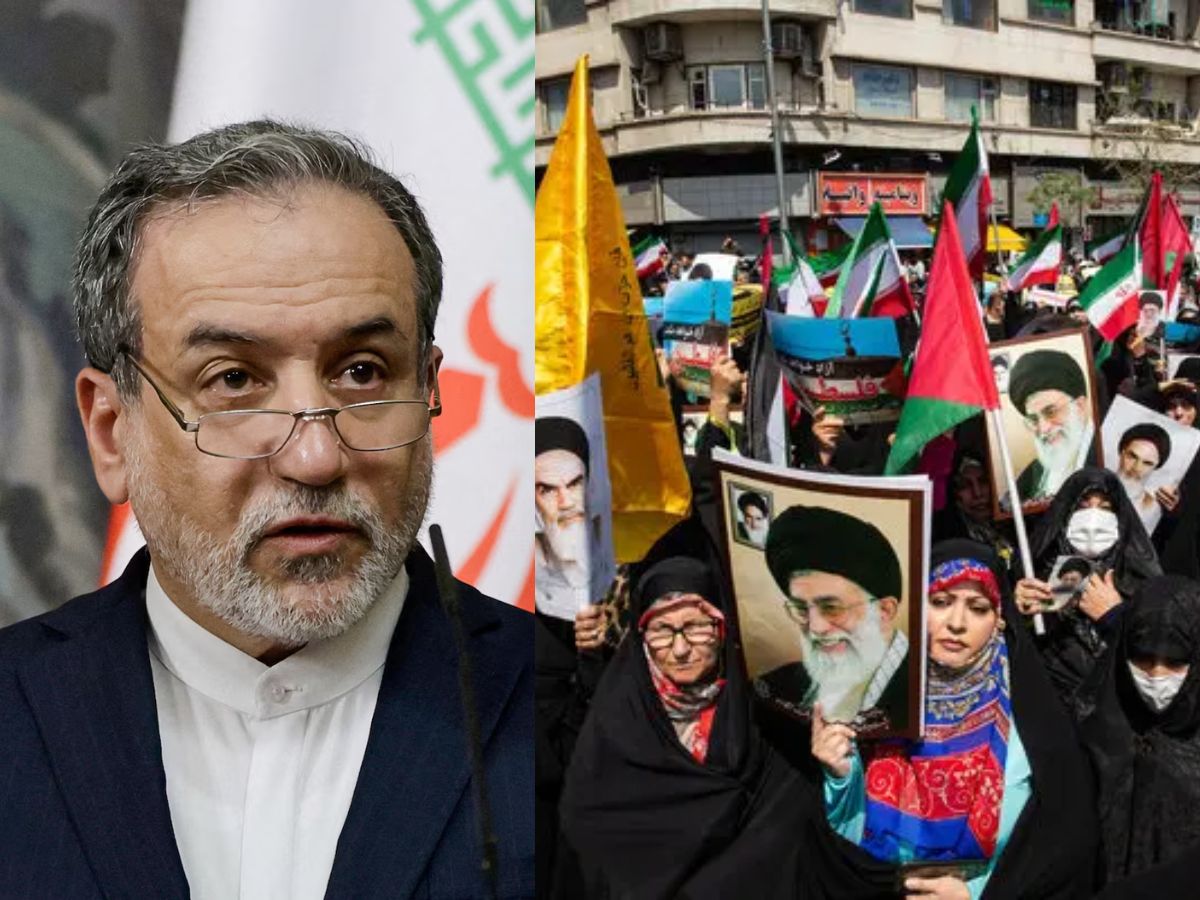
Iran warns US and Israel would be 'Legitimate targets' if attacked [Photo: X]
Iran has issued one of its strongest warnings yet to the US and Israel, after President Donald Trump hinted at possible military action over nationwide protests. The speaker of Iran's parliament said that if the US attacks Tehran, both American and Israeli military sites would be 'legitimate targets' for retaliation. This comes amid ongoing unrest in Iran and rising geopolitical tension across the Middle East.
Mohammad Bagher Ghalibaf, speaker of Iran’s parliament, delivered the warning during a heated parliamentary session. Lawmakers reportedly shouted “Death to America!” while he spoke.
Mohammad Bagher Ghalibaf said, “In the event of a US military attack, both the occupied territory and all American military centres, bases and ships in the region will be our legitimate targets.” He emphasized that Iran would not limit itself to retaliatory measures alone, warning that the country’s response could extend beyond immediate attacks.
Ghalibaf specifically mentioned Israel as a potential target alongside US military installations. “Both Israel and US military and shipping centres will be our legitimate target,” he said.
This has heightened concerns in Tel Aviv, as Israel is a close US ally. Authorities there are reportedly monitoring the situation, wary that any American intervention could trigger retaliatory strikes. Analysts say this makes the scenario more unpredictable and raises risks of broader regional escalation.
The threat comes amid widespread protests across Iran that began in late December 2025. Demonstrators initially protested economic hardship, but the unrest has evolved into broader anti-government demonstrations.
Reports suggest at least 116 people have died, and over 2,600 have been detained. Government measures, including internet and phone blackouts, have made it difficult to verify the situation. The protests are now a key factor influencing Iran’s warnings to the US and Israel.
President Trump has publicly supported the protesters, writing on social media: “Iran is looking at FREEDOM, perhaps like never before. The USA stands ready to help!!!”
Although no final military decision has been made, Trump has been presented with options for potential strikes on Iranian targets. The US State Department has issued a warning, saying, “Do not play games with President Trump. When he says he’ll do something, he means it.”
The US military confirmed that its forces in the Middle East are “postured with forces that span the full range of combat capability to defend our forces, our partners and allies and US interests.”
Israel has reportedly stepped up security monitoring. Governments and rights groups have called for restraint, urging both sides to avoid actions that could escalate into wider conflict. Analysts warn that any miscalculation could quickly escalate tensions in an already fragile region.
Iranian officials have accused foreign powers, including the US and Israel, of exploiting the protests to justify intervention. Hard-liners, including Ghalibaf, stress that Iran will defend its sovereignty at all costs, even if that requires taking aggressive actions against foreign military assets in the region.
The combination of domestic unrest, aggressive rhetoric, and potential US intervention leaves the region on edge. Diplomats and analysts are closely watching developments, as any escalation could have far-reaching consequences across the Middle East. For now, tensions remain high, and global attention is focused on Iran, the US, and Israel.
