Did Iran strike Netanyahu’s office and military sites? Iran’s Revolutionary Guards claim attacks on Israeli leadership targets as war spreads across the Middle East.
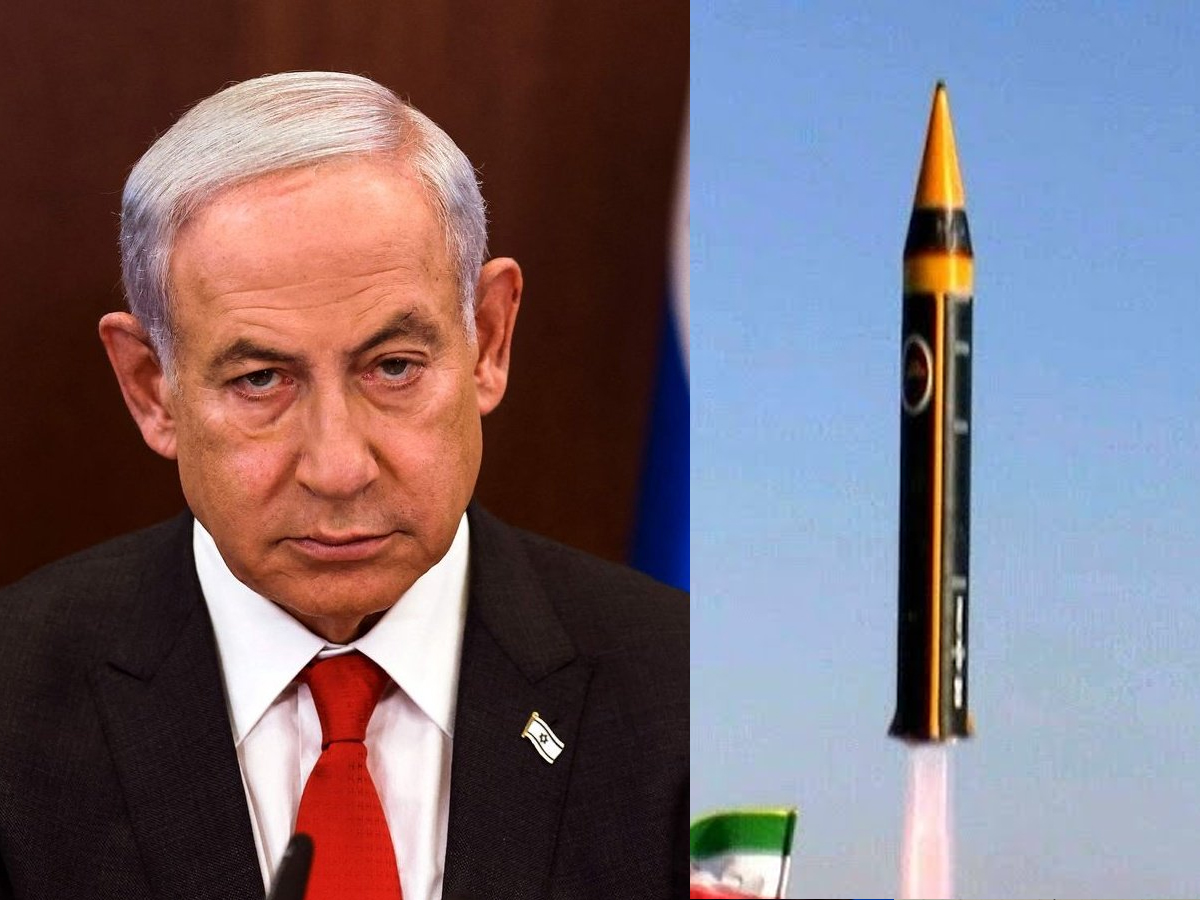
Shortly after the announcement, multiple explosions were heard in and around Jerusalem. (Photo: X/MeghUpdates)
Tensions across the Middle East have rapidly intensified, with Iran’s Islamic Revolutionary Guard Corps (IRGC) claiming it launched missiles at key Israeli government and military targets. Iranian state media and official statements say the attacks hit Benjamin Netanyahu’s office in Tel Aviv, as well as centers in Haifa and Jerusalem, marking a significant escalation in the ongoing conflict.
In a statement carried on Iranian state media, the IRGC said it struck:
“The office of the criminal prime minister of the Zionist regime and the headquarters of the regime’s air force commander were targeted,” the Guardian reported, quoting the IRGC statement. Kheibar missiles, long-range cruise missiles, were reportedly used.
Shortly after the announcement, multiple explosions were heard in and around Jerusalem. The Israel Defense Forces said it detected fresh missiles launched from Iran toward Israeli territory and activated air defence systems to intercept the threat. “Defensive systems are operating to intercept the threat,” the army said in a statement.
The conflict that began after coordinated United States military and Israeli strikes on Iran’s territory, which reportedly killed senior Iranian leaders, has rapidly expanded across the region. Violence has been reported in multiple countries as Iran fires missiles and drones in retaliation.
Explosions have been reported not just in Israel but also in Gulf cities, including Dubai, Doha, and Manama. The situation led to airspace closures and widespread alert levels across several nations.
European leaders have strongly criticised the escalating violence. Ursula von der Leyen, head of the European Commission, condemned “reckless and indiscriminate attacks by Iran and its proxies against sovereign territories across the region.” She stressed the need to “work hard to de-escalate and stop the conflict spreading,” highlighting the broader risks to regional stability.
The Iranian Red Crescent Society has reported that at least 555 people have died in Iran due to the US-Israeli campaign to date. Strikes have also targeted infrastructure in Gulf states. In Kuwait, black smoke was seen rising from near the US embassy, prompting warnings for people to stay away.
The embassy itself has not officially confirmed it was struck, but urged personnel and visitors to shelter in place amid ongoing security warnings.
Explosions and missile interceptions have been reported across several countries hosting US military assets, including Kuwait, Abu Dhabi, and Bahrain. Iran’s attacks have been described as both missile and UAV (drone) barrages, contributing to rising regional instability.
Global Diplomatic Reactions
World leaders and international organisations have expressed concern at the rapid escalation. Many urge restraint to avoid an even wider conflict that could have global repercussions, especially given disruptions to air travel and energy markets linked to this crisis.
