Japan Election Result: Japan PM Sanae Takaichi’s landslide win clears the way for suspending the food tax and testing her pledge of relief without new debt.
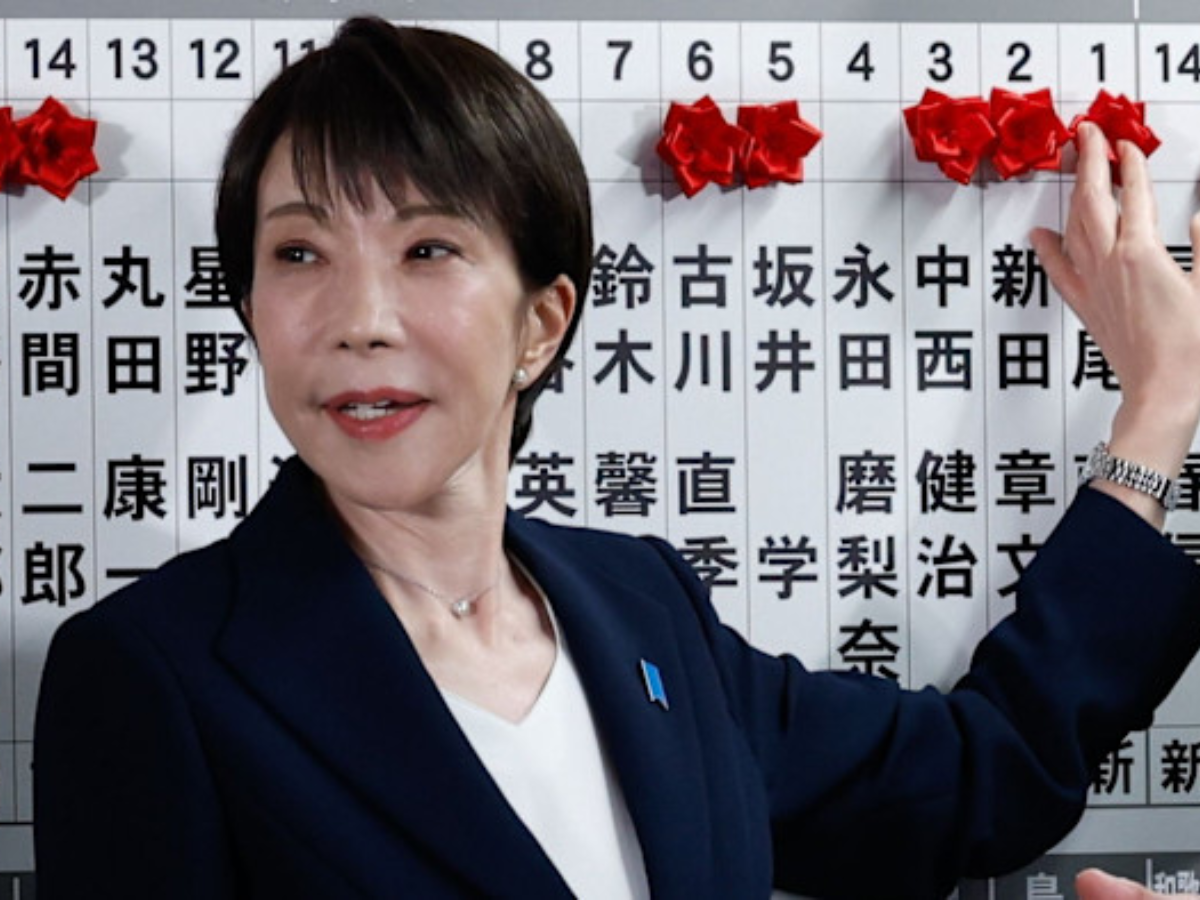
Japanese Prime Minister Sanae Takaichi celebrates a decisive lower house victory as debate grows over her proposed food tax suspension (Photo: X)
Japan Election Result: Japan's election was more than just a rearrangement of the existing parliamentary seats. It also handed the Japanese Prime Minister Sanae Takaichi an endorsement when finances were tight and the neighborhood felt edgy. Sanae’s pledge to delay the food sales tax by 8% for two years is now seen as an early test of her delicate balance between delivering an electoral reprieve, keeping an eye on the purse strings and wielding power.
The electoral contest was immense with close to 1,300 people competing for 465 seats in the lower house. Early returns showed the Liberal Democratic Party would clear the 233-seat threshold needed for a simple majority within hours adding their coalition partners and projections suggest the ruling bloc could top two-thirds of the chamber a threshold that would give it solid control over committees and the budget.
The ruling Liberal Democratic Party Coalition of Prime Minister Sanae Takaichi dominated the election for the lower chamber of parliament with predictions suggesting they secured more than two out of three of the available 465 seats while LDP alone won 244, much more than the 233 needed for a majority, giving the government extensive power to enact laws and control spending.
At the heart of Takaichi’s campaign was a simple message to households squeezed by inflation of food should cost less and suspending the 8% levy could offer direct relief, especially as food prices have risen faster than wages over the past two years. Government data shows grocery costs climbing by more than 6% year on year, sharpening voter anxiety.
What is contentious about this proposal is not the tax incentive itself but, instead, how it is to be funded and this is especially so since Japan has the highest public debt ratio among all developed economies with its public debt currently sitting at more than 250% of GDP. Takaichi has ruled out new debt, implying that any funds required would have to be made up for through cuts elsewhere.
Winning over two-thirds of the lower house gives Takaichi leverage rarely enjoyed by recent leaders and it allows her coalition to dominate legislative procedures and fast-track bills. That strength, however, also raises expectations with fewer procedural excuses available, delays or reversals will be closely scrutinized by voters and investors alike.
For business leaders, the welcome return of political stability after months of uncertainty has to be balanced by the fact that analysts remain unconvinced. That is the view of financial companies who are uncertain about exactly how the tax cut adds up and they argue that as much as the amount matters, so too does the organization's authenticity. Mistakes can have major repercussions on bond markets that are watching Japan's debt burden warily.
While the food levy dominates domestic debate, security looms large and Takaichi has been explicit about boosting defense spending amid tensions with China. Her strong mandate could accelerate that agenda, even as she insists economic growth and fiscal care will underpin any expansion.
