
NEW DELHI: Pakistan’s military establishment often claims it has moved on from the mistakes of the past. That it no longer interferes in politics the way it once did. But what is happening to Pakistan Tehreek-e-Insaf (PTI) today tells a very different story. The methods may be more subtle, the language more polished, but the underlying approach is strikingly familiar.
This is not about secret plots or dramatic accusations. It is about patterns—patterns that Pakistan has seen before. The most obvious example lies in Karachi, where the Muttahida Qaumi Movement (MQM) was steadily weakened and reshaped over years. What is unfolding against PTI now looks less like a new response to an unruly party and more like an updated version of that same playbook.
MQM was never outlawed in a single announcement. Instead, it was slowly hollowed out. Over time, journalists, rights groups, and former insiders described a process where a popular political force was neutralised not at the ballot box, but through pressure, division, and selective tolerance.
The template was set in June 1992 with Operation Clean-up. MQM’s leadership was chased, its organisational structure dismantled, and its supporters targeted. At the same time, splinter groups that were willing to fall in line were allowed to function with relative ease. Human rights organisations noted the imbalance early on: one faction faced relentless force, while another was treated with restraint.
The message was clear: Challenge the system and pay the price. Cooperate, and political space remains available. Democracy, in form, continued but only within boundaries drawn elsewhere. That same logic reappeared in August 2016 after Altaf Hussain’s controversial speech. Media coverage was abruptly cut off, legal pressure intensified, and a new MQM faction was quickly recognised as the legitimate successor. The party was not erased, but it was reshaped into something far less independent.
There was no public admission of intelligence involvement. There never is. In Pakistan, political engineering is rarely acknowledged openly. Its presence is inferred from results, not statements. What PTI is experiencing now follows a similar pattern, but on a much larger scale.
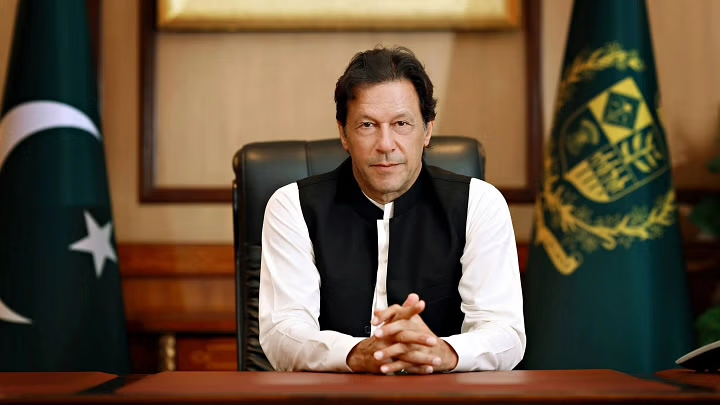
Since Imran Khan’s ouster and imprisonment, the party has been subjected to arrests, prolonged legal cases, restrictions on media exposure, and sustained pressure on its leaders to switch sides. Officially, these actions are presented as routine law enforcement. In reality, their coordination and timing suggest an organised effort to weaken the party from within.
The military trial of former ISI chief Lt Gen Faiz Hamid has also been widely seen as part of this broader reset—signalling a break with PTI’s earlier power centre while helping reposition figures viewed as more acceptable to the establishment. Perhaps the most telling sign is the way internal divisions are now being encouraged. PTI leaders who argue for compromise and engagement with the current power structure are given room to operate. Those who continue to push for protest—especially at the grassroots level in Khyber Pakhtunkhwa—face harsher treatment. Some voices gradually return to television screens and party platforms. Others fade away.
The signal is unmistakable: political relevance is conditional. As with MQM, the objective does not appear to be total destruction. It is control. PTI is being nudged toward becoming a party that can contest elections, but only so long as it does not directly challenge military dominance over civilian decision-making.
Supporters of the establishment argue that PTI’s confrontational style left the state with no choice. Similar justifications were once used against MQM. The outcome was not lasting stability, but years of alienation, violence, and institutional damage. If stability were truly the aim, coercion would not be the preferred tool. If rule of law were the priority, enforcement would not depend on political alignment.
What has taken shape instead is a system that seeks to discipline political behaviour of parties and voters alike. Pakistan is a nuclear-armed country of more than 240 million people. A political order where the most popular party can be weakened through pressure rather than defeated through elections is not resilient. It is fragile.
Karachi paid the price for this approach over decades. There is little reason to believe the rest of the country will fare better. Until the military and the ISI genuinely withdraw from civilian politics—not just in words, but in practice—the MQM experience will continue to serve as a warning. PTI may be the current target, but it will not be the last. And Pakistan’s promise of genuine democracy will remain just that—a promise, repeatedly deferred.
Ashish Singh is an award-winning senior journalist with over 18 years of experience in defence and strategic affairs.




