Russia openly welcomes the transatlantic rift over Trump's Greenland ambitions, seeing NATO tensions as an opportunity even while privately worrying about Arctic stability.
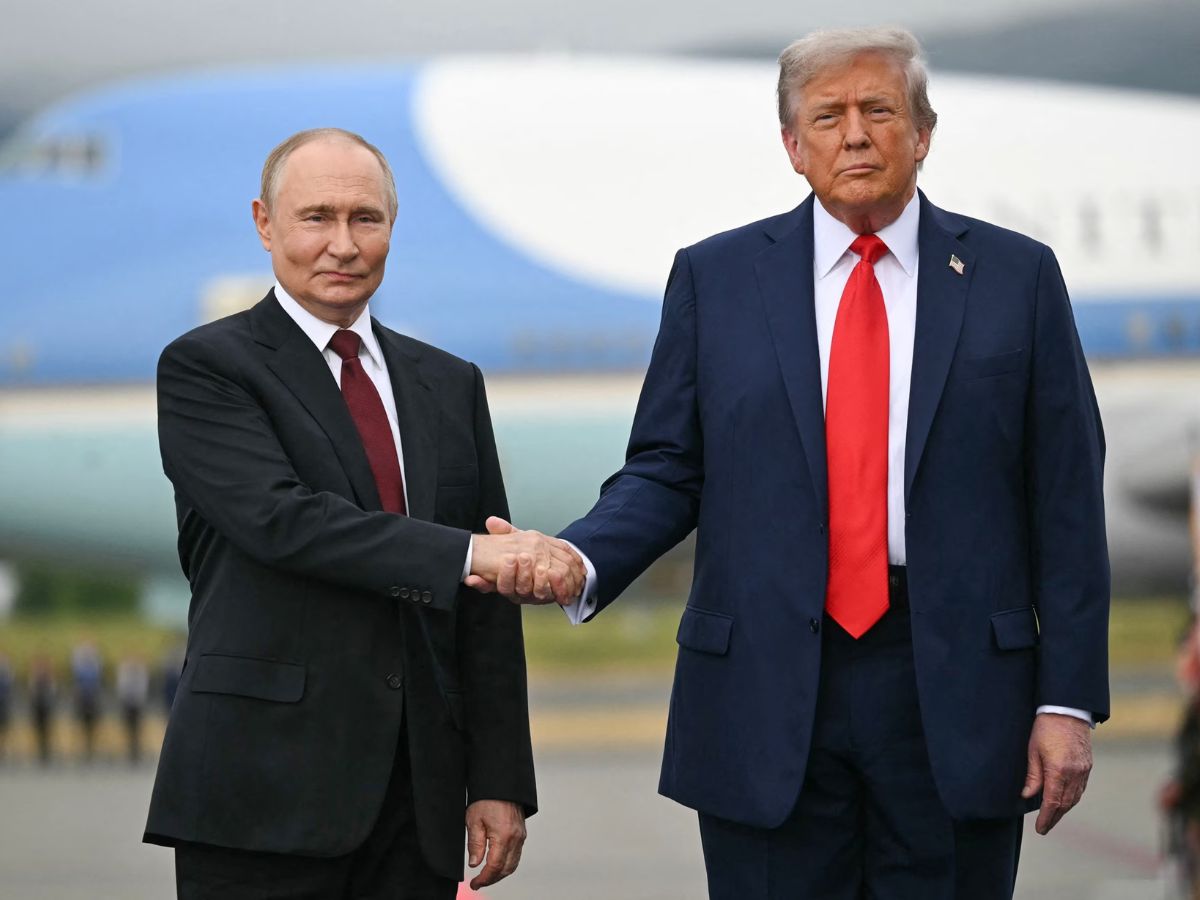
Russia openly welcomes the transatlantic rift over Trump's Greenland ambitions [Photo: X]
Russia has reacted strongly to US President Donald Trump's controversial bid to take control of Greenland, not by threatening war, but by welcoming the political discord it has stirred within NATO and Europe.
Russia says the crisis exposes deep fractures in the transatlantic alliance and sees strategic value in the heightened tensions. At the same time, Russian officials publicly deny any plan to seize the Arctic territory themselves, even as they applaud the weakening unity among Western powers.
Russian officials have already weighed in on the debate over Greenland’s future. Kremlin spokesman Dmitry Peskov said that if Trump were to succeed in acquiring the island, he would “go down in history,” suggesting that the move would have global significance.
Meanwhile, Kremlin-linked commentators, including former Russian officials, have celebrated the perceived collapse of the transatlantic union, a development long hoped for by Russia. Some have mocked Europe’s leaders and portrayed the dispute as a sign of weakening Western alliances.
Russian Foreign Minister Sergey Lavrov characterised Trump’s Greenland ambitions as heralding a “deep crisis” for NATO, one that could pit alliance members against each other. Lavrov dismissed the idea that Russia plans to seize Greenland, stating Russia has “no relation to that” while still describing the situation in critical terms.
This mix of rhetoric reflects Russia’s diplomatic balancing act, denouncing the instability caused by the US, yet avoiding direct involvement. Russian officials also used the controversy to critique what they see as Western hypocrisy, arguing that the “rule-based global order” has lost credibility.
Former Russian President Dmitry Medvedev took to social media to deride European leaders, spinning Trump’s rhetoric into an “equation” that mocked Western political slogans and ridiculed Europe’s policy responses. Without directly threatening force on Greenland, Russia’s public commentary underscores how the Kremlin seeks to exploit divisions among Western allies for political gain.
Some Russian political analysts have even stated bluntly that the best path forward would be to let Western powers “tear each other apart,” highlighting a hard-line view that infighting among NATO members serves Russia’s broader strategic interests.
While Russia publicly cheers the diplomatic tug-of-war, analysts note that Russia still has significant interests in the Arctic region, including resource extraction, military infrastructure and polar shipping routes. Any destabilization of the region could potentially affect Russia’s own ambitions there, making the situation more complex than public statements suggest.
In private discussions, some Russian commentators have suggested that the Greenland crisis could paradoxically undermine the very alliance that contains Russia’s influence, a double-edged outcome for Russia.
Trump’s strategy, which includes threatening tariffs on European allies that oppose his Greenland agenda, has jolted the transatlantic alliance. European leaders have condemned the approach and rallied to defend Denmark’s sovereignty over Greenland, warning that such disputes could erode trust within NATO.
Russia’s reactions, both supportive and critical, reveal its intent to capitalize on Western divisions while still safeguarding its own position in global power dynamics.
Russia’s response to the Greenland controversy highlights how great powers may leverage conflicts among allies to their advantage. By amplifying Western discord, Russia hopes to weaken NATO cohesion and gain diplomatic leverage, especially around issues like the conflict in Ukraine.
At the same time, the situation underscores how fragile alliances can become when strategic interests collide on global stages like the Arctic and the World Economic Forum in Davos.
