Iran protests spread worldwide as Trump revives regime change rhetoric after US strikes on nuclear sites, intensifying global pressure on Tehran.
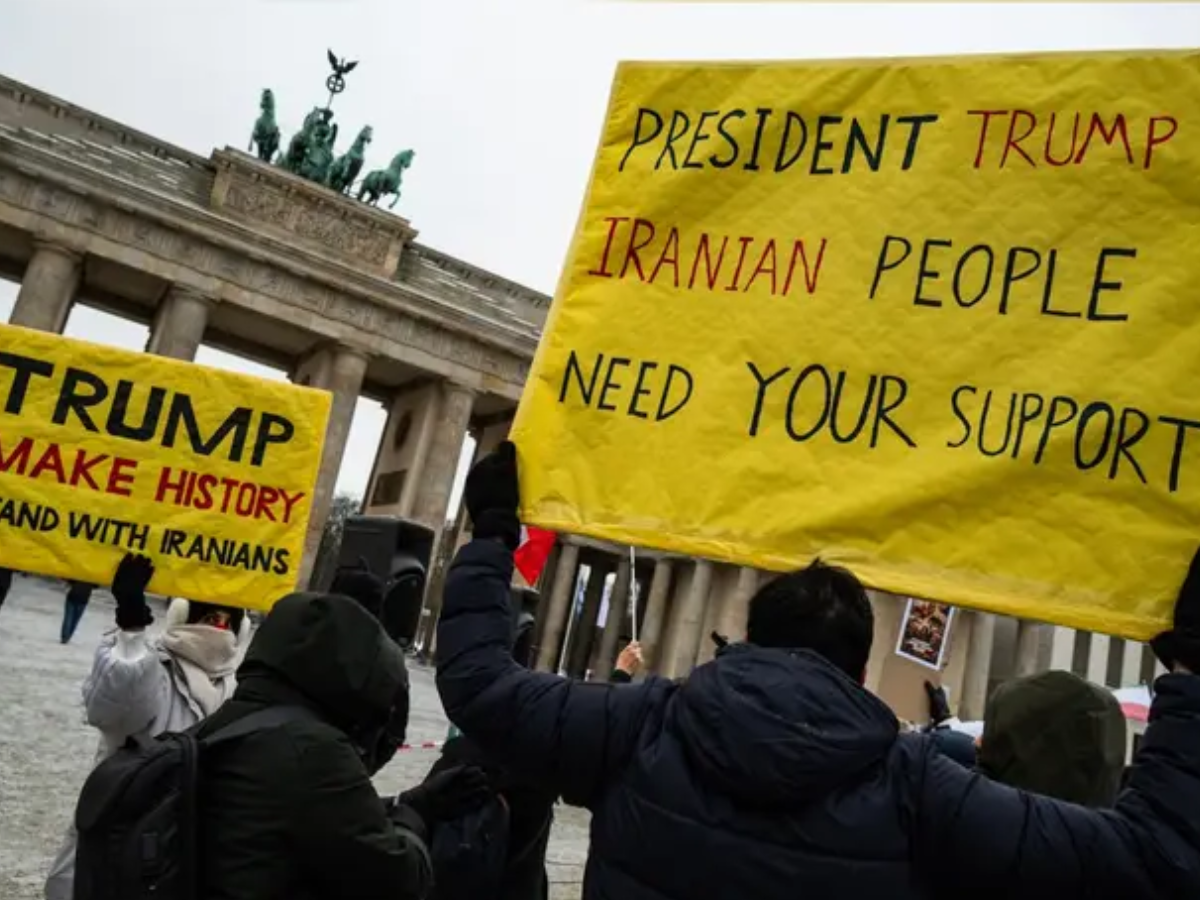
‘Make History, Stand With Iranians’: Protesters Appeal to Trump (Photo: X)
Iran's protests against its elite are not only taking place within Iran's territory. This has shifted from an Iranian crisis to a situation where the international community is observing these demonstrations, particularly owing to their covert and overt interests. However, the recent developments and announcements from the United States, under its former President Donald Trump, seem to fuel this volatile situation.
In the last few days alone, solidarity rallies have emerged well beyond the Iranian border. From Berlin to other major European capitals, protesters have gathered in the streets brandishing signs calling on the leaders of the world to support the Iranians. While the solidarity has been global, the call on the signs has been targeted and they have called on Donald Trump himself to stand with the Iranians against the repression which they assert has been going on for decades.
Weeks of unrest within the boundaries of Iran have led to the arrest of several hundred people, as well as victims, as reported by rights groups, adding more concern to the already tense scenario for Tehran. This has put Tehran under a ruthless spotlight.
Donald Trump has seized on the unrest to revive the controversial notion of regime change in Iran. Within hours of announcing what he called a successful US strike on Iranian nuclear facilities in Fordow, Natanz and Isfahan, Trump went to social media to wonder aloud if the leadership in Tehran deserved to stay in office. Reconfiguring his well-known campaign catchphrase, he coined the Make Iran Great Again or MIGA phrase, making it a clarion call for political change in Tehran.
Trump told world leaders that if Iran's current rulers cannot deliver stability or prosperity, change will come. His speech to the UN General Assembly came hours after he delivered a speech focused on US military objectives saying they were aimed at dismantling Iran's nuclear enrichment capacity and neutralizing what he called a global security threat.
The mention of recent strikes on Iran’s nuclear facilities has escalated the stakes. US officials have indicated the attacks greatly damaged the enrichment capacities of the facilities. This is an important issue considering the historic concern about Iran having nuclear ambitions. Iran reportedly enriched uranium to weapon levels prior to the attack.
Tehran, on the other hand, feels that these attacks are a military strike and a political provocation. Iranian leaders have always denied the aim of developing nuclear weapons, but asserted that foreign intervention will increase Iranian resistance.
Internationally, there is a divided response to the situation in Iran. EU governments have called for caution, suspecting a possible escalation in conflict in response to demands for a regime change in Iran. Nevertheless, international protests are revealing a population frustrated with the current foreign policy tactics adopted in relation to Iran. Germany, France and the UK are countries where protests have taken place, urging a firmer policy on Iran's leadership.
However, the rhetoric of the US has also come under attack from Russia and China over concerns that a destabilised Iran may pose severe repercussions to the Middle Eastern region. This comes at a time when the oil markets are sensitive to any potential escalations.
The coming together of mass protests, nuclear strikes, and statements regarding regime change indicates that Iran may be at a pivotal point in its history. Whether international forces will lead to legitimate change in Iran is in question. The one thing that is certain, however, is that the Iranian internal crisis has developed into a worldwide phenomenon that currently finds itself at a crossroads between mass protest, international competition and nuclear issues.
