
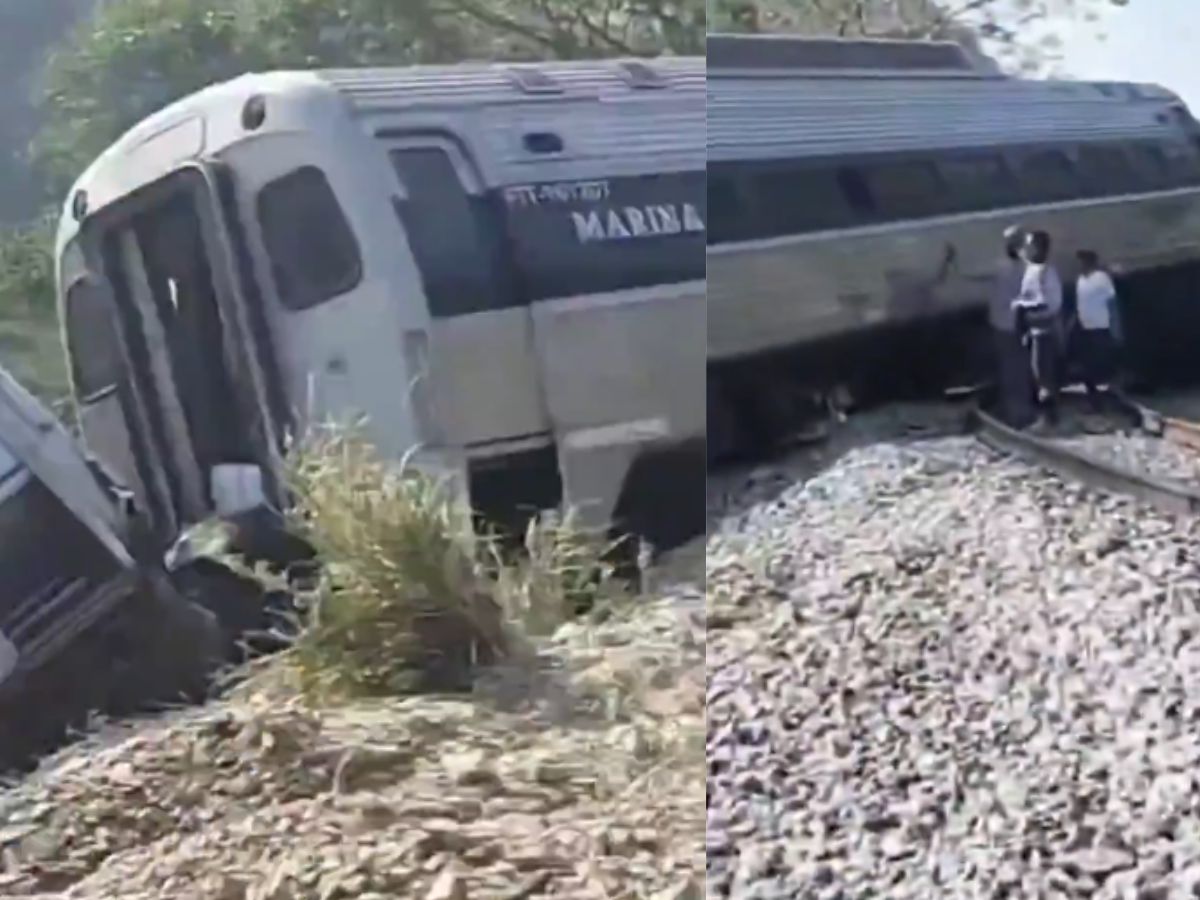
Mexico train crash today: At least 13 people were killed and nearly 100 others were injured after a passenger train derailed in Mexico’s Oaxaca region, according to the Mexican navy.
The train was travelling across the country, linking the Gulf of Mexico with the Pacific Ocean. It was carrying 241 passengers and nine crew members at the time of the accident.
The navy confirmed that 98 people were injured, and 36 of them are being treated in hospital.
Mexico Train Derailment occurred near Nizanda
Officials said the train left the tracks while going around a curve near the town of Nizanda. Mexico’s Attorney General confirmed that a formal investigation has been started to find out what caused the crash.
President Sheinbaum addresses the tragedy
Mexican President Claudia Sheinbaum said that five injured passengers were in serious condition. She also announced that senior officials, including the Secretary of the Navy, were heading to the crash site to oversee rescue and relief work.
Rescue operations underway
Images from the accident scene showed emergency teams helping passengers climb out of the damaged train. The train had slipped off the tracks and was partly tilted over the edge of a cliff, making rescue work difficult and dangerous.
Details of the Interoceanic train
The derailed train was part of the Interoceanic rail service, which runs between Salina Cruz on the Pacific coast and Coatzacoalcos on the Gulf coast. The Mexican navy said the train had two locomotives and four passenger coaches. Mexico’s railway network is operated by the navy.
Oaxaca governor expresses sorrow
Oaxaca Governor Salomón Jara Cruz said he felt "deep regret" over the tragic accident. He added that state authorities are working closely with federal agencies to provide help and support to victims and their families.
Rail project launched to boost the economy
The Interoceanic rail corridor was opened two years ago as part of a major project started by former President Andrés Manuel López Obrador to improve the region’s economy.
The plan aimed to modernise rail connections across the Isthmus of Tehuantepec and turn the area into a major trade route by developing ports, railways, and industrial facilities.
Part of wider transport expansion
This train service is also part of Mexico’s larger effort to expand passenger and freight rail in the southern part of the country and promote economic growth in the region.
The accident has now raised serious questions about safety rules and measures on this important transport corridor.