MEA says PM Modi and President Trump spoke 8 times in 2025, rejecting claims that India-US trade talks stalled due to lack of communication.
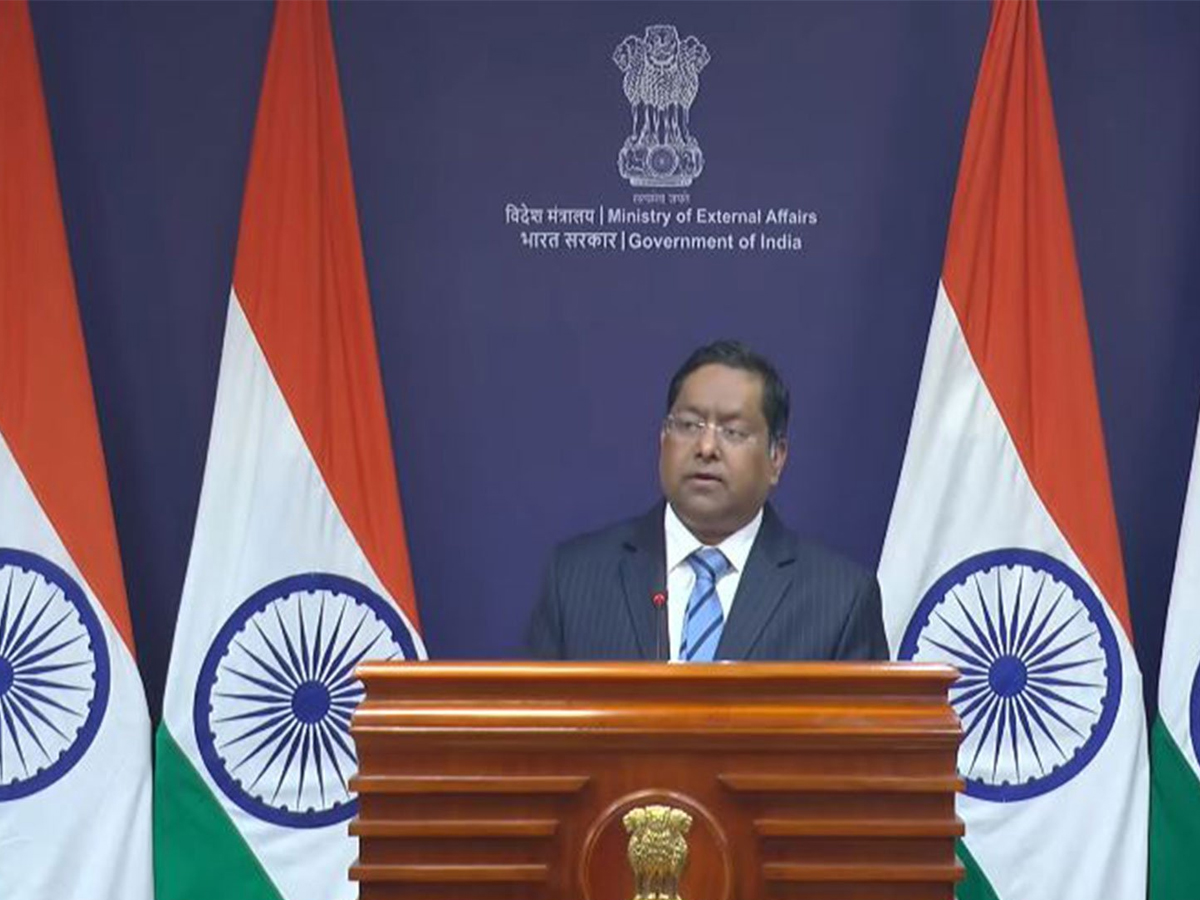
Addressing a media briefing on Friday, MEA spokesperson Randhir Jaiswal said India and the US have remained in close contact throughout 2025. (Photo: ANI)
As trade negotiations between India and the United States remain under intense scrutiny, New Delhi has firmly rejected claims that talks slowed down due to a lack of direct communication between Prime Minister Narendra Modi and US President Donald Trump. The Ministry of External Affairs (MEA) clarified that the two leaders have spoken multiple times this year, underscoring sustained high-level engagement despite unresolved differences over tariffs and the proposed Free Trade Agreement (FTA).
The clarification came after remarks by US Commerce Secretary Howard Lutnick suggested that India-US trade talks lost momentum because Prime Minister Modi did not reach out to President Trump. While the MEA did not directly name Lutnick, its response clearly addressed the narrative circulating in Washington.
Addressing a media briefing on Friday, MEA spokesperson Randhir Jaiswal said India and the US have remained in close contact throughout 2025. He stressed that the characterisation of trade negotiations as stalled due to a lack of leadership-level communication was incorrect.
“We have seen the remarks. India and the US were committed to negotiating a bilateral trade agreement as far back as February 13, 2025. Since then, the two sides have held multiple rounds of negotiations to arrive at a balanced and mutually beneficial trade agreement. On several occasions, we have been close to a deal. The characterisation of these discussions in the reported remarks is not accurate," Jaiswal said.
#WATCH | Delhi | MEA Spokesperson Randhir Jaiswal says, "We have seen the remarks. India and the United States were committed to negotiating a bilateral trade agreement with the US as far back as 13th of February last year. That is, since then, the two sides have held multiple… pic.twitter.com/sEJBQB0Zpu
— ANI (@ANI) January 9, 2026
He further added that Prime Minister Modi and President Trump have spoken over the phone eight times this year, discussing a wide range of strategic, economic, and geopolitical issues.
According to the MEA, Modi and Trump have spoken “as many as eight times” in 2025. These conversations covered “different aspects of our wide-ranging partnership,” including trade, global security, and bilateral cooperation.
Officials indicated that regular leader-level engagement demonstrates both sides’ commitment to strengthening ties, even as negotiations on tariffs and market access remain complex and sensitive.
The MEA reiterated that negotiations on a bilateral trade agreement have been active since February 2025. Multiple rounds of talks have taken place, and negotiators from both sides have, at times, come close to finalising an agreement.
However, differences over tariff structures, market access, and sector-specific concessions continue to delay a breakthrough. New Delhi maintains that any agreement must be balanced and protect India’s economic interests.
Howard Lutnick, speaking earlier, said the US had already concluded trade deals with Indonesia, the Philippines, and Vietnam. He suggested that Washington initially expected India’s agreement to be finalised earlier.
“We did Indonesia, the Philippines, Vietnam, and we announced a whole bunch of deals. So we did this whole bunch of deals…because we negotiated them and assumed India was going to be done before them, I have negotiated them at a higher rate,” Lutnick said.
He added, “So now the problem is the deals came out at a higher rate. And then India calls back and says, ‘Oh, okay, we are ready. ’ I said, Ready for what?”
Despite public disagreements, both governments continue to signal interest in concluding a trade agreement. India’s response suggests it wants to correct the record without escalating tensions, while keeping negotiations alive.
As economic ties between New Delhi and Washington grow increasingly important, the coming months will be crucial in determining whether the two sides can bridge remaining gaps and finalise the long-discussed trade pact.
